Classic Scooters 1960s Mod Culture
 By Team Random Read
15 min read
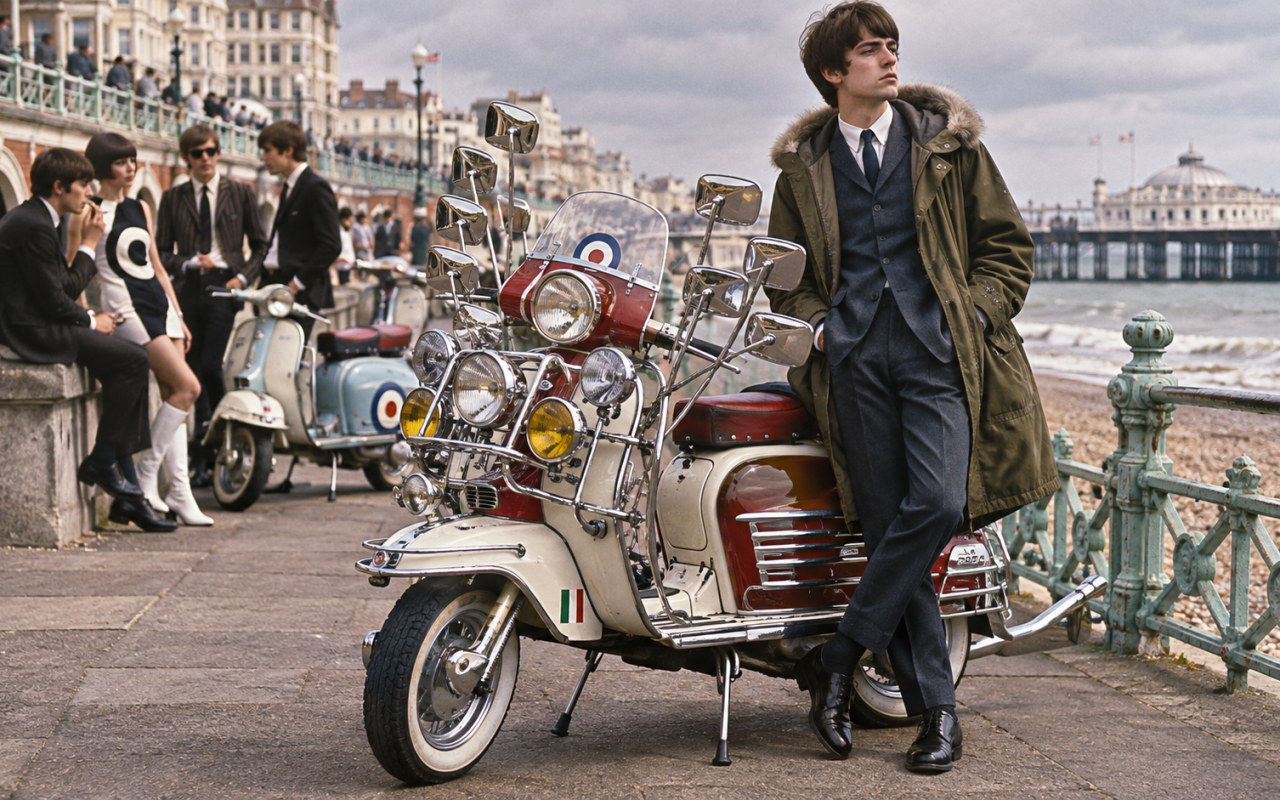
Two Wheels and a Parka: How Classic Scooters Became the Heartbeat of 1960s Mod Culture
Quick answer
Mods chose scooters because Italian models like the Vespa and Lambretta were stylish, affordable and practical. Their step-through frames and enclosed bodywork helped keep tailored suits clean, unlike traditional motorcycles. Mods then customized them with mirrors, spotlights and chrome, turning scooters into rolling statements of identity, taste and belonging.
Key takeaways
• Scooters suited Mod style because step-through frames and enclosed bodywork protected tailored clothes better than typical motorcycles.
• Italian makes such as Vespa and Lambretta carried a modern, continental image that appealed to style-conscious young Britons.
• Customization with mirrors, spotlights, fishtail exhausts and target roundels turned mass-produced machines into personal statements.
• The 1964 seaside clashes, including Brighton, put Mods and their scooters in the headlines and made them a national talking point.
• Bands such as The Who and the Small Faces helped cement the Mod and scooter image in music, film and memory.
The sun is barely up when the sound arrives first: a high, insistent buzz rolling down the road toward the sea. Then the machine itself appears, a Lambretta dressed in more chrome than any factory ever intended, its mirrors flashing like signal lamps. The rider hunches into the wind, an olive-green parka flapping behind him like a flag. Dozens more scooters are strung out along the road behind him, all pointed at the coast, all carrying the same restless hope for a weekend that belongs entirely to them.
It is an unlikely image when you stop to think about it. These machines were designed in postwar Italy as practical, affordable transport, the kind of thing meant for sensible errands and tidy commutes. Their engines were modest, their bodywork was sleek and enclosed, and nobody would have called them rebellious. Yet in the hands of young Britons in the early 1960s, they became something else entirely.
So why did a small Italian runabout become the emblem of a generation? The answer lies in style, ambition, and a stubborn refusal to look like everyone else.
Why Did Mods Choose Scooters Over Motorcycles?
Picture a young clerk in early 1960s London. He spends his week in an office, and he spends his wages on a sharp suit, a good shirt and shoes polished until they shine. On Saturday night he wants to arrive at the club looking as though he has just stepped out of a tailor’s window. A traditional motorcycle was a poor fit for that ambition, and the scooter was a very good one.
The practical logic started with the frame. Most scooters had a step-through design, so a rider could simply sit down without swinging a leg over a tank or a tall saddle. Trouser creases survived the journey. The enclosed bodywork helped too, because the engine and moving parts were tucked behind panels instead of exposed to the rider. A conventional motorcycle threw oil, chain grease and road grime at its rider’s legs, and a scooter kept a good deal of that away from a well-pressed trouser leg. The leg shields and the flat floor gave a little extra protection from rain and spray.
Then there was the matter of image. The leather-jacketed biker, with heavy boots, a loud machine and an air of menace, was the established rebel figure of the day, and the mods wanted no part of it. Their rebellion was quieter and, in its way, sharper. It was about being immaculate, modern and a step ahead. Where the rocker wore his toughness, the mod wore his tailoring. Choosing a scooter was a deliberate way of saying we are not them.
Italian design added to the appeal. Young Britons who wanted to look continental, whether in short jackets, narrow trousers or espresso-bar habits, found in the scooter a machine that carried the same cool. Its smooth lines and clean finish looked more like a piece of modern industrial design than a traditional motorbike, and it suited a generation that cared about detail.
Cost mattered as well. Scooters were generally seen as a more accessible way onto the road than a larger motorcycle, and many young workers bought them on hire purchase, paying in instalments. A scooter could be had by someone with a modest wage and big ambitions, which described a great many young mods.
So the choice was never accidental. The scooter was clean, stylish, Italian and within reach, and it let its rider arrive in one piece.
From Italian Streets to British Style: The Vespa and Lambretta Arrive
Neither machine was built with swaggering teenagers in mind. Both were born out of the rubble of the Second World War, when Italy needed cheap, practical transport for a country with damaged roads and very little money. The Vespa, produced by Piaggio and designed by Corradino D’Ascanio, appeared in 1946. Its pressed-steel body wrapped around the engine and shielded the rider’s legs, so a person could travel in everyday clothes without arriving covered in oil. The Lambretta, built by Innocenti in Milan, followed in 1947 with a different engineering approach but the same promise: mobility for ordinary people.
Italy took to them quickly. They threaded through crowded city streets, carried workers to factories and shoppers to markets, and gradually became part of the look of a country rebuilding itself. Then came the films. Vespas turned up on screen in productions such as Roman Holiday in 1953, tying the scooter to sunlit piazzas, easy charm and effortless Mediterranean glamour. That image travelled well beyond Italy.
Britain received the scooters in the early 1950s, and they were licensed and assembled there too, with Douglas building Vespas in Bath for a time. At first they were sold largely as sensible, economical transport. But the postwar British landscape was still fairly grey, and anything with continental flair stood out. A scooter looked like it belonged to somewhere warmer and more fashionable.
Why the Italian Look Fit the Mod Eye
That is exactly what appealed to the young men who would become known as mods. They were fascinated by Italian tailoring, French cinema, European coffee bars and modern jazz, and they prized anything that seemed sharp, new and a little foreign. The scooter fit neatly into that world.
• Clean lines: The smooth, enclosed bodywork looked designed rather than merely engineered.
• Italian pedigree: The name alone carried associations of style, much like Italian suits and shoes.
• Chrome and paint: Bright finishes and glossy colours gave riders something to polish, personalize and show off.
There was a pleasing irony in the whole story. A machine created to solve the humble problems of postwar Italian life became, in British hands, a badge of cool. The same scooter that once carried a clerk through Rome could now carry a teenager in a sharp suit to a club in London, and nobody on the pavement was in any doubt about which of the two looked better doing it.
The Parka, the Suit and the Look That Went With the Ride
A Mod did not simply ride a scooter; he arrived on one, and what he stepped off in mattered as much as the machine beneath him. The look was built with obsessive care. Suits were sharply cut, often in Italian or continental styles, with slim lapels, narrow trousers and neat vents. Shirts were crisp, ties were thin, and shoes were polished until they caught the streetlight. Plenty of young Mods spent their weekly wages from office, shop or factory jobs on tailoring, because for them the weekend was the real main event.
Here the scooter created a problem. British weather is rarely kind, and a thin suit offers no protection from rain, road spray and oily grime. Hours on a Vespa or Lambretta could ruin an outfit that had cost weeks of savings. The answer came from army surplus stores: the green military parka, originally designed as a cold-weather garment for soldiers and available cheaply.
It was a perfect fit for the job. The parka was long enough to cover a jacket and trousers, wide enough to fit over a suit without crushing it, and its hood kept the wet off a carefully styled haircut. Once the rider reached the club or café, the coat came off and the sharp clothes underneath were revealed, untouched. What began as sheer practicality soon became a uniform in its own right. Mods stitched on patches, pinned on badges and sometimes painted targets on the back, and the parka became as recognisable as the scooter it was worn on.
Clothes, Clubs and Records
Style and sound travelled together. Mods were devoted to American soul, rhythm and blues, Jamaican ska and modern jazz, and they sought out imported records that were hard to find. Clubs such as the Flamingo in London’s Soho and the Scene Club hosted all-nighters where dancing carried on until dawn. Getting there, and getting home when public transport had stopped running, was where the scooter proved its worth.
The machine tied the whole scene together. It carried its rider from the tailor to the record shop to the dance floor, and it let groups of friends travel in company, forming the loose clubs and gangs that gave the movement its social shape. Each element reinforced the others: the clothes needed the parka, the parka needed the ride, and the ride led to the music. Together they made a single, self-contained world, one that a teenager could step into simply by buying a suit, a coat and a place on the back of a friend’s scooter.
Mirrors, Spotlights and Fishtails: The Art of Customization
A factory-fresh scooter was only a starting point. For the mods who bought Vespas and Lambrettas on hire-purchase terms, the real work began once the machine was home. Within weeks, a plain, sensible commuter could be transformed into something that glittered, gleamed and announced its owner from the far end of the street. Scooters were not simply ridden in the mod world. They were built, polished and argued over.
The mirror was the most famous signature. Riders bolted on one, then two, then rows of them, sometimes a dozen or more, fixed to the handlebars and legshields on chrome stalks. Their practical value was close to nil, and that was rather the point. Add a set of spotlights, a tall backrest, a crash bar or two and a whip aerial, and the scooter began to resemble a chrome-plated Christmas tree. Chrome was currency, and every additional piece of shiny metal said that its owner had both the money and the dedication to keep it spotless.
Paint mattered just as much. Owners sent panels to be resprayed in two-tone schemes, pearlescent finishes and metallic colours that no factory offered. Some covered the legshields with painted designs. Others fitted a patterned seat cover or a longer, more elaborate dual seat. The Union Jack and the RAF-style target roundel, borrowed from the markings on British warplanes, turned up on everything from flyscreens to the backs of parkas, tying the scooter to the movement’s sharp, self-consciously modern, very British identity.
Performance modifications carried their own prestige. Many riders swapped the standard silencer for an aftermarket exhaust, and the fishtail design, with its flared, tapering end, became one of the most recognisable. It looked purposeful and sounded sharper, and it signalled that the rider cared about more than appearances.
What the Chrome Was Really Saying
Underneath the glitter sat a clear social logic. Mods prized being “face”, someone admired for taste, style and attention to detail, and a customised scooter was a rolling résumé. Because everyone wore similar suits and drove similar machines, small differences carried real weight. A unique paint job or a particularly imaginative arrangement of lights could lift a rider above the crowd without breaking the unwritten rules of the scene.
The fact that these were often young workers in clerical or manual jobs made the display more striking. Money spent on a gleaming machine was money claimed back from a week of routine, turned into something visible, personal and admired by friends.
What Really Happened on the Beaches in 1964?
The story begins on Easter Sunday, 29 March 1964, in Clacton, Essex. The weather was cold and wet, business was poor, and bored young people crowded the seafront. Shopkeepers and some local youths grew irritated, scuffles broke out between groups of Mods and Rockers, and a few windows were smashed. Police made arrests, and the incident was real but modest. The newspapers made it enormous.
The following morning, headlines were dramatic. The Daily Mirror ran “Day of Terror by Scooter Groups,” while other papers used phrases such as “Wild Ones” and “Battle of Clacton.” Sociologist Stanley Cohen later studied this coverage in his book Folk Devils and Moral Panics, arguing that the press exaggerated both the scale of the violence and the sense that a generation had spun out of control. Reports implied that whole towns had been overrun, when the actual damage was limited and the numbers involved were smaller than the language suggested.
The Spread to Other Resorts
Coverage helped create the pattern it described. Over the Whitsun bank holiday in May 1964, trouble was reported at Margate and Brighton, and later in the summer at Bournemouth, Hastings and other resorts. At Brighton, groups of Mods and Rockers faced off along the seafront and in the streets near the pier, and there were arrests and some fighting. Magistrates took a hard line. At Margate, the chairman of the bench, Dr George Simpson, famously described the defendants as “sawdust Caesars,” a phrase that was widely reported. Fines were handed down, and some were large for young people on modest wages.
Cohen’s analysis suggests that many young people travelled to the coast partly because they expected excitement after reading about it. The label “Mod” or “Rocker” was applied more rigidly by the press than most teenagers applied it themselves, and the scene’s real boundaries were blurrier than the headlines allowed.
The Scooter as Symbol
For the public, the image was simple: rows of scooters, bristling with mirrors and lights, parked beside a roaring seafront crowd. The machines that had been symbols of careful style now became shorthand for menace in the eyes of anxious adults. Yet most owners were not fighting anyone. They were riding to the coast for a day out, a dance or a drink with friends.
The result was a paradox. The coverage alarmed parents and politicians, but it also gave the Mod scene national visibility. Scooters, once a niche enthusiasm, had become a talking point in every household, and curious teenagers across Britain wanted to know what the fuss was about.
How The Who and the Small Faces Immortalized the Scooter Lifestyle
If the newspapers gave the Mods a reputation, the bands gave them a soundtrack. Two groups in particular took the sharp suits, the pill-fuelled all-nighters and the chrome-laden machines parked outside the club, and turned them into songs that outlasted the fashion itself.
The Who were the most natural spokesmen. Formed in London in 1964 and briefly known as the High Numbers, they were courted by a Mod audience that demanded clothes, attitude and volume in equal measure. Their early singles, “I Can’t Explain” and especially “My Generation” in 1965, captured the frustration and swagger of young people who felt ignored by their elders. Pete Townshend’s guitar and Roger Daltrey’s stuttering delivery sounded like the restlessness of a generation, and the scooter crowd recognized itself in every line.
The Small Faces, from London’s East End, were arguably the most stylish of all. Steve Marriott, Ronnie Lane, Kenney Jones and Jimmy Winston, later replaced by Ian McLagan, dressed with the care of the most devoted Mod and played with a soulful, rhythm-and-blues drive. “Whatcha Gonna Do About It” and “All or Nothing” were hits that spoke directly to the club scene. Their image, with its neat haircuts and tailored jackets, made them a living advertisement for the look.
The Story Told Again: Quadrophenia
Then came the retelling. In 1973, The Who released Quadrophenia, a double album following a young Mod named Jimmy, whose fractured personality is mirrored in four musical themes, one for each member of the band. Set against the seaside clashes of 1964, it looked back with a mixture of affection and ache. The 1979 film adaptation, directed by Franc Roddam, put the scooter at the center of the picture. Jimmy’s Lambretta, loaded with mirrors, became one of cinema’s best-known pieces of youth iconography, and its fate in the story carries real emotional weight.
The film also sparked a Mod revival in Britain, sending a new generation to hunt down old Vespas and Lambrettas and pull on parkas of their own.
Why does the scooter remain so tightly bound to the decade? Perhaps because it stood for something specific. It was affordable, stylish and personal, a machine a teenager with a job could actually own and make unique. It carried its rider to the dance hall, the coast and the next adventure, and it did so with an elegance that rebellion on a heavy motorcycle never quite matched. In song and on screen, the scooter became the emblem of a moment when young people claimed their own taste, their own weekends and their own voice.
The Enduring Legacy of Scooters and Mod Style
Strip away the mirrors, the parkas and the chart-topping anthems, and what remains is a simple idea: a young person with a little money and a lot of imagination decided that how they travelled, dressed and spent their weekends should belong to them. Scooters were never only transport. They were a statement made in chrome and paint, repeated on every seafront road and city street where a row of them gleamed in the light.
That may be why the image refuses to fade. Each new generation that finds an old Vespa or Lambretta is really chasing the feeling behind it: the pride of making something your own. So the question worth carrying away is this: what is the modern equivalent of that small, stylish machine, and what will today’s teenagers build their own identity around?
Frequently asked questions
Why did Mods prefer scooters to motorcycles?
Scooters offered a step-through frame and enclosed bodywork that helped keep suits and trousers cleaner than a traditional motorcycle would. They also looked modern and Italian-stylish, fitting the Mod emphasis on sharp dress, urban cool and a distance from the leather-clad biker image.
Which scooters were most associated with Mod culture?
The Italian Vespa and Lambretta are the machines most closely tied to Mod culture. Both were built around practical, stylish designs and were widely available in Britain, which made them accessible to young people who wanted something modern, distinctive and easy to personalize.
How did Mods customize their scooters?
Common modifications included extra mirrors, banks of spotlights, fishtail exhausts, chrome accessories and painted target roundels. The aim was individuality and visual impact, so that a mass-produced machine became a personal statement and a way of signaling taste within the scene.
What happened at Brighton in 1964?
In 1964, Mods and Rockers clashed at British seaside resorts, and Brighton was among the places that drew heavy press coverage. The events fed a national debate about youth culture and made Mods, with their scooters and parkas, widely recognizable in the public imagination.
How did The Who and the Small Faces shape the scooter image?
Both bands were closely identified with the Mod scene, and their music, clothing and imagery helped carry its look and attitude to a wider audience. The Who’s work, including the rock opera Quadrophenia, is especially linked with scooter-riding Mod life in popular memory.

Team Random Read
Random Read is an independent general-interest blog covering history, current affairs, nature, psychology, science and pop culture. About us
More like this

Foods Impossible Without High End Technology
Foods That Wouldn't Exist Without High-End Technology: The Hidden Science of Processed Food
The Real History Behind Halloween Traditions: From Samhain Bonfires to Carved Pumpkins
Halloween grew from the Gaelic festival of Samhain, marking the end of harvest, blended with the Christian All Saints' and All Souls'…

Why Gaming Is the New Way Gen Z and Millennials Make Real Friends
Picture this: two people on opposite sides of the world, one in Lagos and one in Manila, staying up past midnight to…