Why Gaming Is the New Way Gen Z and Millennials Make Real Friends
 By Team Random Read
Updated
11 min read
By Team Random Read
Updated
11 min read

Picture this: two people on opposite sides of the world, one in Lagos and one in Manila, staying up past midnight to storm a castle together in an online RPG. By the end of the session, they know each other’s humor, communication style, and how the other handles pressure. Six months later, they’re best friends — and they’ve never shared a physical room. This is not an edge case. This is the new normal of human connection in 2026.
In this article
- Table of Contents
- The Numbers Don't Lie: Gaming Is a Social Revolution
- Why Gaming Builds Stronger Bonds Than You'd Expect
- Gen Z vs. Millennials: Same Game, Different Approach
- The Discord Era: How Communities Became the New Neighbourhoods
- Gaming as a Cure for the Loneliness Epidemic
- When Online Friends Become Real-Life Friends
- Yes, There Are Valid Criticisms
- The Future of Gaming Friendships
- Conclusion
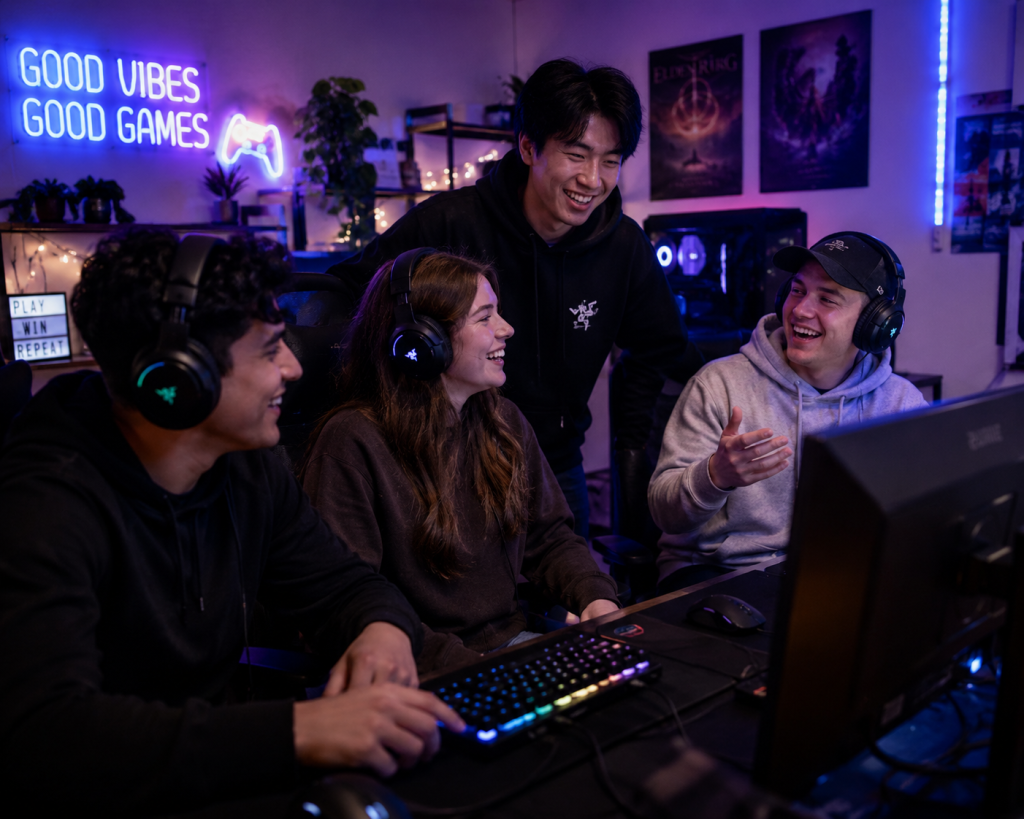
Gaming has quietly transformed from a solitary hobby into one of the most powerful social platforms on earth. And the data is hard to argue with: a growing majority of Gen Z and Millennials are not just playing games — they are building their social lives inside them. If you’ve ever wondered why your younger cousin seems closer to someone they met online than to their school friends, or why your colleague mentions their “gaming crew” the same way previous generations mentioned their pub regulars, this article is your answer.
Table of Contents
- The Numbers Don’t Lie: Gaming Is a Social Revolution
- Why Gaming Builds Stronger Bonds Than You’d Expect
- Gen Z vs. Millennials: Same Game, Different Approach
- The Discord Era: How Communities Became the New Neighbourhoods
- Gaming as a Cure for the Loneliness Epidemic
- When Online Friends Become Real-Life Friends
- Yes, There Are Valid Criticisms
- The Future of Gaming Friendships
- Conclusion
The Numbers Don’t Lie: Gaming Is a Social Revolution
The Entertainment Software Association (ESA), which publishes the most comprehensive annual study of U.S. gaming habits, released findings in 2025 that should stop anyone dismissive of gaming culture in their tracks. According to the ESA’s Essential Facts report, 70% of Gen Z and 61% of Millennials have met people through video games they would not otherwise have met. More remarkably, 63% of Gen Z players and 49% of Millennials say they met a genuine close friend — or even a romantic partner — through a game.
Let that sink in. Nearly two-thirds of an entire generation has formed meaningful relationships that originated in a virtual world. This isn’t a niche phenomenon. This is mainstream human behavior.
Zoom out further and the picture gets even bigger. The global online gaming population stood at approximately 3.43 billion people in 2025 — nearly half the planet. In the United States alone, roughly 205 million people play video games regularly, representing 64% of the total population. The average U.S. gamer is 36 years old and has been playing for 18 years. Gaming, in other words, is not a phase people grow out of. It is a lifelong social ecosystem.
Perhaps the most striking single statistic comes from a recent survey of Millennials and Gen Z: 40% of adults in these generations say they now socialize more through video games than in person. Not occasionally. More often. The virtual lounge has replaced the physical one for a huge slice of two generations.
Why Gaming Builds Stronger Bonds Than You’d Expect
Skeptics often dismiss gaming friendships as shallow — “you don’t really know someone you’ve only met online.” But psychologists and social researchers increasingly challenge that assumption. Gaming turns out to be a surprisingly rich environment for authentic connection, for several concrete reasons.
Shared adversity creates trust. When you and a teammate spend three hours trying to defeat the same raid boss, coordinating strategy, recovering from failures, and finally succeeding together, you experience something that social scientists call “challenge bonding.” It is the same mechanism that forges tight friendships in sports teams, military units, and emergency rooms. The game provides the challenge; the friendship forms in the response to it.
Gaming reveals character fast. How someone behaves under pressure — whether they blame teammates, stay calm, encourage others, or quit when things get hard — is visible within minutes of playing together. People naturally gravitate toward those whose in-game values align with their own. The result is a kind of social filtering that can actually accelerate the development of genuine compatibility.
Voice chat lowers the social stakes. Approximately 67% of multiplayer gamers use voice chat regularly, according to recent industry data. Voice-based conversation during gameplay is low-pressure in a way that face-to-face socializing often isn’t. There’s no eye contact to navigate, no awkward silences to fill — the game fills them. This makes it easier for introverted people, those with social anxiety, or anyone who finds traditional socializing exhausting to open up naturally.
Time invested equals depth. Millennials and Gen Z average over 10 hours of gaming per week. A significant portion of that time is spent playing with others. By simple arithmetic, consistent gaming companions spend more active, communicative time together in a month than most coworkers do in a year. Depth of relationship tends to follow depth of shared time.
Gen Z vs. Millennials: Same Game, Different Approach
While both generations are using gaming as a social lifeline, they’re doing so in distinct ways that reflect their broader differences in identity and lifestyle.
For Gen Z, gaming is not a hobby — it is a primary social space. A striking 58% of Gen Z gamers now describe gaming as their main social environment, ranking it above messaging apps and social media platforms. Gen Z approaches games as immersive identity platforms where they express creativity, build peer communities, and assert their values. Titles like Fortnite, Roblox, and Minecraft are less about the gameplay itself and more about the social world constructed around it. With gaming penetration among Gen Z expected to reach 74.8% by 2027, this generation is set to be the most engaged gaming cohort in history.
For Millennials, the relationship is more nuanced. Many grew up during the console boom of the 1990s and early 2000s, so gaming carries a nostalgic warmth. Today, they gravitate toward mobile gaming and casual titles that slot into the gaps of a busy adult life — a commute, a lunch break, the window between putting children to bed and falling asleep. Millennials use gaming less as an identity and more as a reliable, low-friction social ritual. Jumping into a mobile game with a friend for twenty minutes while dinner cooks is, for many, the most realistic form of social contact a packed adult schedule allows.
Both approaches are valid. And both are producing real, lasting human connections.
The Discord Era: How Communities Became the New Neighbourhoods
You cannot discuss gaming friendships in 2026 without discussing Discord. Launched in 2015 as a voice chat tool for gamers, Discord has evolved into something closer to a fully-featured social infrastructure — part town square, part living room, part community center. Servers built around specific games, genres, or interests host hundreds of millions of users who communicate via text, voice, and video around the clock.
What Discord and similar platforms have done is create what sociologists would call “third places” — social environments that are neither home nor work, where people gather voluntarily, regularly, and on equal terms. For previous generations, these were pubs, churches, barber shops, and community clubs. For a generation that grew up digital and often lives far from extended family, online gaming communities fill that role with remarkable effectiveness.
Guilds, clans, and online gaming groups now collectively include approximately 1.8 billion users worldwide, many of whom participate daily. These are not passive followings — they are active, interdependent communities with their own cultures, rituals, in-jokes, and mutual support systems. Members help each other with in-game challenges, yes, but also with job hunts, mental health struggles, grief, and life advice. The game is the front door. What’s inside is a community.
Gaming as a Cure for the Loneliness Epidemic
Loneliness has been declared a global public health crisis by organizations including the World Health Organization and the U.S. Surgeon General. Ironically, the very technology most often blamed for disconnecting people — screens, devices, online platforms — is, in the case of gaming, actively providing an antidote.
The ESA’s 2025 data shows that 55% of all players across age groups play with others weekly, and 72% have played with others at some point. Even among Boomers and the Silent Generation, 60% acknowledge that games help them maintain social ties. For younger people navigating the loneliness epidemic — particularly those who are geographically isolated, socially anxious, or belonging to minority communities that lack local representation — gaming communities can provide a sense of belonging that the physical world has failed to offer.
Research increasingly supports the idea that the quality of connection matters more than the medium through which it forms. A gaming friendship that involves regular communication, mutual support, and shared experience can deliver the social and psychological benefits of friendship just as effectively as one that started over coffee. The brain does not particularly care whether a relationship began across a café table or a raid party — it responds to the warmth, reliability, and reciprocity that define genuine human bonds.
When Online Friends Become Real-Life Friends
One of the most persistent myths about gaming friendships is that they stay confined to the screen. In reality, the trajectory of many online gaming connections closely mirrors that of any developing friendship: acquaintance, then regular contact, then meaningful exchange, then real-world meetup.
The data supports this. According to industry surveys, 45% of multiplayer gamers have made at least one genuine real-life friend through gaming. Friendships that start in a game commonly migrate to text messaging, then to phone calls, then to video chat, and eventually to in-person meetings. Gaming conventions like PAX, EVO, and regional community events exist largely to provide exactly this kind of physical culmination for communities that began online.
Gaming romances are equally documented. The ESA found that 63% of Gen Z players and 49% of Millennials have met a significant other through video games. In an era where dating apps are increasingly critiqued for their transactional feel and low conversion to genuine connection, the slower, more organic development of attraction within a shared gaming community has become a legitimately common path to partnership.
There is also a practical reason this works: gaming-based relationships are built on demonstrated compatibility before emotional stakes become high. By the time two people consider taking a gaming friendship into real life, they already know a great deal about each other’s personality, humor, and values. The awkwardness of early dating or friendship is compressed because the getting-to-know-you phase has already been lived out over hundreds of hours of shared play.
Yes, There Are Valid Criticisms
A fair account of gaming and social connection cannot ignore the genuine concerns. Gaming can become a substitute for, rather than a supplement to, real-world social development — particularly for adolescents who may be avoiding the discomfort of in-person interaction rather than learning to navigate it. Excessive gaming has been linked to sleep disruption, sedentary behavior, and in extreme cases, compulsive patterns that crowd out other areas of life.
Online gaming communities, despite their many virtues, are also not uniformly safe or welcoming. Toxic behavior, harassment — particularly toward women and minority players — and radicalization within certain gaming spaces are documented and ongoing problems that the industry continues to grapple with inadequately.
The key distinction, researchers suggest, is between gaming that enriches social life and gaming that replaces it. The former is associated with positive outcomes across wellbeing, connection, and even cognitive performance. The latter carries the same risks as any behavior pursued to the point of avoidance. Balance, as ever, is the operative word.
The Future of Gaming Friendships
If the trends of 2025 and 2026 continue — and there is every reason to think they will — gaming will only deepen its role as a social infrastructure. Several emerging developments point toward an even more connected future.
Cross-platform play is breaking down the walls between console, PC, and mobile players, dramatically expanding the potential pool of people any given gamer can connect with. Studies show that cross-platform functionality improves player retention by up to 31%, and the social dimension is a significant driver of that stickiness.
AI companions and adaptive NPCs are beginning to offer new dimensions of social experience within games — though 68% of Gen Z players who are interested in AI companions still prefer them as supplements to, not replacements for, human connection.
The metaverse and spatial computing promise environments where the line between gaming, socializing, working, and creating becomes increasingly blurred. Whether that vision fully materializes or not, the direction of travel is clear: digital spaces are becoming richer, more persistent, and more socially meaningful.
For Gen Z in particular, this is not a novelty. It is simply the world they are building their adult lives in. Future historians may look back on the 2020s as the decade when human beings quietly, collectively decided that the address of a friendship mattered far less than its substance.
Conclusion
The story of gaming friendships is ultimately not a story about technology. It is a story about people finding each other. Every generation has found new venues for connection — the agora, the salon, the pub, the social network. Gaming is simply this generation’s version: more interactive, more immersive, and more globally accessible than anything that came before it.
The statistics are clear: Gen Z and Millennials are meeting best friends, romantic partners, and lifelong companions through video games. They are building communities, supporting each other through hardship, and socializing in ways that feel authentic to their lives and schedules. That the medium involves a controller or a keyboard rather than a handshake does not make the connection any less real.
The next time someone tells you that online gaming is antisocial, you might ask them to explain the 70% of Gen Z players who met someone important to them inside a game. Or the 40% of a generation that socialize more in virtual worlds than in physical ones. Or the billions of people, worldwide, who log in each day not just to play — but to belong.
The controller, it turns out, is also a handshake.
Found this read interesting? Share it with someone who still thinks gaming is antisocial. And explore more stories on psychology, pop culture, and the changing shape of human connection on RandomRead.

Team Random Read
Random Read is an independent general-interest blog covering history, current affairs, nature, psychology, science and pop culture. About us
More like this

The Real History Behind Halloween Traditions: From Samhain Bonfires to Carved Pumpkins
Halloween grew from the Gaelic festival of Samhain, marking the end of harvest, blended with the Christian All Saints' and All Souls'…
Move Over, Keto: Why “Fibermaxxing” Is Taking Over Your Feed
Every few years, a new diet trend explodes onto social media and dominates the wellness conversation. We've seen keto, intermittent fasting, carnivore…

The Psychology Behind Why We Love Watching Disasters Unfold
You are driving down the highway, and traffic suddenly grinds to a halt. For twenty minutes, you inch forward, frustrated, assuming there…