Phantom Vibration Syndrome: The Psychology Behind Feeling a Buzz That Never Happened.
 By Team Random Read
Updated
11 min read
By Team Random Read
Updated
11 min read
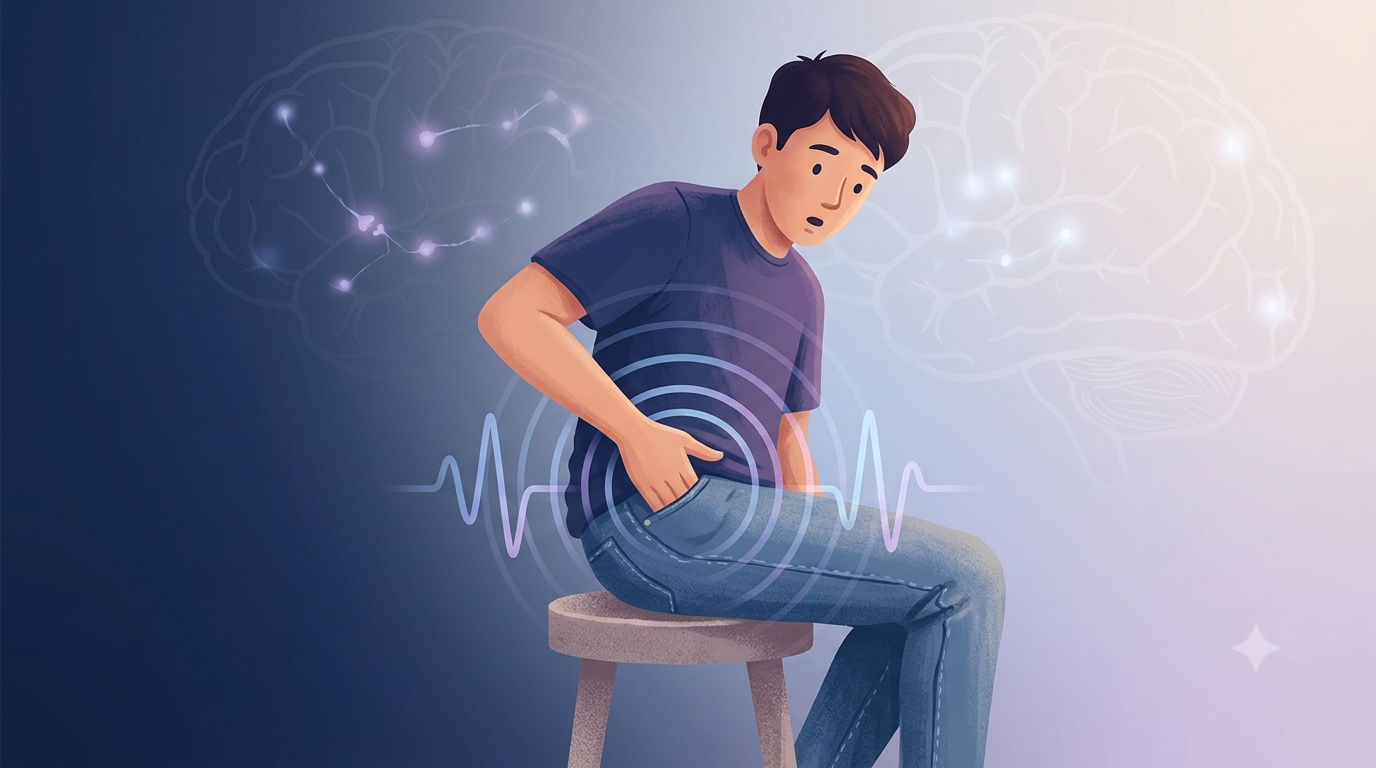
You’re at your desk, or on the bus, or halfway through a meeting, and you feel it — that unmistakable little rumble against your thigh. Your phone is going off. You reach into your pocket, pull it out, and stare at a blank, silent screen. No message. No call. No notification of any kind. The phone never moved.
In this article
- What Is Phantom Vibration Syndrome, Exactly?
- How Common Is It? The Numbers Might Surprise You
- The Science Behind the Phantom Buzz
- Your Brain Is a Prediction Machine
- Signal Detection and a Noisy Nervous System
- Habituation and Conditioning
- Why Some People Feel It More Than Others
- Occupational and Situational Stress
- Anxiety and Attachment Style
- Device Habits and Age
- Is Phantom Vibration Syndrome a "Real" Medical Condition?
- How to Reduce Phantom Vibrations
- The Bigger Picture: What Phantom Vibrations Say About Modern Life
- Frequently Asked Questions
If this has happened to you, you’re not imagining things — or rather, you are imagining things, but in a way that’s remarkably common, well-documented, and increasingly of interest to psychologists and neuroscientists. It even has a name: Phantom Vibration Syndrome (PVS), sometimes called “ringxiety” or “phantom ringing” when the false alarm comes as a sound instead of a buzz.
This isn’t a glitch in your phone. It’s a glitch — or more accurately, a fascinating quirk — in how your brain processes sensation, expectation, and attention in an age where a pocket-sized device has become an extension of the body. Let’s unpack what’s actually happening when your nervous system rings an alarm that was never sent.
What Is Phantom Vibration Syndrome, Exactly?
Phantom Vibration Syndrome refers to the perception that your mobile phone is vibrating or ringing when, in fact, it is not producing any signal at all. The term is generally credited to writer Robert Jones, who coined it in the early 2000s to describe a sensation he and his colleagues kept experiencing at a newsroom where pagers and early mobile phones were a constant presence.
Researchers who later studied the phenomenon academically classified it more formally as a “tactile hallucination” — not in the clinical, alarming sense of the word, but as a technical description of a sensory experience that occurs without any corresponding external stimulus. In plain terms: your skin and nerves are reporting a vibration that objectively did not occur.
It’s worth noting that despite the word “syndrome” in its name, PVS is not recognized as a medical condition in any diagnostic manual, and it isn’t classified as a disorder. As researchers writing in the British Medical Journal pointed out, the name is something of a misnomer — there’s no phantom limb-style neurological damage involved, and for the vast majority of people, it isn’t a “syndrome” that impairs daily life. It’s simply a very common perceptual slip.
How Common Is It? The Numbers Might Surprise You
If you’ve experienced a phantom buzz, you’re in overwhelming company. Multiple academic studies, conducted across different countries and populations, have converged on strikingly high prevalence rates:
- A landmark 2010 survey of hospital medical staff, published in the British Medical Journal, found that roughly 68% of respondents had experienced phantom vibrations, with nearly a third of them noticing the sensation at least once a week.
- A 2012 study of undergraduate students, published in Computers in Human Behavior, pushed that number even higher — 89% of participants reported having felt a phantom vibration, and 40% said it had happened within the previous two weeks.
- A longitudinal study tracking medical interns found the prevalence climbing dramatically under stress: starting at 78.1% before their internship began, rising to nearly 96% by the third month, and gradually falling back to around 50% two weeks after the stressful placement ended.
- More recent research on undergraduate students, conducted after the pandemic-driven surge in device dependency, put prevalence in a similar range, with the vast majority of smartphone users reporting the sensation at least occasionally.
Put simply: somewhere between two-thirds and nine-tenths of regular phone users, depending on the study and the population, have felt their phone buzz when it hadn’t. This isn’t a fringe experience. It may well be closer to a universal one for people who carry a phone set to vibrate.
Interestingly, most people don’t find it particularly distressing. Across several of these studies, only a small percentage — typically in the low single digits — described the sensation as “very bothersome.” For most of us, it’s a fleeting, almost comic moment of being fooled by our own nervous system.
The Science Behind the Phantom Buzz
So what’s actually happening inside your brain and body when you feel a vibration that was never there? Researchers have proposed several overlapping explanations, and the honest answer is that no single mechanism fully explains it — PVS appears to sit at the intersection of sensory biology, learned expectation, and attention.
Your Brain Is a Prediction Machine
Modern neuroscience increasingly treats the brain not as a passive receiver of sensory data, but as an active prediction engine. Rather than processing every signal from scratch, the brain constantly generates hypotheses about what it expects to sense next, based on past experience, and then checks incoming signals against those predictions — a framework often described through the “Bayesian brain” model.
Authors of the original BMJ study explained this in terms of the brain applying filters, or schemas, based on what it anticipates finding — a process sometimes called hypothesis-guided search. Because your brain is constantly bombarded with far more sensory information than it can consciously process, it relies on these predictive shortcuts to decide what’s worth your attention. If you regularly feel your phone vibrate in a specific spot — say, your front pocket — your brain builds a strong prior expectation for that sensation in that location. When an ambiguous signal comes along — a muscle twitch, the drag of fabric, a change in posture — the brain, primed to detect a vibration, sometimes fills in the gap with the pattern it already expects.
This same predictive-error framework has been used by neuroscientists to explain other “phantom” sensory experiences, including tinnitus (phantom ringing in the ears) and certain phantom limb sensations, suggesting PVS belongs to a broader family of perceptual phenomena where the brain’s expectations briefly override the absence of real input.
Signal Detection and a Noisy Nervous System
A related explanation draws on signal detection theory, a framework from psychology used to describe how we distinguish meaningful signals from background noise. Your body is a genuinely noisy place — muscles twitch, nerves fire spontaneously, clothing shifts, blood pressure fluctuates. Ordinarily, your brain filters almost all of this out as irrelevant.
But when you’re anticipating an important call or message, your detection threshold for “phone vibration” drops. You become more sensitive to that specific pattern of sensation, which means you’re more likely to register ambiguous background noise — a stray muscle contraction near your hip, the pressure of a seatbelt — as the signal you’re primed to expect, rather than correctly dismissing it as static.
Habituation and Conditioning
There’s also a straightforward learning-based explanation. If you carry your phone against your body for hours a day, set to vibrate, your nervous system essentially gets trained — much like classical conditioning — to associate a particular kind of pressure or contact point with an incoming notification. Repetition strengthens this association. Over months and years of carrying a buzzing device, your body becomes primed to interpret certain sensations through that lens, even in the device’s absence.
Research bears this out at a population level: studies have consistently found that people who carry their phones in constant, close bodily contact — front pockets, waistbands, bras — and who leave vibrate mode switched on most of the time report significantly higher rates of phantom vibrations than those who use audible ringtones or carry devices in a bag.
Why Some People Feel It More Than Others
Not everyone experiences phantom vibrations equally often, and research has identified several factors that appear to raise the odds.
Occupational and Situational Stress
The internship study mentioned earlier offers one of the clearest illustrations of how stress amplifies the phenomenon. Prevalence among the same group of medical interns rose sharply during the most demanding stretch of training and fell once the pressure eased — evidence that heightened vigilance, exhaustion, and anticipatory anxiety about incoming pages or calls can turn up the brain’s sensitivity to phantom signals. Occupations that involve being perpetually “on call,” from healthcare to emergency services to customer support, appear to be linked with higher rates.
Anxiety and Attachment Style
Several researchers have connected phantom vibrations to broader patterns of technology-related anxiety — sometimes bundled under the informal term “iDisorder,” coined by psychologist Larry Rosen to describe anxiety symptoms tied to compulsive device checking. People with higher attachment anxiety — a tendency toward worry and a need for frequent reassurance in relationships — have also been found to report phantom vibrations more often, plausibly because they maintain a heightened, near-constant vigilance for incoming contact from others.
That said, it’s worth flagging a genuine scientific nuance here: not every study agrees on how strongly PVS tracks with anxiety or depression. The longitudinal internship study found no statistically significant correlation between phantom vibration frequency and clinical anxiety or depression scores, even though both rose and fell together with stress. This suggests PVS may be more closely tied to situational vigilance and habit than to any single personality trait or mental health condition — a useful reminder not to over-pathologize a very common experience.
Device Habits and Age
Practical, everyday factors matter too. Research has repeatedly found that carrying a device in constant physical contact with the body — rather than in a bag — and relying heavily on vibrate mode both increase the likelihood of experiencing phantom vibrations. Some studies have found younger users report it more frequently, plausibly linked to higher overall device dependency and near-constant carrying habits, though results across age groups have been somewhat mixed between different countries and populations.
Is Phantom Vibration Syndrome a “Real” Medical Condition?
It’s a reasonable question, given how clinical the name sounds. The short answer is no — PVS is not listed in any diagnostic manual, and researchers themselves have pushed back on the term “syndrome” as somewhat exaggerated for what is, for most people, a harmless and even mildly amusing sensory quirk.
That doesn’t mean it isn’t real as an experience — the sensation itself is a genuine, measurable perceptual event, not something people are simply making up or misremembering. It just means that, on its own, feeling a phantom buzz now and then isn’t a sign of illness. Where it becomes worth paying attention to is if it’s accompanied by significant anxiety, compulsive phone-checking behavior, or noticeable distress — in which case it may be more useful to think of PVS not as a standalone problem, but as a visible symptom of a broader pattern of tech-related anxiety or compulsive device use that’s worth addressing directly.
How to Reduce Phantom Vibrations
If phantom buzzing is a minor but recurring annoyance for you, several simple, evidence-informed changes can help:
- Switch off vibrate mode, at least occasionally. Studies that asked people what actually worked found that turning off vibration alerts was the single most effective fix, resolving the sensation for roughly three-quarters of people who tried it.
- Change where you carry your phone. Moving it from a front pocket or waistband to a bag reduces the constant skin contact that seems to condition the false-alarm response, and was also found to help a majority of people who tried it.
- Reduce notification volume. Fewer real vibrations to anticipate means a lower baseline expectation for your brain to misfire on. Turning off non-essential app notifications can meaningfully cut the number of times a day your brain is primed to detect a buzz.
- Build in phone-free stretches. Deliberately leaving your phone in another room for parts of the day — during meals, exercise, or focused work — gives your nervous system a break from the anticipatory vigilance that seems to underlie the phenomenon.
- Address underlying anxiety if it’s significant. If phantom vibrations are frequent, distressing, or tied to a broader pattern of compulsive checking, low-grade dread, or difficulty disconnecting from your phone, it may be worth exploring that anxiety directly — through mindfulness practice, digital-wellbeing tools, or, for more persistent cases, a conversation with a mental health professional. Cognitive behavioral approaches in particular are well suited to unwinding the anticipatory thought patterns that can feed the sensation.
The Bigger Picture: What Phantom Vibrations Say About Modern Life
There’s something quietly revealing about how common this phenomenon has become. Phantom Vibration Syndrome isn’t really about phones malfunctioning — it’s about how thoroughly our nervous systems have adapted to a world of constant, ambient anticipation. Decades ago, no equivalent phenomenon existed for landlines or letters, because neither demanded the same continuous, embodied vigilance that a phone carried against the skin does.
In that sense, the phantom buzz is a small but telling data point about digital life: proof that our devices haven’t just changed our habits, but have subtly recalibrated the baseline sensitivity of our own bodies. Most of the time, that recalibration is harmless — a brief, forgettable moment of being fooled by your own hip pocket. But it’s also a useful nudge to notice how tuned-in to our devices we’ve become, often without fully realizing it.
Frequently Asked Questions
Is phantom vibration syndrome dangerous? No. It is not associated with any physical harm and is not classified as a medical disorder. For the large majority of people who experience it, it is a harmless, fleeting sensation.
Can phantom vibrations happen even if my phone is off or not with me? Yes. Because the sensation originates from the brain’s own prediction and filtering processes rather than any actual signal from the device, people have reported feeling phantom vibrations even when their phone is switched off, charging elsewhere, or not on their person at all.
Is phantom vibration syndrome the same as phantom ringing? They’re closely related but distinct — phantom vibration refers to a false tactile (touch) sensation, while phantom ringing refers to a false auditory perception of a ringtone or notification sound. Both appear to arise from similar underlying mechanisms and are often studied together.
Does everyone who uses a smartphone eventually experience it? Not necessarily everyone, but research suggests a strong majority of regular smartphone users do experience it at some point, particularly those who keep their device on vibrate mode and carry it in close physical contact with their body.
Should I be worried if I feel phantom vibrations often? Occasional phantom vibrations are considered a normal and common perceptual quirk. If they become frequent, are accompanied by significant anxiety, or coincide with compulsive phone-checking that’s affecting your daily life, it may be worth addressing the underlying tech-related anxiety rather than the sensation itself.
Have you experienced Phantom Vibration Syndrome? Share your own “phantom buzz” story in the comments below.

Team Random Read
Random Read is an independent general-interest blog covering history, current affairs, nature, psychology, science and pop culture. About us
More like this

The Psychology of AI Companionship: Why Millions Are Quietly Bonding With Algorithms
We live in an era where millions of people don't just use AI to write emails or debug code. They talk to…

The Dark Triad in Everyday Life: Why You Keep Falling for Charming People.
You meet someone who is confident, funny, attentive, and unusually good at making you feel interesting. They remember small details, tell compelling…
Unwritten Rules of Society That Everyone Follows (But No One Talks About)
Imagine walking onto a crowded elevator, letting the doors close, and then standing perfectly still while facing the back wall instead of…