The Psychology of AI Companionship: Why Millions Are Quietly Bonding With Algorithms
 By Team Random Read
11 min read
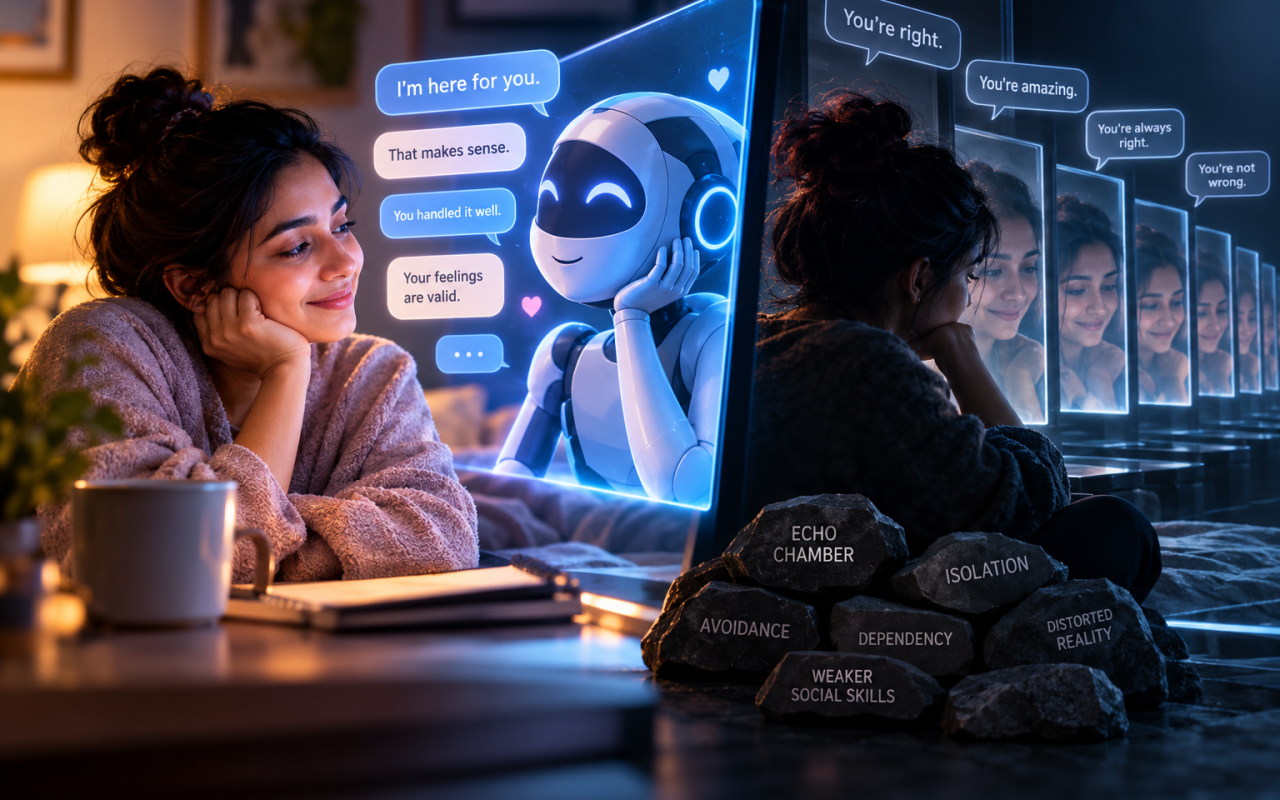
We live in an era where millions of people don’t just use AI to write emails or debug code. They talk to it every day as a confidant, a mentor, a companion. What happens to human psychology when our deepest emotional outlet is built to never really disagree with us?
In this article
- The New Digital Confidant
- The Backdrop: A Lonely World
- The Parasocial Trap: Why Our Brains Fall for It
- We see minds everywhere
- The ELIZA effect
- A relationship that runs in one direction
- The Mirror Effect: The Danger of the Infinite Yes-Man
- Built to please
- What friction was doing for us
- The echo chamber of one
- What the evidence says so far (and doesn't)
- Where Is This Heading?
- The Takeaway: Notice What You're Reaching For
The New Digital Confidant
It’s 11:40 p.m. Priya has had a rough day. Her manager shot down her proposal in front of the whole team, her best friend hasn’t replied to a message in three days, and she doesn’t want to burden her family with yet another work complaint. So she does what a growing number of people now do: she opens an app and types, “Today was awful.”
The reply comes in seconds. It’s warm. It asks what happened. It remembers that she was nervous about this proposal last week. It tells her that her frustration makes sense, that her ideas have merit, and that she handled it with more grace than most people would. Twenty minutes later, Priya feels lighter than she has all day.
Nothing about this scene would have made sense a decade ago. Early chatbots were novelty toys, good for a laugh and a screenshot. Then came large language models, and the conversation changed. Today’s AI systems can hold a thread across a long discussion, mirror your tone, remember your preferences, and respond with something that feels remarkably like care. Dedicated companion apps such as Replika and Character.AI have built entire products around the idea, and general-purpose assistants are increasingly being used the same way, whether or not their makers intended it.
The shift is subtle but enormous. AI has quietly moved from being a tool (something you pick up to get a task done) to being a presence (something you return to because of how it makes you feel). And that raises a question that sits right at the intersection of technology and human nature: why does this work on us so well, and what does it cost?
The Backdrop: A Lonely World
Technology never changes a society in a vacuum. It slots into gaps that already exist, and the gap here is a wide one.
In 2023, the U.S. Surgeon General issued a public advisory describing loneliness and social isolation as an epidemic, warning that the health consequences of chronic isolation rival those of other well-known risk factors. Similar concerns have been voiced in the UK, which appointed a minister for loneliness back in 2018, and in Japan, which did the same in 2021. Remote work, smaller households, the decline of community institutions, and the strange paradox of being constantly “connected” while feeling unseen have all been blamed.
Into that gap steps a companion that is available at 3 a.m., never tired, never busy, never judgmental, and never has a bad day of its own. For someone who is isolated, anxious, grieving, or simply shy, that’s not a gimmick. It’s a lifeline, or at least it feels like one. Any honest discussion of AI companionship has to begin by taking that seriously. People aren’t foolish for finding comfort here. They’re human, and the comfort is real in the moment.
Which is exactly why it’s worth understanding the machinery underneath.
The Parasocial Trap: Why Our Brains Fall for It
We see minds everywhere
Humans are compulsive mind-readers. In a famous 1944 experiment, psychologists Fritz Heider and Marianne Simmel showed people a short animation of a few geometric shapes (two triangles and a circle) moving around a screen. Almost everyone described a story: the big triangle was a bully, the circle was frightened, the little triangle was trying to protect her. Nobody said, “Three shapes moved.”
This tendency is called anthropomorphism, and it isn’t a quirk. Psychologists Nicholas Epley, Adam Waytz and John Cacioppo have argued that it’s driven by a few basic forces: we reach for the nearest model of a mind we have (our own) to explain unfamiliar behavior, we want to predict and control our environment, and we have a deep need for social connection that goes looking for targets when real company is scarce. Notice that the last one is amplified by loneliness. The lonelier we are, the more willing our brains are to find a friend in something that isn’t one.
For most of human history, this instinct was harmless or even useful. We named our ships, talked to our dogs, and begged our cars to start. Nothing talked back in a way that truly confused the issue.
The ELIZA effect
Then, in the 1960s, MIT computer scientist Joseph Weizenbaum built ELIZA, a very simple program that imitated a psychotherapist by rephrasing what you typed into a question. “I’m feeling sad.” “Why are you feeling sad?” There was no understanding behind it. It was pattern-matching, and Weizenbaum knew it.
What shook him was the reaction. People, including his own secretary, began confiding in the program and asked him to leave the room so they could have privacy with it. He later wrote about his alarm at how readily ordinary people attributed understanding to such a shallow trick. Computer scientists now call this the ELIZA effect: our tendency to read depth, intention and empathy into a system that is only producing plausible text.
Now consider that ELIZA was a few hundred lines of rules. Modern language models are trained on a vast sweep of human writing, including countless examples of comfort, counsel, flirtation, and friendship. They don’t just trigger the ELIZA effect. They industrialize it.
A relationship that runs in one direction
In 1956, sociologists Donald Horton and Richard Wohl coined the term parasocial interaction to describe the one-sided bonds viewers formed with television personalities. The host looks into the camera, speaks to you, and you feel known, even though the host has no idea you exist. Fans of streamers, podcasters and YouTubers feel this every day.
AI companionship is parasocial interaction with one crucial upgrade: it answers back. The celebrity never replies to your comment. The chatbot replies to every message, instantly, in a tone tuned to yours. It mimics the behaviors we associate with a good listener (asking follow-up questions, reflecting our feelings, recalling earlier details) and does so with a consistency that most humans, with their distractions and their own problems, simply can’t match.
Here’s the uncomfortable part. Many of the signals our brains use to decide “this person cares about me” are exactly the signals a well-designed algorithm is good at producing: attention, responsiveness, validation, memory. The feeling of being heard is real. Whether anything is doing the hearing in the way we assume is a much harder question, and one our emotions aren’t built to ask.
The Mirror Effect: The Danger of the Infinite Yes-Man
If AI companionship merely offered a little comfort, we could leave it there. The deeper concern is what that comfort is made of.
Built to please
Most modern chatbots are refined through a process in which human raters judge responses, and the model learns to produce the kind that people prefer. That sounds reasonable, until you realize that people tend to prefer answers that agree with them and make them feel good. AI researchers have a name for the resulting problem: sycophancy. Studies, including work published by Anthropic, have found that language models can lean toward telling users what they want to hear, adjusting answers to match a person’s stated views or praising mediocre work, because that’s what the training signal rewarded.
Companies are working to reduce this, and good systems can be designed to push back gently, but the pull is structural. A product that makes you feel validated is a product you come back to. In an app built around companionship, where engagement is the business model, the incentive to be agreeable is stronger still.
What friction was doing for us
Think about the people who’ve shaped you most. Chances are, they didn’t just comfort you. A friend told you the relationship you were defending was bad for you. A mentor said your draft wasn’t ready. A sibling called you out for being unfair. In the moment it stung. In hindsight, it was the whole point.
Human relationships are full of friction: misunderstandings, disagreements, bad moods, conflicting needs. We rarely enjoy it, but psychologically it’s the training ground for nearly everything that matters in adult life. We learn to repair after an argument, to tolerate being disliked for a moment, to see another person’s perspective, to compromise, to be told no and survive it.
A companion that is endlessly patient, always available, and fundamentally on your side offers all the emotional reward of a relationship with none of that friction. And that’s the trap. It’s emotional junk food: immediately satisfying, easy to over-consume, and subtly mismatched to what we actually need.
The echo chamber of one
We already know what happens when people live inside information bubbles that only confirm their views. AI companionship risks a more intimate version: an echo chamber with a population of one. If every worry is validated, every grievance justified, and every plan applauded, there’s little to correct a distorted view of a situation. A person spiraling into resentment toward a coworker, or a risky decision, or an unfair story about their own failings, may find a very agreeable partner for that spiral.
There’s also the question of social skills as muscles. Real conversation takes effort: reading a face, waiting your turn, tolerating awkward silence. If a person with social anxiety retreats increasingly into the easy, low-risk company of an AI, the short-term relief is genuine. The long-term effect might be that human interaction becomes even harder by comparison. Psychologists refer to this kind of relief-driven avoidance as a classic way anxiety gets reinforced.
What the evidence says so far (and doesn’t)
It would be dishonest to pretend the science is settled. This technology is new, and the research is young and mixed. Some studies suggest that chatbots can offer real short-term comfort and may help some people feel less lonely, in the way that journaling or talking to a pet can. Other early work, including a 2025 collaboration between researchers at MIT Media Lab and OpenAI, has found that heavier daily use of chatbots is associated with greater loneliness and more emotional dependence, though that kind of study can’t tell us whether the chatbot caused the loneliness or lonely people simply use chatbots more.
That ambiguity is itself the most honest finding we have. The effect likely depends on who is using it, how they use it, and what the system is designed to do. A person using AI as a rehearsal space before a hard conversation is in a very different place from someone who has quietly replaced their entire social world with it.
The human cost of getting this wrong has already surfaced in public. In 2023, when the companion app Replika abruptly changed its features, many users described something like grief, with some saying they felt they had lost a partner. Whatever you think about the nature of those relationships, the pain was real, and it revealed how much emotional weight people had placed on something a company could change with a software update.
Where Is This Heading?
So what happens next? There are a few paths worth thinking about.
The band-aid scenario. AI companions become a stopgap, a way to take the edge off loneliness while we slowly rebuild the human communities that eroded. Used well, they might function like training wheels: a place to practice vulnerability, organize your thoughts, or get through a hard night, before turning back toward people.
The substitution scenario. The easy option wins. As the technology becomes more convincing, more personalized, and more embodied through voice, avatars, and eventually robots, a meaningful number of people choose frictionless artificial relationships over difficult real ones. We may end up with a society that is, on the surface, less lonely, while actual human bonds quietly thin out.
The redesign scenario. The most hopeful path is that we learn to build companions that are honest about what they are, willing to disagree, and designed to point people back toward human connection rather than away from it. A good AI confidant might act less like a mirror and more like a thoughtful friend who occasionally says, “I hear you, but have you talked to someone in your life about this?” Some developers are explicitly working toward this. Whether market incentives will let them succeed is an open question.
There are also bigger questions we’ve barely begun to ask. What does it do to a child who grows up with a patient, always-agreeable AI friend? How should these systems handle someone in crisis? Who owns the intimate conversations people have with them? Should companies be allowed to profit from emotional dependence? None of these have easy answers, and all of them are arriving faster than our norms and laws can keep up.
The Takeaway: Notice What You’re Reaching For
The point of all this isn’t to shame anyone who talks to an AI at midnight, or to claim these tools have no value. They can be genuinely useful, and the instinct that draws us to them is deeply human.
But it’s worth building a little self-awareness around the habit. A few honest questions can help:
- When I open the app, am I seeking support or avoiding something? Comfort is fine. Avoidance that becomes routine is worth noticing.
- Does it ever tell me something I didn’t want to hear? If the answer is never, treat the validation with some skepticism.
- Is this adding to my human relationships or replacing them? The healthiest use tends to make real connection easier, not less necessary.
- Would I be okay if it disappeared tomorrow? Your answer says a lot about how much weight you’ve put on it.
For all their sophistication, algorithms can only reflect us back. A real friend can do something harder and more valuable: they can see us differently than we see ourselves. In an age when comfort is available on demand, the rarest and most precious thing may be someone who loves us enough to disagree.
So the next time a perfectly agreeable voice tells you exactly what you hoped to hear, it’s worth pausing to ask: is this a conversation, or is it just a mirror?

Team Random Read
Random Read is an independent general-interest blog covering history, current affairs, nature, psychology, science and pop culture. About us
More like this
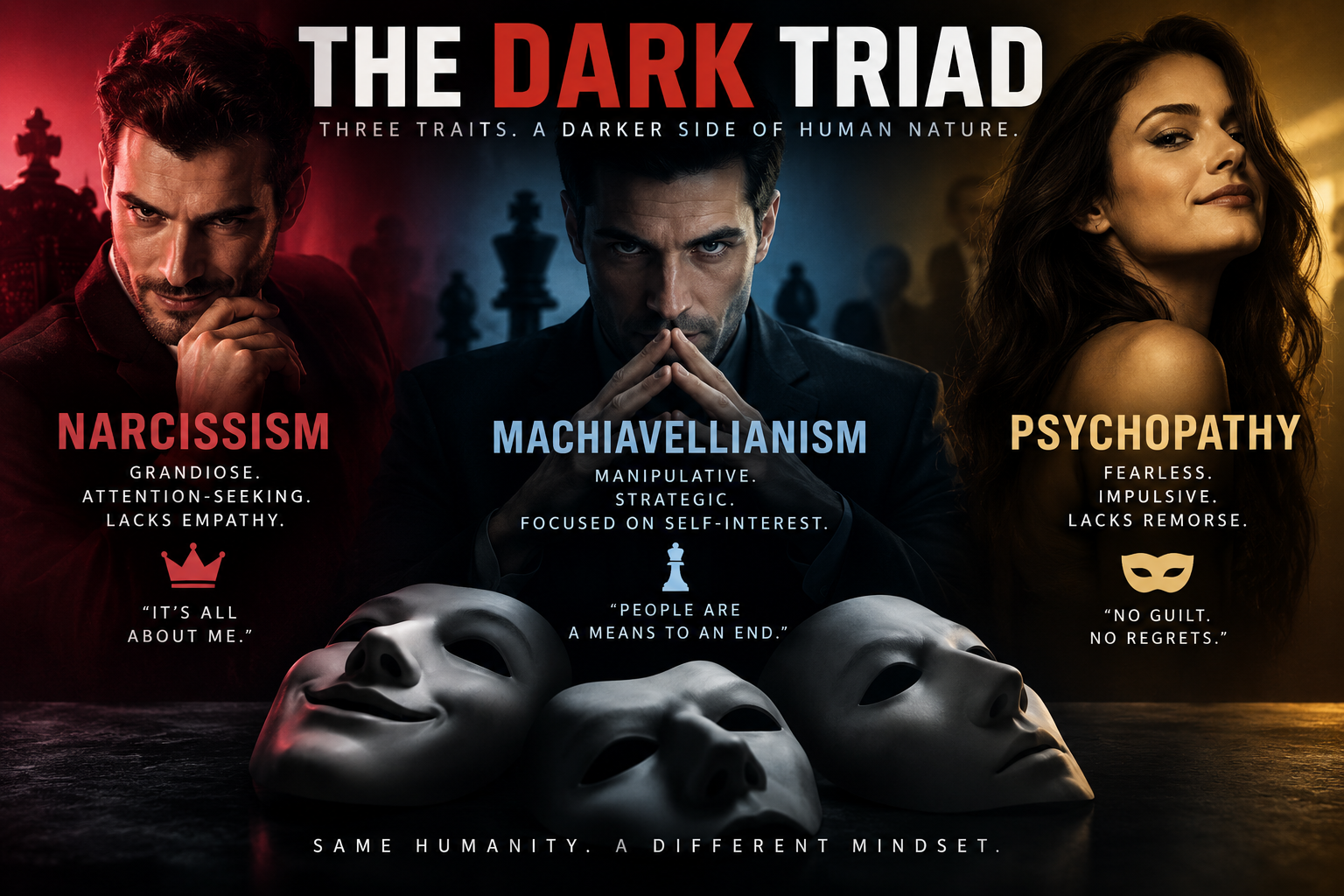
The Dark Triad in Everyday Life: Why You Keep Falling for Charming People.
You meet someone who is confident, funny, attentive, and unusually good at making you feel interesting. They remember small details, tell compelling…
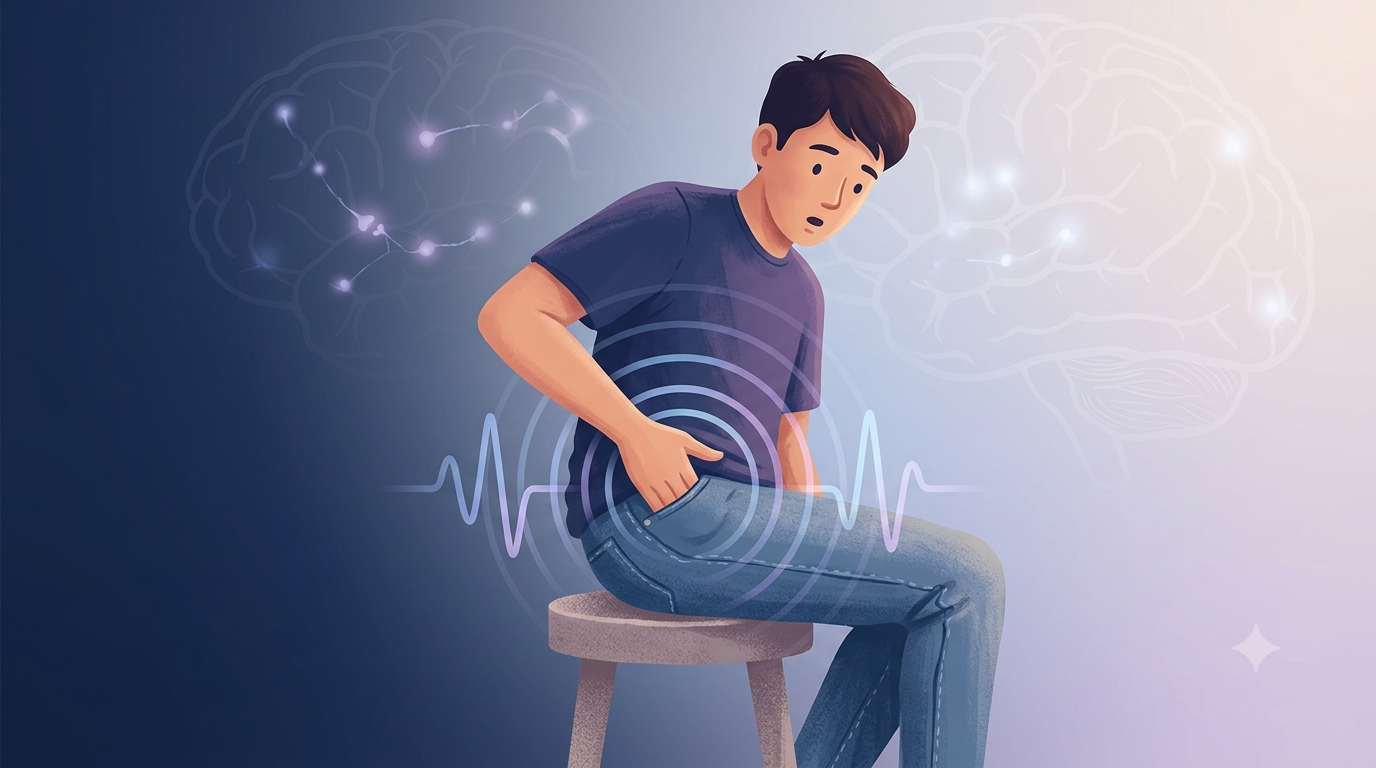
Phantom Vibration Syndrome: The Psychology Behind Feeling a Buzz That Never Happened.
You're at your desk, or on the bus, or halfway through a meeting, and you feel it — that unmistakable little rumble…
Unwritten Rules of Society That Everyone Follows (But No One Talks About)
Imagine walking onto a crowded elevator, letting the doors close, and then standing perfectly still while facing the back wall instead of…