10 Animals That Can Kill You in Seconds (And You’ve Probably Never Heard of Them)
 By Team Random Read
Updated
13 min read
By Team Random Read
Updated
13 min read
Everyone fears the great white shark, the grizzly bear, and the king cobra. These famous predators get all the Hollywood movie deals, the massive documentaries, and the endless internet fame. But the reality is that the most dangerous creatures on Earth rarely weigh more than a few pounds. Some of them are the size of your thumbnail.
Nature is loaded with biological weapons. The scariest part isn’t just that these animals are deadly; it’s that you have absolutely no idea they exist. You could step on one, brush past one on a hiking trail, or pick one up on a sunny beach without realizing you just made the biggest, and possibly last, mistake of your life.
When we talk about animals that kill in seconds or minutes, we are usually talking about complex venoms. These are chemical cocktails designed by evolution to paralyze prey instantly or deter massive predators. When injected into a human, our nervous systems and vital organs simply cannot handle the overload.
This article dives into the weird, wild, and deeply terrifying world of obscure animals that pack enough venom to shut down a human body before you even have a chance to call for help.
TL;DR (Too Long; Didn’t Read)
Forget about bears and lions. The real threat comes from tiny, obscure creatures with highly evolved biological weapons. From a beautiful sea snail that shoots a venomous harpoon, to an invisible jellyfish that causes impending doom, to a fluffy caterpillar that triggers massive internal bleeding—these animals are silent, highly toxic, and virtually unknown to the average person. The golden rule of nature: if you don’t know what it is, never, ever touch it.
The Geography Cone Snail
What Is It?
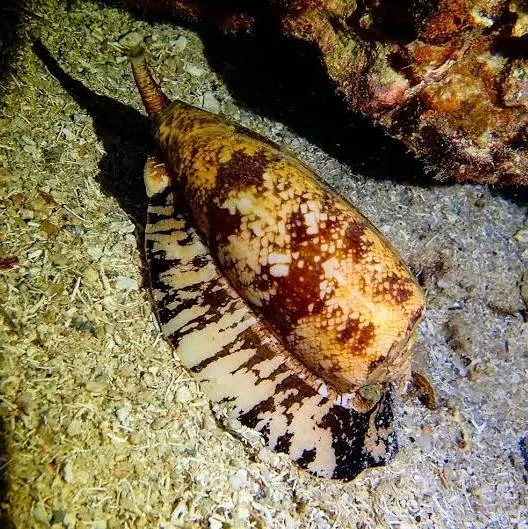
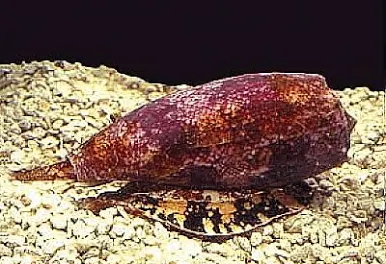
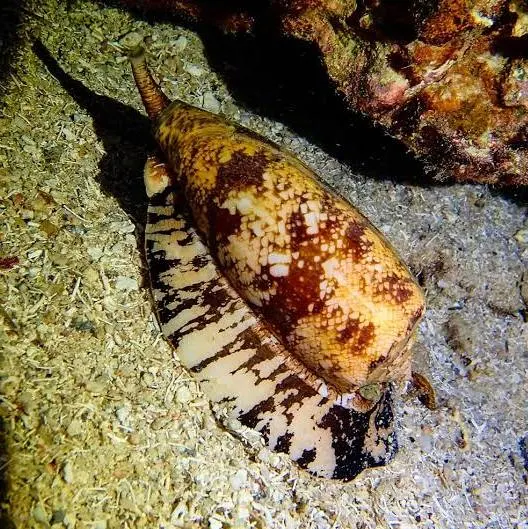
It looks like a beautifully patterned seashell. It has an intricate, brown-and-white marbled shell that washes up on tropical beaches. It is exactly the kind of shell a tourist would want to pick up, dust off, and slip into their pocket as a holiday souvenir. If you do that, you might not make it off the beach alive.
The Deadly Mechanism
The Geography Cone Snail does not bite, and it doesn’t sting like a bee. Instead, it shoots a microscopic, venom-coated harpoon out of a small fleshy tube called a proboscis. This harpoon fires at the speed of a bullet and is sharp enough to pierce right through a thick neoprene wetsuit.
The venom is a complex mixture of hundreds of different toxins called conotoxins. It acts as an incredibly powerful paralytic. In fact, locals in tropical regions sometimes call it the “cigarette snail.” The dark joke is that if you get stung by one, you only have enough time to smoke a single cigarette before your lungs completely stop working. There is currently no anti-venom available for a Geography Cone Snail sting. If you are stung, the only way to survive is to be rushed to a hospital and put on artificial life support until your body naturally filters the toxins out over several days.
Where Does It Live?
You will find these silent killers in the warm, shallow waters of the Indo-Pacific reefs. They hide in the sand, waiting to ambush passing fish.
The Irukandji Jellyfish
What Is It?
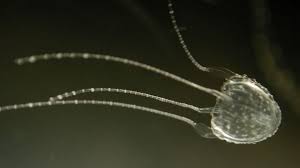
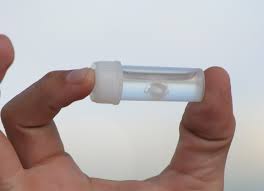
When people think of deadly jellyfish, they usually picture the massive Australian Box Jellyfish with tentacles trailing for meters. But the Irukandji is far more terrifying because of its size. The bell of this jellyfish is only about five millimetres across—roughly the size of a match head. It is completely transparent, making it essentially invisible in the ocean water.
The Deadly Mechanism
Unlike most jellyfish that only have stingers on their tentacles, the Irukandji has stingers (nematocysts) on its bell as well. The initial sting is usually barely noticeable. It feels like a tiny mosquito bite underwater. But about 20 to 30 minutes later, “Irukandji Syndrome” sets in.
The venom unleashes a massive flood of stress hormones into the human body. Your blood pressure skyrockets to life-threatening levels, potentially causing a brain haemorrhage or heart failure. Victims experience agonizing muscle cramps, severe lower back pain, a burning sensation in the skin, and intense vomiting. The most bizarre psychological symptom of Irukandji Syndrome is a feeling of “impending doom.” Victims become completely convinced that they are going to die, often begging doctors to just let it happen to end the pain.
Where Does It Live?
Historically found off the northern coasts of Australia, rising ocean temperatures have caused these invisible killers to spread to parts of Florida, Hawaii, and the Caribbean.
The Blue-Ringed Octopus
What Is It?
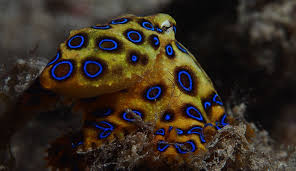
This is one of the most visually stunning creatures in the ocean. The Blue-Ringed Octopus is tiny, usually no bigger than a golf ball. When it is resting, it is a dull, sandy colour. But when it feels threatened, brilliant, glowing blue rings pulse all over its body. This is nature’s ultimate warning sign, but many tourists think it’s an invitation to pick it up for a photo.
The Deadly Mechanism
The bite from a Blue-Ringed Octopus is usually completely painless. You might not even know you were bitten until you try to breathe. The octopus produces a neurotoxin called tetrodotoxin, which is roughly 1,000 times more toxic to humans than cyanide.
Tetrodotoxin blocks nerve signals from traveling throughout your body. Within minutes, you will experience total motor paralysis. You will fall to the ground, completely unable to move or speak, but you will remain entirely conscious and awake. As the paralysis reaches your chest, your diaphragm stops moving, and you suffocate while fully aware of what is happening. A single golf-ball-sized octopus carries enough venom to kill 26 adult humans in a matter of minutes.
Where Does It Live?
They reside in tide pools and shallow coral reefs across the Pacific and Indian Oceans, especially around Australia and Japan.
The Reef Stonefish
What Is It?
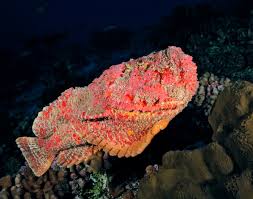
The Stonefish wins the award for being the most venomous fish on the planet, but it also wins the award for the best camouflage. As its name suggests, it looks exactly like a piece of coral or an algae-covered rock. It sits completely motionless on the ocean floor, blending in perfectly.
The Deadly Mechanism
Along the spine of the Stonefish are 13 incredibly thick, needle-like dorsal spines. Each spine is attached to two venom sacs. If you step on a Stonefish, the pressure of your foot pushes the spines up, injecting the venom deep into your flesh like a hypodermic needle.
The venom is a powerful cytotoxin that destroys cells and tissue on contact. The pain is described as the absolute worst pain a human being can endure without passing out. Survivors have reported begging doctors to amputate their legs just to make the agony stop. The venom causes extreme swelling, tissue death (necrosis), and can trigger cardiovascular collapse. Without immediate medical intervention and the specific anti-venom, a sting to the chest or abdomen can kill a person in under an hour.
Where Does It Live?
Coastal regions of the Indo-Pacific oceans. They love shallow waters, making them a massive hazard for beachgoers wading in the surf.
The Assassin Caterpillar (Lonomia Obliqua)
What Is It?
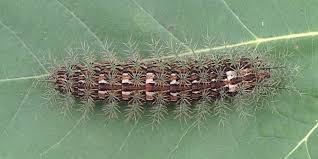
When we think of dangerous insects, we think of hornets or spiders. We do not usually think of fluffy caterpillars. But the Lonomia obliqua, often called the Assassin Caterpillar, is a deadly biological anomaly. It looks like a harmless, leafy green and brown caterpillar covered in little bristles.
The Deadly Mechanism
Those bristles are actually hollow venom-delivery tubes. If you brush your arm against this caterpillar while hiking, the bristles break off into your skin and release an incredibly potent anti-clotting agent.
The venom essentially breaks down the proteins in your blood that allow it to clot. Within a few hours, victims develop massive bruising all over their bodies. Then, the internal bleeding starts. Victims will begin bleeding from their eyes, their nose, their gums, and even from old healed scars. Ultimately, the venom destroys the kidneys and causes massive brain haemorrhaging, leading to death. It is one of the few caterpillars in the world capable of killing a healthy adult human.
Where Does It Live?
The rainforests of South America, primarily in Brazil, Argentina, and Uruguay. They usually hide in plain sight on tree trunks.
Dubois’ Sea Snake
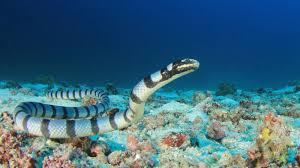
What Is It?
Most people know about land snakes like the Cobra or the Rattlesnake, but sea snakes are entirely different beasts. The Dubois’ Sea Snake is a marine reptile that has adapted to life entirely underwater. It has a paddle-like tail for swimming and can hold its breath for hours.
The Deadly Mechanism
This snake holds the title of the most venomous sea snake in the world, and it ranks in the top three most venomous snakes on Earth overall. Because sea snakes prey on fish—which can swim away incredibly fast—their venom must act instantly.
If a Dubois’ Sea Snake bites you, it injects a highly potent postsynaptic neurotoxin. The venom immediately attacks the connections between your nerves and your muscles. Symptoms progress at terrifying speed: blurred vision, difficulty swallowing, drooping eyelids, and then total respiratory failure. You won’t just drown because you are underwater; you will drown because your lungs simply forget how to process oxygen.
Where Does It Live?
The shallow coastal waters of the Coral Sea, Arafura Sea, Timor Sea, and the Indian Ocean. They are frequently accidentally caught in fishing nets, posing a huge risk to fishermen.
Maricopa Harvester Ant
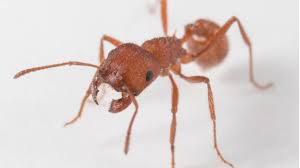
What Is It?
Ants are annoying, right? You step on an anthill, you get a few itchy bites, and you move on. Not with the Maricopa Harvester Ant. This is widely considered to be the most toxic insect in the world. It looks like a standard reddish-brown ant, but its chemical payload is biologically devastating.
The Deadly Mechanism
The venom of the Maricopa Harvester Ant is believed to be up to 20 times more toxic than the venom of a honeybee. When this ant attacks, it latches onto your skin with its jaws and then repeatedly stings you with its abdomen, pivoting in a circle to inject maximum venom.
The venom contains amino acids that break down muscle tissue and trigger fierce allergic reactions. While one ant might not kill an adult, they swarm. If you accidentally disturb a nest, hundreds of ants will attack at once. The sheer volume of this highly concentrated venom can easily cause anaphylactic shock, extreme swelling of the airways, and cardiac arrest in a matter of minutes.
Where Does It Live?
The deserts of the southwestern United States (Arizona, California, Texas, New Mexico) and northern Mexico.
Indian Red Scorpion
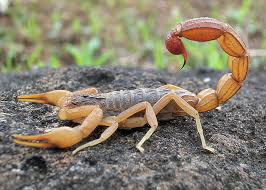
What Is It?
When it comes to scorpions, the rule of thumb is: the smaller the pincers and the thicker the tail, the deadlier the scorpion. The Indian Red Scorpion is a prime example. It is quite small, roughly two to three inches long, with frail-looking claws but a thick, segmented tail loaded with venom
The Deadly Mechanism
This scorpion is widely regarded as the most lethal scorpion on the planet. Its venom is a potent mix of neurotoxins that specifically target the cardiovascular and pulmonary systems.
Once stung, the victim’s heart rate becomes dangerously irregular. The hallmark symptom of an Indian Red Scorpion sting, however, is acute pulmonary edema. This means the venom causes the blood vessels in your lungs to leak fluid. The victim’s lungs physically fill with fluid from the inside out, causing them to literally drown in their own bodily fluids on dry land. Without rapid treatment and blood pressure medication, mortality rates are incredibly high, especially among children and the elderly
Where Does It Live?
Eastern India, Pakistan, Nepal, and Sri Lanka. They frequently find their way into human settlements, hiding in shoes, bedsheets, and piles of firewood.
The Golden Poison Frog
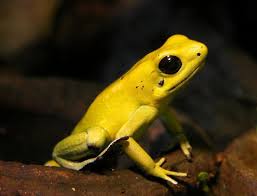
What Is It?
Amphibians are usually harmless, but the Golden Poison Frog is an exception that will stop your heart. It is a tiny, brilliantly yellow frog, barely two inches long. Its bright color is a warning to predators: I am toxic, do not eat me.
The Deadly Mechanism
Notice the name is “Poison” frog, not “Venomous.” Venom is injected (like a snake bite); poison is ingested or absorbed. The Golden Poison Frog secretes a terrifying toxin called batrachotoxin from glands in its skin.
You do not even have to be bitten by this frog to die. Simply touching its bare skin is enough, provided you have a tiny cut on your hand or if you rub your eyes afterward. The batrachotoxin prevents your nerves from transmitting impulses, leaving muscles in an active, contracted state. This leads to massive, uncontrollable muscle spasms and total heart failure. A single frog the size of a paperclip contains enough poison on its skin to kill up to 10 grown human adults.
Where Does It Live?
A very small, specific region of the Pacific coast of Colombia in the dense rainforests.
Sydney Funnel-Web Spider
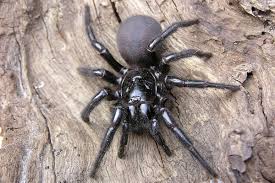
What Is It?
While most people have heard of the Black Widow or the Brown Recluse, the Sydney Funnel-Web Spider is a localized nightmare that kills much faster. It is a large, glossy black spider with massive fangs that are capable of piercing right through a leather shoe or a fingernail.
The Deadly Mechanism
The male Sydney Funnel-Web is particularly dangerous. During mating season, they wander out of their burrows and often end up in people’s houses, swimming pools, and shoes. When they strike, they don’t just bite once; they rear back and violently strike multiple times in rapid succession.
Their venom contains a compound called robustoxin, which specifically targets the nervous systems of primates (including humans). Within ten to fifteen minutes of a bite, the victim’s blood pressure drops massively, their mouth fills with excess saliva, muscle spasms tear through the body, and respiratory failure sets in. Before the invention of a specific anti-venom in 1981, this spider was responsible for a terrifying number of rapid deaths in Australia.
Where Does It Live?
Strictly found within a 100-kilometer radius of Sydney, Australia.
Conclusion
The animal kingdom is a beautiful place, but it does not play by human rules. We tend to fear the animals that roar, growl, and chase us down. Yet, the reality of biology proves that the most efficient killers on Earth are often silent, small, and heavily weaponized.
Whether it is a sea snail defending itself with a toxic harpoon or a tiny frog sweating pure heart-stopping poison, nature’s biological warfare is both fascinating and terrifying. The best way to survive the wild is simple: admire it from a distance. If you don’t know what it is, don’t touch it.
Frequently Asked Questions (FAQ)
What is the difference between venomous and poisonous?
It comes down to delivery. Venomous animals inject their toxins into you actively, usually through a bite or a sting (like a snake or a jellyfish). Poisonous animals unload their toxins passively, meaning you have to touch them, eat them, or absorb their toxins (like the Golden Poison Frog or a toxic mushroom). If it bites you and you die, it’s venomous. If you bite it (or touch it) and you die, it’s poisonous.
Can you build an immunity to these deadly venoms over time?
Generally, no. While some snake handlers claim to build slight tolerances to specific snake venoms through micro-dosing, the venoms from animals like the Cone Snail, Stonefish, or Box Jellyfish are far too complex and destructive. They destroy tissue or shut down nerve pathways instantly. Attempting to build immunity would simply result in death.
What is the actual most venomous animal on Earth?
Toxicity is measured by the LD50 (Lethal Dose 50) test, which measures how much venom is required to kill a subject. By pure chemical toxicity, the Inland Taipan (a snake from Australia) and the Geography Cone Snail are often tied for the top spot. However, the Golden Poison Frog’s skin toxin is mathematically one of the most lethal organic compounds ever discovered.
Why do such tiny animals need such incredibly powerful venom?
It is a matter of survival and physics. A lion uses brute force and weight to kill its prey. A tiny sea snail or an octopus does not have muscle mass. They prey on incredibly fast fish that could swim miles away if not paralyzed instantly. Therefore, their venom must be an instant “kill switch” to secure their meal or to instantly stop a predator thousands of times their size.\
What should I do if I am stung by an unknown marine animal?
Get out of the water immediately to avoid drowning if paralysis sets in. Do not urinate on the sting (this is a myth and often causes jellyfish stingers to release more venom). Rinse the area with hot water (as hot as you can tolerate) or vinegar to break down the proteins in the venom, and seek emergency medical attention instantly. Time is your biggest enemy.

Team Random Read
Random Read is an independent general-interest blog covering history, current affairs, nature, psychology, science and pop culture. About us
More like this

The Wood Wide Web: Do Trees Really Talk to Each Other?
Beneath most forests, tree roots are linked to fungi in a partnership that’s hundreds of millions of years old. Some researchers say…
What’s Happening in the Amazon Rainforest Right Now – The Good, The Bad, and The Ugly
Welcome to 2026. The Amazon rainforest is currently experiencing one of the most volatile and decisive periods in its recorded history. If…

Places on Earth Where the Laws of Nature Feel Broken
We go through life trusting a basic set of rules. Water flows downhill. Lava is red. Rocks are silent. Gravity pulls us…