5 Unsung Heroes of WW2: The Quiet Courage That Changed History
 By Team Random Read
Updated
12 min read
By Team Random Read
Updated
12 min read
When we think of World War II, we usually picture massive armies, iconic generals, and famous politicians. Names like Winston Churchill, Franklin D. Roosevelt, and Dwight D. Eisenhower dominate the history books. We remember the beaches of Normandy, the bombing of Pearl Harbor, and the harsh winters of the Eastern Front. However, the true story of the war is much larger than the people giving orders from secure bunkers.
In this article
- 1. Irena Sendler: The Guardian of the Warsaw Ghetto
- Who She Was
- Her Heroic Actions
- The Legacy
- 2. Juan Pujol García (Agent Garbo): The Spy Who Fooled Hitler
- Who He Was
- His Heroic Actions
- The Legacy
- 3. Virginia Hall: The Most Dangerous Woman in Europe
- Who She Was
- Her Heroic Actions
- The Legacy
- 4. Chiune Sugihara: The Diplomat Who Defied Orders
- Who He Was
- His Heroic Actions
- The Legacy
- 5. Witold Pilecki: The Man Who Volunteered for Auschwitz
- Who He Was
- His Heroic Actions
- The Legacy
- Conclusion
- Frequently Asked Questions (FAQs)
- 1. Why are these individuals considered "unsung" heroes?
- 2. Did Juan Pujol García (Garbo) ever get caught by the Nazis?
- 3. Are there surviving children who were saved by Irena Sendler?
- 4. Why didn't the Allies bomb Auschwitz after receiving Witold Pilecki's report?
- 5. What happened to the Jews saved by Chiune Sugihara?
Behind enemy lines, in occupied cities, and deep within the shadows of espionage, ordinary people were fighting the war in their own way. These individuals did not have massive armies backing them up. They did not have political power or widespread fame. Instead, they had deep moral convictions, incredible bravery, and the willingness to risk their own lives for the sake of others.
Many of these men and women worked in absolute secrecy. Because their survival depended on nobody knowing who they were, their stories were often lost in the chaos of the post-war era. Some were sworn to secrecy by their governments for decades after the war ended. Others were tragically punished by new political regimes.
Today, it is vital to remember these unsung heroes. Their stories teach us that you do not need to wear a general’s stars to change the course of history. Below are five remarkable individuals whose quiet courage saved thousands of lives and helped secure the victory of the Allied forces.
1. Irena Sendler: The Guardian of the Warsaw Ghetto
Who She Was
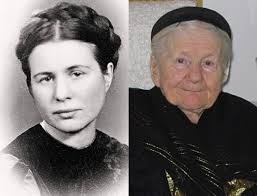
Irena Sendler was a Polish social worker born in 1910. When World War II broke out and Nazi Germany invaded Poland in 1939, Sendler was living in Warsaw. She was deeply influenced by her father, a doctor who died treating patients with typhus when other doctors refused to help them. His belief that you must always rescue a drowning person, regardless of their background, guided Irena’s entire life.
Her Heroic Actions
In 1940, the Nazis forced the Jewish population of Warsaw into a small, heavily guarded area known as the Warsaw Ghetto. Over 400,000 people were crammed into an area of just over one square mile. Disease and starvation ran rampant, and it quickly became clear that the Nazis planned to send the residents to death camps.
As a social worker, Sendler had a special permit to enter the Ghetto to check for signs of typhus, a disease the Germans feared would spread beyond the Ghetto walls. She used this pass to her advantage. Working with a secret Polish resistance organization called Zegota, Sendler began smuggling Jewish children out of the Ghetto to save them from the Holocaust.
Her methods were incredibly dangerous and required intense creativity. She smuggled infants in the bottoms of toolboxes, in potato sacks, and even inside coffins. For older children, she hid them under stretchers in ambulances or guided them through the underground sewer systems. Sendler even trained a dog to bark loudly whenever Nazi guards approached, which covered the sounds of crying babies.
Once the children were out, Sendler provided them with forged identification documents and placed them in Christian orphanages, convents, or with sympathetic Polish families.
The Legacy
Sendler wanted to ensure these children could reclaim their true identities and reunite with their families after the war. She wrote the children’s real names and their new fake names on small slips of paper, placed them in glass jars, and buried them under an apple tree in a friend’s garden.
In 1943, the Gestapo discovered her activities. She was arrested, severely tortured, and sentenced to death. However, Zegota managed to bribe a German guard to let her escape on the way to her execution. She spent the rest of the war in hiding but continued her resistance work. By the end of the war, Irena Sendler and her network had saved an estimated 2,500 Jewish children.
2. Juan Pujol García (Agent Garbo): The Spy Who Fooled Hitler
Who He Was
Juan Pujol García was a Spanish citizen who developed a deep hatred for both fascism and communism during the Spanish Civil War. When World War II began, he decided he needed to do something to defeat Nazi Germany. He approached British intelligence and offered his services as a spy, but he was immediately rejected.
Undeterred, Pujol decided to become a spy on his own.
His Heroic Actions
Since the British did not want him, Pujol approached the Germans. He created a completely fake identity as a fanatically pro-Nazi Spanish government official traveling to London. The Germans believed him and hired him to spy on the British.
The incredible part of the story is that Pujol never actually went to London. He moved to Lisbon, Portugal, and began writing fake intelligence reports using old maps, a tourist guide, and a train timetable. He invented an entire network of imaginary sub-agents—complete with names, backstories, and salaries—and the Germans paid him to fund this non-existent network.
His fake reports were so convincing that the British intercepted them and launched a massive manhunt for the spy in Britain, not realizing he was in Portugal. When the British finally figured out what Pujol was doing, they were amazed. MI5 immediately brought him to London and gave him the codename “Garbo” because he was such a brilliant actor.
Garbo’s greatest achievement came during Operation Fortitude, the Allied deception plan for the D-Day invasion in 1944. Garbo fed the Germans hundreds of messages convincing them that the main Allied attack would not happen at Normandy, but rather at Pas de Calais. He even convinced them that the real Normandy invasion was just a distraction.
The Legacy
Hitler trusted Garbo’s intelligence so completely that he kept massive German tank divisions waiting at Pas de Calais for an invasion that never came. This gave the Allied forces the crucial time they needed to secure the beaches at Normandy.
Remarkably, Pujol is the only person in history to receive the Iron Cross from Nazi Germany (for his “valuable” intelligence) and the Member of the Order of the British Empire (MBE) from Britain for his actual heroic service. After the war, he faked his own death in Angola to escape any Nazi retribution and lived a quiet life in Venezuela.
3. Virginia Hall: The Most Dangerous Woman in Europe
Who She Was
Virginia Hall was an American woman born in Baltimore. She dreamed of being a diplomat but lost the lower part of her left leg in a hunting accident before the war. She wore a heavy wooden prosthetic leg that she affectionately named “Cuthbert.” Because of her amputation, the US State Department rejected her applications to join the Foreign Service.
When the war started, she refused to sit on the sidelines. She drove ambulances in France, and when France fell to the Nazis, she made her way to Britain and joined the Special Operations Executive (SOE), a secret British organization meant to “set Europe ablaze.”
Her Heroic Actions
Hall was sent back into Vichy France as an undercover spy, posing as a reporter. She was incredibly effective. She organized local French resistance movements, set up safe houses, helped downed British pilots escape, and gathered vital intelligence on German troop movements.
The Gestapo quickly realized that a highly effective spy was operating in their territory. Klaus Barbie, the infamous “Butcher of Lyon,” became obsessed with hunting her down. He ordered his men to find the “limping lady,” famously stating, “She is the most dangerous of all Allied spies. We must find and destroy her.”
When Germany completely occupied France, Hall had to flee for her life. In a grueling journey, she walked across the freezing Pyrenees mountains into Spain in the dead of winter. It was an agonizing trip made even harder by her heavy wooden leg. During the trek, she radioed London to say that “Cuthbert” was giving her trouble. Unaware that Cuthbert was her leg, London replied, “If Cuthbert is giving you trouble, have him eliminated.”
The Legacy
Even after escaping, Hall refused to quit. She joined the American Office of Strategic Services (OSS)—the precursor to the CIA—and requested to be sent back into France. Disguised as an elderly peasant woman, she coordinated supply drops, trained resistance fighters, and blew up bridges to disrupt the German army right before D-Day.
For her immense courage, Virginia Hall was the only civilian woman in World War II to be awarded the Distinguished Service Cross, one of the highest military honors in the United States.
4. Chiune Sugihara: The Diplomat Who Defied Orders
Who He Was
Chiune Sugihara was a Japanese diplomat serving as the Vice-Consul for the Japanese Empire in Kaunas, Lithuania, in 1939. He was a quiet, highly educated man who spoke multiple languages. Unlike soldiers on the battlefield, Sugihara’s war was fought entirely from his office desk, armed only with a pen and official government stamps.
His Heroic Actions
In 1940, as the Soviet Union occupied Lithuania and the threat of Nazi Germany loomed over Eastern Europe, thousands of Jewish refugees fled to Kaunas. They were desperately trying to escape the Holocaust. To get out of Europe, they needed transit visas to travel through the Soviet Union to Japan, and from there to safe havens like the Dutch Caribbean.
The refugees surrounded the Japanese consulate, begging for visas. Sugihara contacted his superiors in Tokyo three times, asking for permission to issue the visas. Three times, the Japanese government strictly denied his request, stating that visas could only be issued to those who already had a final destination and plenty of money.
Faced with a moral crisis, Sugihara decided to listen to his conscience rather than his government. Knowing that he would likely be fired and his family put at risk, he began hand-writing transit visas for the Jewish refugees.
For 29 days, Sugihara worked up to 20 hours a day, writing hundreds of visas by hand. He didn’t stop to eat, and his hands became blistered and swollen. Even as the consulate was closed down and he was forced to board a train to leave Lithuania, Sugihara continued writing visas and throwing them out of the train window to the desperate crowds running alongside the tracks. When he ran out of official paper, he threw out blank sheets with the consulate seal, hoping people could forge the documents themselves.
The Legacy
By defying his orders, Chiune Sugihara saved an estimated 6,000 Jewish men, women, and children. Today, it is believed that over 40,000 people are alive because of his actions.
When he returned to Japan after the war, he was quietly dismissed from the diplomatic service for his insubordination. He spent the rest of his life working low-profile jobs, rarely speaking of what he had done. It wasn’t until decades later, when the people he saved finally tracked him down, that the world learned of the Japanese diplomat who sacrificed his career to save thousands of lives.
5. Witold Pilecki: The Man Who Volunteered for Auschwitz
Who He Was
Witold Pilecki was a Polish cavalry officer and an early member of the Polish resistance. When Germany and the Soviet Union invaded Poland in 1939, Pilecki fought bravely but was forced underground when the Polish army was defeated. As the Nazi occupation deepened, horrifying rumors began to emerge about a new prison camp called Auschwitz. At the time, the world did not know it was an extermination camp.
His Heroic Actions
In 1940, Pilecki proposed a plan so daring it sounded suicidal: he would intentionally get arrested by the Gestapo, be sent to Auschwitz, gather intelligence from the inside, and organize a resistance movement among the prisoners. His commanders approved the plan.
Pilecki deliberately walked into a German street roundup in Warsaw and was sent directly to Auschwitz. Upon arriving, he was subjected to the horrific brutality, starvation, and disease that defined the camp. Despite the constant threat of death, Pilecki successfully created a secret organization called the Union of Military Organizations (ZOW) inside the camp.
His resistance network managed to secure extra food, distribute clothing, keep up morale, and even build a secret radio transmitter using smuggled parts. Most importantly, Pilecki smuggled detailed intelligence reports out of the camp through prisoners who managed to escape. These documents, known as “Witold’s Report,” were the very first comprehensive accounts of the Holocaust to reach the Allied powers. He detailed the gas chambers, the mass executions, and the horrifying reality of the Final Solution.
After spending nearly two and a half years surviving in the most dangerous place on earth, Pilecki realized the Allies were not coming to bomb the camp. In 1943, he organized a daring escape, overpowering a guard in the camp bakery and fleeing into the night.
The Legacy
Pilecki’s heroism did not end at Auschwitz. He went on to fight in the Warsaw Uprising in 1944. Tragically, after the war, Poland fell under Soviet communist control. Pilecki remained loyal to the Polish government-in-exile and began gathering intelligence on Soviet atrocities. He was arrested by the communist secret police, brutally tortured, and executed after a show trial in 1948.
For decades, his name was erased from history books by the communist regime. It was only after the fall of the Soviet Union that the incredible, selfless heroism of Witold Pilecki was finally revealed to the world.
Conclusion
The victories of World War II were not just won on maps by generals moving army units. They were won by ordinary people who made the terrifying choice to stand up against evil. Irena Sendler, Juan Pujol García, Virginia Hall, Chiune Sugihara, and Witold Pilecki operated in the darkest corners of the war. They did not seek fame or glory. They acted because it was the right thing to do. By remembering these five unsung heroes, we honor the millions of quiet, brave acts that ultimately saved humanity from its darkest hour.
Frequently Asked Questions (FAQs)
1. Why are these individuals considered “unsung” heroes?
They are considered unsung because their names are not widely taught in standard history curriculums compared to major political leaders or generals. Many of them operated in total secrecy, and their actions were classified or covered up for decades after the war ended.
2. Did Juan Pujol García (Garbo) ever get caught by the Nazis?
No. Incredibly, the Nazis never realized that Agent Garbo was working for the British. Even after the war ended, the Germans still believed he was one of their best spies. He managed to maintain the deception perfectly until the fall of the Third Reich.
3. Are there surviving children who were saved by Irena Sendler?
Yes. Many of the 2,500 children Irena Sendler saved survived the war, grew up, and had families of their own. Later in her life, many of these survivors visited Sendler to thank her personally for saving them from the Warsaw Ghetto.
4. Why didn’t the Allies bomb Auschwitz after receiving Witold Pilecki’s report?
The Allied high command debated bombing the camp or the railway lines leading to it. However, they ultimately decided against it, arguing that precision bombing was too difficult at the time, the risk of killing thousands of prisoners was too high, and that the best way to help the prisoners was to focus all resources on winning the war as quickly as possible.
5. What happened to the Jews saved by Chiune Sugihara?
Most of the refugees who received transit visas from Sugihara traveled via the Trans-Siberian Railway across Russia to Japan. From Japan, many relocated to Shanghai, China, which accepted Jewish refugees without passports, or traveled to the Americas and Australia, successfully escaping the Holocaust.

Team Random Read
Random Read is an independent general-interest blog covering history, current affairs, nature, psychology, science and pop culture. About us
More like this
Historical Myths Debunked: 15 Popular “Facts” Everyone Gets Wrong.
History is full of extraordinary stories. Some are so memorable that they become part of popular culture: Julius Caesar was born by…

5 Everyday Inventions That Were Total Accidents (Including Microwave Ovens & Post-it Notes)
We like to imagine that great inventions are born from brilliant minds following carefully drawn plans. A scientist develops a theory. An…
The Bayeux Tapestry: The 1,000-Year-Old Story of 1066, William the Conqueror and the Battle of Hastings
Few historical objects tell a story as vividly as the Bayeux Tapestry. Nearly 1,000 years old, this extraordinary piece of medieval embroidery…