What’s Happening in the Amazon Rainforest Right Now – The Good, The Bad, and The Ugly
 By Team Random Read
Updated
9 min read
By Team Random Read
Updated
9 min read
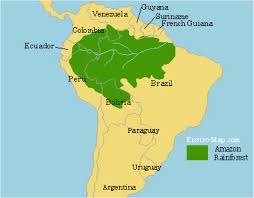
Welcome to 2026. The Amazon rainforest is currently experiencing one of the most volatile and decisive periods in its recorded history. If you are looking for a simple narrative that the forest is either completely saved or entirely doomed, the reality on the ground is much more complicated.
In this article
- The Good: Deforestation Rates Are Plummeting
- The Lowest Deforestation Rates in a Decade
- The "Tropical Forest Forever" Facility
- The Power of Indigenous Land Rights
- The Bad: Historic Droughts and Record-Breaking Fires
- Rivers Running Dry
- Fire-Driven Degradation is Now the Biggest Threat
- The Carbon Emission Nightmare
- The Ugly: Tipping Points, Crime, and Disease
- The Rise of a "Hypertropical" Climate
- Organized Crime in the Deep Forest
- The Return of Forgotten Diseases
- Why 2026 is a Turning Point for the Amazon
- Frequently Asked Questions (FAQs)
- 1. Is the Amazon rainforest still burning right now?
- 2. How much of the Amazon rainforest has been destroyed so far?
- 3. Why are the droughts in the Amazon getting so much worse?
- 4. What is the Tropical Forest Forever Facility?
- 5. How does organized crime affect the Amazon rainforest?
Right now, the Amazon is a massive battleground between highly effective human policy and the severe consequences of global climate change. On one hand, government crackdowns and international funding are successfully stopping the bulldozers. On the other hand, the global rise in temperatures has triggered extreme droughts, turning the normally humid rainforest into a tinderbox.
Understanding what is happening in the Amazon requires looking at the data without romanticizing the situation. The world’s largest tropical rainforest is nearing a critical tipping point. To grasp the full picture, we have to break down the current state of the Amazon into the good, the bad, and the very ugly.
The Good: Deforestation Rates Are Plummeting
For decades, the primary threat to the Amazon was the physical clearing of land for cattle ranching, soy farming, and logging. Today, we are seeing a historic reversal of that trend.
The Lowest Deforestation Rates in a Decade
According to Brazil’s National Institute for Space Research (INPE), deforestation alerts in the Amazon have continued to fall sharply into early 2026. Data shows that between August 2025 and January 2026, satellite systems detected 1,325 square kilometers of forest clearing. This represents the lowest level for that specific six-month period since 2014.
This is not a sudden fluke. It is the continuation of a trend that began accelerating a few years ago. In the 12 months ending in July 2025, INPE’s high-resolution PRODES monitoring system reported that deforestation fell by 11% to 5,796 square kilometers—an 11-year low. This steep decline is largely attributed to renewed environmental enforcement, strict penalties for illegal land grabbing, and the strengthening of federal environmental protection agencies in Brazil.
The “Tropical Forest Forever” Facility
Conservation is ultimately an economic battle. Historically, a hectare of cleared land used for cattle ranching generated more immediate cash than a hectare of intact forest. In late 2025, a groundbreaking initiative was launched to flip this economic script.
Introduced at a summit in Belém, Brazil, the Tropical Forest Forever Facility is a massive global fund designed to make standing forests financially valuable. The fund aims to channel up to $4 billion annually to 74 eligible nations. Instead of funding complex, bureaucratic green projects, the mechanism is brilliantly simple: it pays countries $4 per hectare, per year, for verified preserved forests. Adjusted for performance and monitored by satellites, this fund provides a direct, reliable income stream for nations that protect their natural resources, aligning economic prosperity directly with climate stability.
The Power of Indigenous Land Rights
Another major driver of the “good” news is the expansion and legal recognition of Indigenous territories. Organizations like the Rainforest Foundation and MapBiomas have continuously published data proving that Indigenous peoples are the most effective guardians of the Amazon.
In 2025 and into 2026, efforts to advance land rights over millions of acres in Brazil, Peru, and Guyana have accelerated. Satellite mapping consistently shows that legally recognized Indigenous lands suffer from a fraction of the deforestation seen in unprotected areas. By empowering the people who have lived in the forest for millennia with legal authority over their land, governments are building an impenetrable wall against industrial ranching and illegal logging.
The Bad: Historic Droughts and Record-Breaking Fires
While the drop in direct deforestation is a massive victory, the Amazon is facing an entirely different, weather-driven catastrophe. The climate itself has become the forest’s biggest enemy.
Rivers Running Dry
The Amazon basin is still reeling from consecutive, extreme droughts that peaked in 2023 and 2024, with severe hangover effects continuing into 2026. Driven by a brutal combination of a strong El Niño and human-caused climate change—which made these extreme weather events up to 30 times more likely—the region suffered an unprecedented lack of rainfall.
In the Brazilian Amazon alone, the biome lost over 8 million acres of surface water. Major rivers dropped to record lows. This created a profound humanitarian and ecological crisis. Hundreds of remote Indigenous and riverside communities, which rely entirely on the rivers for transportation, found themselves completely isolated. Food, medicine, and clean water could not reach them. Furthermore, the lack of moisture turned the historically damp, fire-resistant underbrush of the rainforest into dry, highly flammable kindling.
Fire-Driven Degradation is Now the Biggest Threat
Because the forest is so dry, fires have ripped through the Amazon at a terrifying pace. In 2024, an estimated 44.2 million acres of the Brazilian Amazon burned—an area larger than the state of California, and a 66% increase from the previous year.
A landmark study published in late 2025 by the European Commission’s Joint Research Centre highlighted a terrifying shift: fire-driven degradation has officially overtaken direct deforestation as the main source of carbon emissions in the Amazon.
To understand why this is bad, you must understand the difference between the two. Deforestation is the complete removal of trees. Degradation occurs when a fire sweeps through the forest floor. It doesn’t instantly destroy the massive canopy trees, but it severely damages them. The canopy thins out, letting more sunlight hit the forest floor, which dries out the soil even further. This creates a vicious cycle where the degraded forest becomes even more likely to burn the following year.
The Carbon Emission Nightmare
The Amazon is supposed to be the lungs of the Earth, absorbing massive amounts of greenhouse gases. However, the recent fires are reversing this process. During the 2024 fire season, the Amazon released an estimated 791 million tons of carbon dioxide into the atmosphere. To put that massive number into perspective, that is roughly equivalent to the entire annual emissions of a highly industrialized country like Germany. Because of the ongoing drought conditions into 2026, the forest is struggling to regenerate and recapture that lost carbon.
The Ugly: Tipping Points, Crime, and Disease
Beyond the data on trees and carbon, there are dark, systemic shifts happening deep within the Amazon basin. These are the long-term consequences of human interference that cannot be fixed by simply putting out a fire or passing a law.
The Rise of a “Hypertropical” Climate
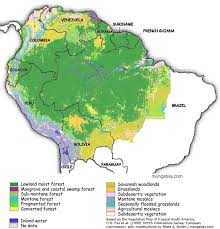
The Amazon rainforest is fundamentally changing its biological nature. In December 2025, researchers from UC Berkeley published alarming findings showing that the Amazon is slowly transitioning into what they call a “hypertropical” climate.
This is a new, hotter climate state characterized by frequent, intense droughts occurring even during the traditional wet seasons. According to scientists, this specific type of climate has not existed on Earth for tens of millions of years. As the number of high heat-stress days increases, massive tree die-offs are occurring. The forest is being forced to rapidly shift its tree species to those that can survive hotter, drier conditions. If the ecosystem cannot adapt fast enough, vast swaths of the lush rainforest will permanently degrade into dry, grassy savannas.
Organized Crime in the Deep Forest
When we think of Amazon deforestation, we usually picture a rogue cattle rancher. In 2026, the reality is much more dangerous. “Nature crime” has become a booming, highly organized industry.
Cities like Tabatinga (in Brazil) and Leticia (in Colombia), located in the thinly governed tri-border area of the northwestern Amazon, have become major hubs for international crime syndicates. Drug cartels that historically focused exclusively on cocaine trafficking have diversified their portfolios. They are now deeply entrenched in illegal gold mining, illicit timber logging, and violent land grabbing.
This makes environmental conservation incredibly dangerous. Park rangers and environmental protection agencies are not equipped to fight heavily armed cartels. These organized crime groups use violence to displace Indigenous governance, corrupt local officials, and rapidly clear deep-forest areas to build illegal airstrips and mining camps.
The Return of Forgotten Diseases
As human activity pushes further into the previously untouched wild areas of the Amazon, ecology is thrown completely out of balance. What begins as an environmental issue is rapidly evolving into a public health crisis.
In January 2026, researchers from UC Santa Barbara revealed that changes in land use are driving a severe uptick in human yellow fever cases in the Amazon basin. For decades, yellow fever had been mostly confined to monkey populations deep in the jungle. However, the expanding border between forested areas and new urban settlements is causing the disease to spill over into human populations. Scientists are now sounding the alarm that the region is in severe danger of redeveloping urban transmission cycles, where the disease begins spreading from human to human within cities without needing a jungle animal as a host.
Why 2026 is a Turning Point for the Amazon
Humanity has already crossed several critical planetary boundaries, and the Amazon is teetering on the edge of its own specific tipping point. Scientists have long warned that if total deforestation in the Amazon reaches between 20% and 25%, the entire ecosystem will collapse. Once that threshold is crossed, the forest will no longer be able to produce its own rainfall, triggering an unstoppable chain reaction that will turn the remaining rainforest into a dry savanna.
Currently, the Amazon has lost approximately 17% of its original forest cover. We are dangerously close to the edge.
This makes the events of 2026 absolutely critical. The region is preparing to host the COP30 climate summit in Belém, putting the Amazon directly in the center of the global geopolitical stage. The success of the Tropical Forest Forever Facility, the continued enforcement of zero-deforestation policies by the Brazilian government, and the global effort to curb greenhouse gas emissions will determine whether the Amazon survives the century. We have the tools to stop the bleeding, but the clock is ticking faster than ever.
Frequently Asked Questions (FAQs)
1. Is the Amazon rainforest still burning right now?
Yes, fires remain a massive threat in 2026. While the scale of the fires fluctuates with the dry and wet seasons, the severe droughts of 2024 and 2025 left behind millions of hectares of degraded, dry forest. Because the dead trees and underbrush act as highly flammable fuel, the forest remains at a high risk for large-scale wildfires, especially during the dry season (June to November).
2. How much of the Amazon rainforest has been destroyed so far?
As of 2026, approximately 17% of the Amazon rainforest’s original cover has been completely lost to deforestation over the last 50 years. This number is highly concerning to scientists, who warn that reaching a total loss of 20% to 25% could push the ecosystem past a point of no return, causing the remaining forest to dry out and die naturally.
3. Why are the droughts in the Amazon getting so much worse?
The worsening droughts are primarily driven by human-caused global climate change, combined with natural weather cycles like El Niño. Rising global temperatures accelerate the evaporation of moisture from the soil and plants. Additionally, because trees generate much of the region’s rain through a process called transpiration, losing trees to deforestation directly results in less rainfall, creating a compounding cycle of drought.
4. What is the Tropical Forest Forever Facility?
It is a massive international financial fund launched by Brazil in late 2025. Designed to make standing forests more economically valuable than cleared land, the fund pays up to 74 eligible tropical nations a flat rate of $4 per hectare, per year, to successfully protect their forests. It is backed by up to $4 billion annually and uses satellite monitoring to verify that the countries are actually keeping the trees standing before they get paid.
5. How does organized crime affect the Amazon rainforest?
Organized crime syndicates, particularly drug cartels operating in the remote border regions of Brazil, Colombia, and Peru, have expanded into “nature crime.” They heavily fund and control illegal gold mining, illegal logging, and land grabbing. Because these groups are heavily armed and well-funded, they use violence to displace Indigenous communities and overpower local environmental police, making conservation efforts in these deep-jungle areas incredibly dangerous and difficult

Team Random Read
Random Read is an independent general-interest blog covering history, current affairs, nature, psychology, science and pop culture. About us
More like this

The Wood Wide Web: Do Trees Really Talk to Each Other?
Beneath most forests, tree roots are linked to fungi in a partnership that’s hundreds of millions of years old. Some researchers say…
Places on Earth Where the Laws of Nature Feel Broken
We go through life trusting a basic set of rules. Water flows downhill. Lava is red. Rocks are silent. Gravity pulls us…

Small Changes in Nature That Could Destroy Humanity
When we think about the end of the world, we usually picture a massive, Hollywood-style disaster. We imagine giant asteroids crashing into…