5 Major Discoveries at Göbekli Tepe as of 2026
 By Team Random Read
Updated
10 min read
By Team Random Read
Updated
10 min read
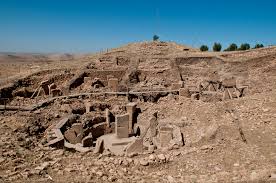
Göbekli Tepe, located in the Şanlıurfa province of southeastern Turkey, has been actively rewriting the history of human civilization since wide-scale excavations began in the 1990s. For decades, historians and archaeologists believed that early humans first invented agriculture, settled into permanent villages, and only then developed the time and resources to build complex religious monuments. Göbekli Tepe flipped that timeline upside down. Built over 11,000 years ago by hunter-gatherers, it proved that the desire to construct grand, communal spaces may have actually driven the invention of farming and settled life.
In this article
- TL;DR: The Short Version
- 1. The World’s Oldest Lunisolar Calendar on Pillar 43
- 2. The 11,000-Year-Old Painted Wild Boar Statue
- 3. Domestic Structures and the End of the "Empty Sanctuary" Myth
- 4. The Giant Human Statue of Karahan Tepe and the Taş Tepeler Network
- 5. The World’s Oldest Stairways and Tiered Amphitheaters
- Frequently Asked Questions (FAQs) About Göbekli Tepe
- How old is Göbekli Tepe compared to the Egyptian Pyramids?
- Who exactly built Göbekli Tepe?
- Why did they intentionally bury the site?
- What is the Taş Tepeler project?
- Can tourists visit Göbekli Tepe in 2026?
However, the story of this ancient site does not end with its initial unearthing. As of March 2026, continuous digging by the Turkish Ministry of Culture and Tourism, operating under the broader Taş Tepeler (Stone Hills) project, has completely shattered the old narratives. What was once viewed as a lonely, isolated sanctuary reserved only for nomadic pilgrims is now recognized as a vibrant, technologically advanced, and colorful settlement connected to a massive regional network.
From the deepest understandings of early astronomy to the revelation of everyday domestic life, the sands of Anatolia have recently yielded breathtaking secrets. If you want to understand where humanity comes from, you must look at the most recent data. Here is a detailed breakdown of the five major discoveries at Göbekli Tepe that have redefined our past.
TL;DR: The Short Version
If you are short on time, here is a quick summary of the five major discoveries that have recently reshaped our understanding of Göbekli Tepe:
- 1. The World’s Oldest Lunisolar Calendar: Carvings on Pillar 43 reveal a 365-day calendar tracking both solar and lunar cycles, while also serving as a memorial for a devastating comet strike around 10,850 BCE.
- 2. The 11,000-Year-Old Painted Wild Boar: A life-sized limestone boar was unearthed retaining its original red, white, and black pigments, proving that the ancient world was brightly painted, not bare stone.
- 3. Proof of Domestic Settlement: Once thought to be an empty temple, the discovery of cisterns, water channels, and domestic grinding tools proves that people lived at Göbekli Tepe year-round.
- 4. The Giant Human Statue of Karahan Tepe: A sister site revealed a highly realistic, 2.3-meter-tall seated human figure, showing a massive shift in ancient art from animal worship to human focus.
- 5. The First Stairways and Amphitheaters: Recent unearthings show a rapid architectural evolution, including tiered seating, communal rectangular buildings, and the oldest known stone stairways in the world.
1. The World’s Oldest Lunisolar Calendar on Pillar 43
For years, archaeologists marveled at Pillar 43, famously known as the “Vulture Stone,” located in Enclosure D. It is heavily decorated with strange animals and geometric shapes. However, a groundbreaking 2024 study published by Dr. Martin Sweatman from the University of Edinburgh revealed that these carvings are not just artistic mythology—they represent the world’s oldest known lunisolar calendar.
Researchers discovered exactly 365 “V-shaped” symbols etched into the stone. Through meticulous analysis, it was determined that each “V” represents a single day. The ancient builders divided their calendar into 12 lunar months, plus 11 extra solar days (known as epagomenal days) to ensure their lunar calendar stayed perfectly aligned with the solar year. This level of astronomical tracking was not thought to exist until the ancient Greeks documented it 10,000 years later.
Even more remarkably, the calendar appears to serve a dual purpose as a historical memorial. The specific alignment of the constellations carved into the pillar points to a catastrophic event: a comet fragment swarm that struck Earth around 10,850 BCE. This event, known in geology as the Younger Dryas impact, triggered a 1,200-year mini ice age that wiped out many large animal species and severely altered the global climate.
The implications of this discovery are massive. It suggests that the trauma of the comet strike fundamentally changed these ancient people. To survive the sudden freezing temperatures, they had to band together, watch the skies obsessively to predict seasonal changes, and eventually invent agriculture to secure a stable food supply. The calendar on Pillar 43 proves that the people of Göbekli Tepe were not primitive wanderers; they were highly observant scientists and mathematicians responding to a global climate disaster.
2. The 11,000-Year-Old Painted Wild Boar Statue
When we look at ancient ruins, from the Greek Parthenon to the megaliths of Stonehenge, we usually see bare, bleached stone. We have been conditioned to think of antiquity in shades of beige and gray. In late 2023, the dirt of Enclosure D at Göbekli Tepe corrected this misconception with the unearthing of a life-size limestone statue of a wild boar.
What made this discovery completely unprecedented was what remained on the stone: paint. Archaeologists found highly preserved residues of red, white, and black pigments covering the boar. The tongue of the animal was painted a vibrant red, while the body featured contrasting black and white layers. This makes the Göbekli Tepe boar the oldest known painted statue from the Neolithic period, pushing the history of painted statuary back by thousands of years.
The statue was found resting on a meticulously carved stone bench situated between two massive T-shaped pillars. The bench itself was decorated with an “H-shaped” symbol, a crescent moon, two snakes, and three human faces. The placement of the brightly painted boar in the center of these complex symbols suggests it held immense ritualistic importance.
This discovery fundamentally changes how we must visualize Göbekli Tepe. The site was not a sterile, dusty monument. In its prime, it was a highly vibrant, aggressively colorful space. Creating paint 11,000 years ago required significant effort, involving the sourcing, grinding, and mixing of specific minerals with binding agents. The painted boar proves that prehistoric hunter-gatherers dedicated vast amounts of time to aesthetic beauty and vivid sensory experiences within their communal spaces.
3. Domestic Structures and the End of the “Empty Sanctuary” Myth
The original excavator of Göbekli Tepe, the late Klaus Schmidt, famously summarized the site with the phrase: “First came the temple, then the city.” His theory was that Göbekli Tepe was a purely religious sanctuary. He believed that no one lived there permanently, and that nomadic bands of hunter-gatherers would travel hundreds of miles just to perform rituals, feast, and then leave. For over two decades, this was the accepted historical consensus.
Recent excavations leading up to 2026 have completely dismantled this theory. Deep digging around the massive circular enclosures has revealed a vast network of domestic architecture. Archaeologists have uncovered the foundations of smaller, permanent houses, proving that a massive community lived side-by-side with the grand temples.
Alongside the houses, researchers discovered advanced water management systems. Carved stone cisterns and channels designed to collect and store rainwater demonstrate that the site was equipped to sustain a large population through dry seasons. Furthermore, massive quantities of grinding stones, pestles, and tools associated with the daily processing of wild cereals were unearthed in these domestic zones.
This forces a massive rewrite of Neolithic history. The people of Göbekli Tepe were not just visiting; they had settled down. They were transitioning from a purely nomadic lifestyle into a permanent, sedentary society before they had fully domesticated crops. They relied on the abundant wild wheat and barley growing in the region, using their permanent settlement as a base to process it. Göbekli Tepe was not an isolated cathedral in the desert; it was a bustling, permanent town that served as the cradle for the agricultural revolution.
4. The Giant Human Statue of Karahan Tepe and the Taş Tepeler Network
For a long time, Göbekli Tepe was treated as a bizarre, isolated anomaly. However, the Turkish government’s “Taş Tepeler” (Stone Hills) project—which involves the simultaneous excavation of over a dozen Neolithic sites in the surrounding region—has proven that Göbekli Tepe was just one neighborhood in a massive, interconnected civilization. The most staggering discovery from this wider network occurred at Karahan Tepe, a sister site located about 40 kilometers away.
Deep inside a newly excavated enclosure, archaeologists uncovered an incredibly realistic, 2.3-meter-tall (7 feet 6 inches) human statue. The figure is depicted sitting down, holding its phallus with both hands, and features a meticulously carved, highly expressive face with a prominent nose and deep-set eyes. The statue was found intentionally placed alongside a beautifully crafted stone plate and a highly detailed vulture carving.
This discovery is a major paradigm shift for art historians and anthropologists. At Göbekli Tepe, the artwork is overwhelmingly dominated by dangerous animals: scorpions, snakes, foxes, boars, and lions. Human depictions are rare and usually abstract (like the faceless T-shaped pillars). However, Karahan Tepe shows a dramatic evolution in human psychology.
The giant, realistic human statue signifies a moment in cognitive history where early humans began to see themselves as the center of the universe. Instead of fearing and worshiping the wild, dangerous animals of the natural world, they began to elevate the human form. It is the earliest known instance of a realistic, monumental human depiction, marking the exact moment our ancestors started to place humanity above the animal kingdom.
5. The World’s Oldest Stairways and Tiered Amphitheaters
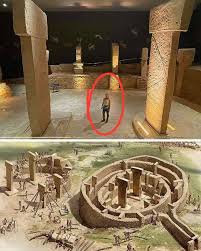
As excavations progressed into 2025 and 2026, researchers began unearthing entirely new architectural layouts that display an astonishing leap in prehistoric engineering. Previously, Göbekli Tepe was known almost exclusively for its circular enclosures. However, recent digging at both Göbekli Tepe and nearby sites like Sayburç has revealed the evolution of building styles over time, transitioning from circular temples to massive, rectangular communal buildings.
The most shocking structural discovery was the unearthing of the world’s oldest known stone stairways. Built directly into the bedrock, these multi-leveled staircases allowed ancient people to navigate complex, tiered oval buildings safely. Before this, it was assumed that early humans simply utilized natural ramps or basic dirt paths to move between elevations.
Furthermore, archaeologists uncovered a massive enclosure structured exactly like a modern amphitheater. It features carved stone benches organized in concentric tiers, all facing a central stage-like area where the grand pillars and statues are located. This design proves that Göbekli Tepe hosted massive, organized public spectacles.
These architectural leaps—from basic circles to rectangular buildings, staircases, and amphitheaters—reveal a society with strict social hierarchies, specialized architects, and intense communal organization. It also sheds light on the mystery of why the site was eventually abandoned. The earth layers show that these massive structures were not destroyed by natural disasters; they were intentionally, painstakingly filled with dirt and buried by the very people who built them. The complexity of the architecture shows this burial was a massive, highly organized ritual—a respectful decommissioning of a sacred space before the community moved on to build the modern agricultural world.
Frequently Asked Questions (FAQs) About Göbekli Tepe
How old is Göbekli Tepe compared to the Egyptian Pyramids?
Göbekli Tepe is staggeringly old. The oldest excavated layers date back to approximately 9,600 BCE. To put this in perspective, the Great Pyramid of Giza was built around 2,600 BCE. This means Göbekli Tepe was already 7,000 years old by the time the ancient Egyptians started moving blocks for the pyramids. It predates the invention of writing, the wheel, and Stonehenge by millennia.
Who exactly built Göbekli Tepe?
The complex was built by Pre-Pottery Neolithic A (PPNA) hunter-gatherers. These were early humans who had not yet discovered metal tools, pottery, or full-scale agriculture. They used flint and limestone tools to carve the massive pillars. Despite their “primitive” technology, their ability to organize hundreds of workers points to a highly advanced social structure.
Why did they intentionally bury the site?
One of the greatest mysteries of Göbekli Tepe is that around 8,000 BCE, the builders intentionally backfilled the massive enclosures with tons of soil, rocks, and animal bones. Archaeologists currently believe this was not an act of destruction, but a ritualistic “decommissioning.” As their society shifted fully into farming, their religious needs changed, and they respectfully buried the old temples like one might bury a sacred elder.
What is the Taş Tepeler project?
Taş Tepeler, meaning “Stone Hills” in Turkish, is a massive, ongoing archaeological initiative launched by the Turkish government. It focuses on excavating an entire network of 12 related Neolithic sites in the Şanlıurfa region, including Göbekli Tepe, Karahan Tepe, and Sayburç. This project has proven that the region was a sprawling, interconnected civilization rather than just a single isolated monument.
Can tourists visit Göbekli Tepe in 2026?
Yes, Göbekli Tepe is a recognized UNESCO World Heritage site and is highly accessible to the public. It features state-of-the-art protective roofs over the main excavation areas, elevated wooden walkways for safe viewing, and a modern visitor center. It is easily reachable by taking a short drive from the city of Şanlıurfa in southeastern Turkey.

Team Random Read
Random Read is an independent general-interest blog covering history, current affairs, nature, psychology, science and pop culture. About us
More like this

Historical Myths Debunked: 15 Popular “Facts” Everyone Gets Wrong.
History is full of extraordinary stories. Some are so memorable that they become part of popular culture: Julius Caesar was born by…

5 Everyday Inventions That Were Total Accidents (Including Microwave Ovens & Post-it Notes)
We like to imagine that great inventions are born from brilliant minds following carefully drawn plans. A scientist develops a theory. An…
The Bayeux Tapestry: The 1,000-Year-Old Story of 1066, William the Conqueror and the Battle of Hastings
Few historical objects tell a story as vividly as the Bayeux Tapestry. Nearly 1,000 years old, this extraordinary piece of medieval embroidery…