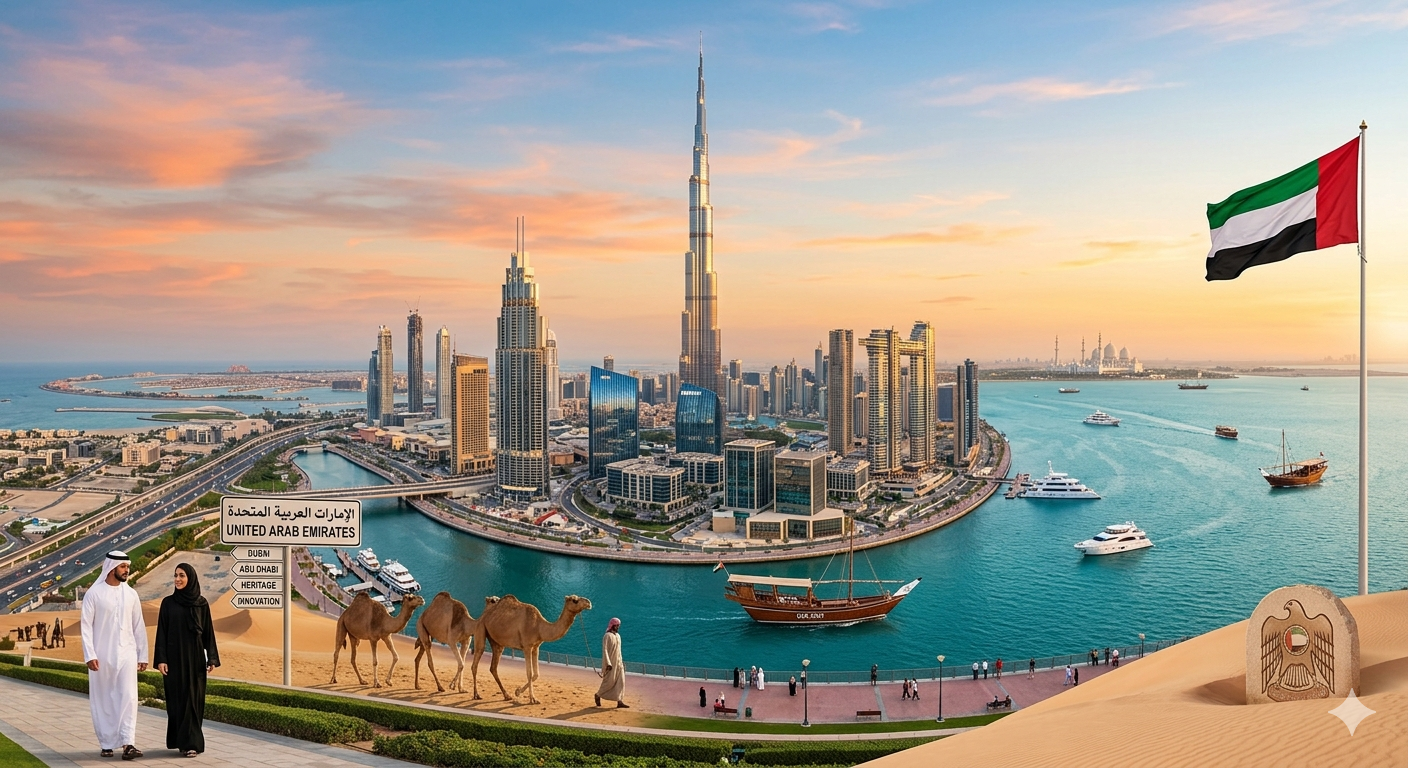
When most people think of the United Arab Emirates (UAE), their minds immediately jump to record-breaking skyscrapers, massive artificial islands, and luxury shopping malls. It is easy to look at a city like Dubai and assume its history started maybe thirty or forty years ago.
But if you dig beneath the sand and the concrete, you will find a surprisingly deep, rich, and complex history. This land has been a crossroads for humanity for thousands of years. It has seen the rise and fall of ancient civilizations, the birth of global trade routes, fierce naval battles with European empires, and a total economic transformation that is completely unmatched in modern history.
Let’s walk through the entire documented history of the UAE, from the very beginning to the modern day.
The Early Days: Before the Sand Became Cities
Long before the concept of borders or countries existed, the Arabian Peninsula was a very different place. It wasn’t always the arid desert we know today.
The Stone Age and the First Humans
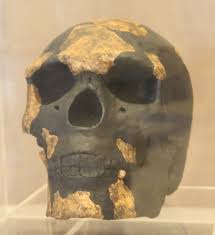
Archaeological discoveries have completely changed how we view the early history of the UAE. At a site called Jebel Faya in the emirate of Sharjah, researchers found stone tools dating back roughly 125,000 years. This is a massive deal in the historical community. It suggests that early humans migrating out of Africa crossed into the Arabian Peninsula much earlier than previously thought. Back then, the climate was wetter, and the landscape featured grasslands and lakes, making it a perfect route for early human migration.
The Neolithic and Bronze Ages
Fast forward to the Neolithic period (around 8000 to 4000 BC), and the climate started to dry up. The people living here had to adapt. They became nomadic, moving with the seasons to find water and grazing land for their animals.
Then came the Bronze Age (3200 to 1300 BC), which brought a major shift. The most famous culture from this time is the Umm Al-Nar culture, named after an island near Abu Dhabi where the first evidence was found. These people were not just surviving; they were thriving. They built impressive circular stone tombs, which you can still see today, and they actively traded with Mesopotamia (modern-day Iraq) and the Indus Valley (modern-day Pakistan and India). They traded copper, which was mined heavily in the Hajar Mountains.
The Iron Age and the Falaj System
The Iron Age (1200 to 300 BC) brought a technological revolution that changed the region forever: the falaj irrigation system.
Imagine trying to grow crops in a dry, hot climate. It’s nearly impossible unless you have a steady water source. The falaj system solved this. It was an ingenious network of underground channels that tapped into mountain aquifers and brought fresh water directly to agricultural lands. This allowed communities to settle down permanently. They started growing date palms, which became a crucial food source and a staple of the local diet that remains culturally significant today.
The Arrival of Islam and the Middle Ages
The 7th century marked one of the most important turning points in the history of the Arabian Peninsula.
The Prophet’s Messengers
In 630 AD, envoys sent by the Prophet Muhammad PBUH arrived in the region, bringing the message of Islam. The local leaders embraced the new religion, and it quickly became the unifying force for the tribes of the peninsula.
However, the transition wasn’t entirely peaceful. After the Prophet Muhammad PBUH passed away, some tribes rebelled in what became known as the Ridda Wars. This led to a major conflict known as the Battle of Dibba (located in modern-day Fujairah) in 632 AD. The Islamic forces won, cementing Islam’s permanent place in the region.
Julfar: The Thriving Trading Hub
During the Middle Ages, the Islamic empire expanded, and the UAE region became a vital hub for global trade. The city of Julfar, located in what is now Ras Al Khaimah, became incredibly prosperous.
Julfar was perfectly positioned near the Strait of Hormuz. Traders from China, India, and Africa passed through here. If you were looking for high-quality pearls, incense, or spices in the 14th century, Julfar was the place to be. The city was home to thousands of people and remained a major commercial center for centuries.
The Era of European Influence
Where there is trade and wealth, empires usually follow. By the 15th and 16th centuries, European powers started looking for ways to control the lucrative trade routes of the East.
The Portuguese Arrival
In 1498, the Portuguese explorer Vasco da Gama successfully sailed around the southern tip of Africa and reached the Indian Ocean. This changed the game. The Portuguese didn’t just want to trade; they wanted a monopoly.
In the early 1500s, Portuguese fleets arrived in the Arabian Gulf. They were heavily armed and ruthless. They attacked and conquered key coastal towns, including Khor Fakkan and Julfar. For over a century, the Portuguese built forts along the coast and forced local traders to pay massive taxes. If you visit the UAE today, you can still find the ruins of these ancient Portuguese military forts scattered along the eastern coast.
The Rise of Local Powers
The Portuguese didn’t stay forever. By the 1600s, other European powers, mainly the Dutch and the British, started showing up, challenging Portuguese dominance.
While the Europeans fought among themselves, local Arab tribes began to consolidate their power. Two major tribal confederations emerged that would shape the modern UAE:
- The Bani Yas: This was a massive alliance of tribes that dominated the interior deserts and the coast around modern-day Abu Dhabi.
- The Qawasim: Based in the north around Ras Al Khaimah and Sharjah, the Qawasim were a powerful maritime force. They had a massive fleet of ships and controlled trade in the lower Gulf.
In the 18th century, a faction of the Bani Yas tribe, known as the Al Bu Falasah, migrated from Abu Dhabi and settled by a small creek. That creek was the Dubai Creek, and this migration marked the early foundation of the modern emirate of Dubai under the leadership of the Al Maktoum family.
The British Connection and the “Trucial States”
By the late 18th and early 19th centuries, the British Empire was the dominant global superpower, primarily due to its interests in India. The British East India Company needed safe passage through the Arabian Gulf to protect its trade routes.
The Pirate Coast vs. The Trucial Coast
The British had a major problem: the Qawasim fleet. The Qawasim were actively defending their waters and their trade. When British ships were attacked, the British labeled the area the “Pirate Coast.” (Historians today still debate this; many argue the Qawasim were simply defending their territory from foreign invasion, not acting as random pirates).
Regardless of the perspective, the British decided to intervene militarily. In 1819, a British naval force attacked and destroyed the Qawasim fleet and their forts in Ras Al Khaimah.
In 1820, the British forced the local sheikhs to sign the General Maritime Treaty. This treaty banned acts of piracy and warfare at sea. Over the next few decades, more treaties were signed, eventually leading to the Perpetual Maritime Truce of 1853. Because of these truces, the British renamed the area the “Trucial States.”
Under this arrangement, the local rulers managed their own internal affairs, but Britain controlled their foreign policy and defense. This protectorate status lasted for over a century.
The Pearling Industry Boom (and Bust)
During the 19th and early 20th centuries, the economy of the Trucial States relied almost entirely on one thing: pearls.
The warm, shallow waters of the Arabian Gulf produced some of the finest pearls in the world. Every summer, thousands of local men would head out on wooden dhows (traditional boats) for months at a time. It was incredibly dangerous and grueling work. Divers would clip their noses, tie a rock to their foot to sink quickly, and hold their breath for minutes at a time to harvest oysters.
The pearls were sold to merchants in India, who then sold them to Europe and America. It brought significant wealth to the coastal towns.
But disaster struck in the 1920s. A Japanese entrepreneur named Kokichi Mikimoto invented a way to create artificial, cultured pearls. Suddenly, the global market was flooded with cheap, perfectly round pearls. The natural pearling industry of the Trucial States collapsed almost overnight. The region was plunged into severe poverty, further worsened by the global Great Depression and World War II.
The Turning Point: Black Gold
The 1950s were a difficult time for the Trucial States. The pearl trade was dead, and the population was struggling. But beneath the sand lay a resource that would change their destiny completely.
The Discovery of Oil
Foreign oil companies had been exploring the region since the 1930s, but it wasn’t until the late 1950s that massive reserves were finally discovered. Oil was first found in Abu Dhabi in 1958, and exports began in 1962. Dubai struck oil shortly after, in 1966.
The influx of oil money was sudden and massive. But money alone doesn’t build a nation; leadership does.
Sheikh Zayed’s Vision
In 1966, Sheikh Zayed bin Sultan Al Nahyan became the ruler of Abu Dhabi. He understood that oil was a temporary resource and that the wealth needed to be used to build a sustainable future.
Sheikh Zayed immediately started using the oil revenues to build the infrastructure that the region desperately needed. He built schools, hospitals, modern roads, and housing. He focused on education and healthcare, transforming the standard of living for his people in a matter of years. He also generously shared Abu Dhabi’s wealth with the other, poorer emirates in the Trucial States.
The Birth of a Nation: 1971
While the economy was booming, a major political earthquake was on the horizon.
The British Withdrawal
In 1968, the British government, facing its own economic struggles back home, made a shocking announcement: they would be ending their treaty relationships and withdrawing all military forces from the Gulf by the end of 1971.
The rulers of the Trucial States suddenly had to figure out how to survive without British military protection. The region was surrounded by larger, powerful neighbors, and standing alone was a massive security risk.
Uniting the Emirates
Sheikh Zayed of Abu Dhabi and Sheikh Rashid bin Saeed Al Maktoum of Dubai took the lead. They met in a desert camp and agreed to merge their two emirates into a single union. They then invited the rulers of the other Trucial States, as well as Bahrain and Qatar, to join them.
Negotiations were intense. Bahrain and Qatar eventually decided to declare independence as their own separate nations. But the rulers of the remaining Trucial States saw the value in sticking together.
On December 2, 1971, the rulers of six emirates—Abu Dhabi, Dubai, Sharjah, Ajman, Umm Al Quwain, and Fujairah—gathered at the Union House in Dubai. They officially signed the constitution, creating the independent country of the United Arab Emirates. Sheikh Zayed was elected as the first President. A few months later, in February 1972, the seventh emirate, Ras Al Khaimah, officially joined the union, completing the country as we know it today.
Modern UAE: From Desert to Global Hub
The speed at which the UAE developed after 1971 is hard to comprehend. In just a few decades, small coastal towns were transformed into sprawling, futuristic metropolises.
Rapid Infrastructure Growth
Throughout the 1970s and 80s, the country was essentially a massive construction site. The leadership focused on connectivity, building international airports, deep-water seaports like Jebel Ali in Dubai (which became the largest man-made harbor in the world), and modern telecommunications networks.
Diversifying the Economy
While Abu Dhabi held the vast majority of the oil reserves, Dubai’s oil reserves were relatively small and expected to run out quickly. Sheikh Rashid of Dubai knew he had to diversify. He focused on turning Dubai into a global hub for trade, tourism, and aviation.
Dubai launched Emirates Airlines in 1985, which eventually became one of the largest and most luxurious airlines in the world. The emirate also created massive free-trade zones to attract foreign businesses without local tax burdens. This strategy worked flawlessly, turning the UAE into the commercial capital of the Middle East.
In the 2000s, the UAE pushed the boundaries of engineering. Dubai constructed the Palm Jumeirah (a massive artificial island shaped like a palm tree) and the Burj Khalifa, which opened in 2010 and remains the tallest building in the world.
Looking Ahead: The Future of the UAE
Today, the UAE is focusing on a post-oil future. The government is investing heavily in renewable energy, artificial intelligence, and technology.
They have even looked beyond the Earth. In 2020, the UAE successfully launched the “Hope Probe” to Mars, becoming the first Arab nation to reach the Red Planet. They have also sent astronauts to the International Space Station, proving that a country that started with pearl divers and nomadic tribes is now actively participating in the future of space exploration.
The history of the UAE is a story of incredible resilience. It is a testament to people who survived in one of the harshest environments on earth, adapted to massive global changes, and used their resources to build a modern marvel from the ground up.
Frequently Asked Questions (FAQs)
1. What were the UAE called before 1971?
Before officially becoming the United Arab Emirates in 1971, the region was known as the “Trucial States.” This name came from a series of maritime truces signed between the local tribal rulers and the British government in the 19th century, which made the area a British protectorate.
2. How many emirates make up the UAE, and what are their names?
There are seven emirates in total. They are Abu Dhabi (the capital), Dubai, Sharjah, Ajman, Umm Al Quwain, Fujairah, and Ras Al Khaimah. Six united on December 2, 1971, and Ras Al Khaimah joined in February 1972.
3. Was the UAE ever colonized?
The UAE was never formally colonized in the way India or parts of Africa were. It was a “protectorate” of the British Empire. This meant that while Britain controlled the region’s defense and foreign affairs, the local Sheikhs retained power over their own internal, domestic affairs.
4. What was the main source of income before oil was discovered?
Before the discovery of oil in the 1950s, the region’s economy relied heavily on the natural pearling industry. Men would dive into the Arabian Gulf to harvest oysters. The industry collapsed in the 1920s and 30s after the Japanese invented cultured (artificial) pearls.
5. Who is considered the founding father of the UAE?
Sheikh Zayed bin Sultan Al Nahyan is universally recognized as the founding father of the UAE. As the ruler of Abu Dhabi, he was the primary driving force behind uniting the seven independent emirates into one cohesive nation and served a
Leave a Reply