What If Time Froze Every Day for 1 Hour — But Only You Could Move?
 By Team Random Read
Updated
13 min read
By Team Random Read
Updated
13 min read
TL;DR: Having a secret, frozen hour every day sounds like the ultimate superpower. You could catch up on sleep, learn new skills, or simply enjoy 60 minutes of absolute peace. However, the reality would be much more complicated. You would age faster than everyone else, deal with the deafening silence of a paused world, and face massive moral dilemmas about what you do when nobody is watching. It is a brilliant fantasy, but psychologically and physically, it comes with a heavy price.
In this article
- Introduction: The Ultimate Fantasy or a Hidden Nightmare?
- The Rules of the Frozen Hour
- Breathing and Moving in Frozen Time
- Light, Sound, and Temperature
- Aging and the Extra 15 Days a Year
- How Would You Spend Your Secret 60 Minutes?
- The Ultimate Life Hack: Productivity and Learning
- Catching Up on Sleep (The Great Illusion)
- The Temptation of Wealth and Crime
- The Psychological Toll: Isolation in a Still World
- The Deafening Silence
- The Burden of Secrecy
- Paranoia and the "What If It Never Unfreezes?" Fear
- The Physical Consequences: What Happens to Your Body?
- The Risk of Injury in a Frozen World
- Navigating Around Frozen People
- A Day in the Life: Mapping Out the Frozen Hour
- How It Would Change Human History
- The Ethics of the Frozen Hour
- Helping Others vs. Helping Yourself
- The Invasion of Privacy
- Conclusion: A Blessing With a Hidden Price Tag
- Frequently Asked Questions
- 1. Would I age while time is frozen?
- 2. How would I see or breathe if everything is frozen?
- 3. Would the internet or electronics work?
- 4. What happens if I move someone while time is frozen?
- 5. Could I get caught on security cameras?
Introduction: The Ultimate Fantasy or a Hidden Nightmare?
Imagine you are sitting in a crowded cafe. The espresso machine is hissing, people are talking over each other, and the traffic outside is a constant hum. Then, suddenly, absolute silence. You look up. The barista is completely frozen, pouring milk that hangs suspended in mid-air. A bird outside is paused mid-flap. The person across from you is frozen mid-laugh.
You stand up. You are the only thing in the universe that can move. You have exactly 60 minutes before the world presses “play” again.
We have all wished for more time. Between working, commuting, taking care of family, and trying to maintain a social life, 24 hours just never feels like enough. The idea of a secret hour—a glitch in the clock that belongs only to you—is one of the most common daydreams in human history.
But what would actually happen if time froze for one hour every day, and you were the only one left moving? It is easy to think about the fun stuff: sneaking past lines, taking a much-needed nap, or reading every book you never had time for. Yet, if you really break down the physics, the psychology, and the daily reality of this superpower, the picture gets a lot more complicated.
Let’s dive deep into the fascinating, terrifying, and incredible reality of the frozen hour.
The Rules of the Frozen Hour
To truly understand this scenario, we have to establish some ground rules. If time genuinely stops for everything but you, physics gets a little weird. For this thought experiment to work without you instantly dying, we have to assume a little bit of “superpower magic.”
Breathing and Moving in Frozen Time
If time literally stops, air molecules stop moving. If air molecules stop moving, they become a solid wall. Walking would be impossible, and breathing would be out of the question. For our scenario, we have to assume that your body acts as an “unfreezing bubble.” Anything you touch, breathe, or interact with temporarily unfreezes. The air goes into your lungs, the door handle turns when you grab it, and the ground allows you to walk.
Light, Sound, and Temperature
Light is made of photons moving at an incredible speed. If time stops, photons stop hitting your eyes, which means you would be completely blind. Again, your “bubble” allows light to enter your eyes so you can see.
However, sound is a different story. Sound relies on vibrations traveling through the air. In a frozen world, nothing vibrates. There are no cars driving, no wind blowing through the trees, no hum of the refrigerator. The silence would not just be quiet; it would be total, absolute, and overwhelming. The only thing you would hear is your own breathing, the rustle of your clothes, and your heartbeat echoing in your ears.
Aging and the Extra 15 Days a Year
Here is a mathematical reality that most people ignore when dreaming of this power: you are living an extra hour every day.
An extra hour a day equals 365 extra hours a year. That is just over 15 full days of extra life every single year. Over the course of a decade, you will have aged almost half a year more than your friends and family. It might not seem like a lot right now, but over an average lifespan, your body will be several years older than your birth certificate claims. Your cells are still dividing; your body is still ticking.
How Would You Spend Your Secret 60 Minutes?
Once you get past the strange physics, the practical applications of this power are endless. How you use this time would completely define who you become.
The Ultimate Life Hack: Productivity and Learning
Most people complain they do not have time to learn a new language, write a book, or get in shape. With a guaranteed, uninterrupted hour every day, those excuses vanish.
Imagine dedicating your frozen hour to working out. You could go for a run through the frozen streets, weaving between paused cars and statuesque pedestrians. You could learn to play the guitar without bothering your neighbors, because the sound waves would only exist right where you are. Over a year, 365 hours of dedicated, focused practice is enough to make you highly proficient at almost anything. You could become a master chef, a skilled programmer, or a brilliant painter, seemingly overnight to the rest of the world.
Catching Up on Sleep (The Great Illusion)
Let’s be honest. For the first few weeks, you are probably just going to sleep. When the clock strikes and the world pauses, you would close your eyes and get that extra hour of rest.
But there is a catch. If you fall asleep during the frozen hour, you have no alarm clock. Mechanical and digital clocks are frozen. Your phone timer is paused. You would have to rely entirely on your internal body clock. If you oversleep, the hour will end, the world will crash back into noisy reality, and you will suddenly find yourself waking up in a very confusing, jarring environment.
The Temptation of Wealth and Crime
We cannot talk about frozen time without talking about the dark side. The temptation to break the rules would be astronomical.
If you are struggling to pay rent, and you are standing in a bank when time stops, the temptation to reach over the counter would be immense. You could walk into any store, take whatever you want, and walk out. To the security cameras, the items would just vanish in a glitch between frames.
Even if you consider yourself a highly moral person, desperation changes people. The absolute certainty that you cannot be caught creates a moral vacuum. Would you steal groceries to feed your family? Would you take cash from a massive corporation? The line between hero and villain gets very blurry when consequences are removed from the equation.
The Psychological Toll: Isolation in a Still World
While the physical benefits are great, the mental impact of pausing time would be incredibly heavy. Humans are social creatures. We rely on the feedback of the world around us. Taking that away, even for an hour, does something to the human brain.
The Deafening Silence
We touched on this earlier, but the psychological weight of true silence cannot be overstated. We are never in total silence. Even in a quiet room, there is a low-level hum of electricity or distant traffic.
During your frozen hour, you are the only moving, breathing thing on a planet of 8 billion paused statues. The silence would be heavy enough to cause ringing in your ears (tinnitus). Many people who spend time in anechoic chambers (rooms designed to absorb all sound) report feeling anxious, dizzy, and even hallucinating after just 30 minutes. Dealing with that every single day would require incredible mental toughness.
The Burden of Secrecy
Who do you tell? If you tell your partner, they will either think you are losing your mind, or they will believe you and become incredibly jealous. They might start making demands. “Can you check my boss’s emails while time is frozen?” “Can you fix this problem for me?”
If you do not tell anyone, you are carrying the biggest secret in human history entirely on your own shoulders. You are living a double life. Every day, you experience a completely different reality that you cannot share with the people you love. Over time, that kind of secret creates an invisible wall between you and the rest of society.
Paranoia and the “What If It Never Unfreezes?” Fear
Imagine it is your 100th time freezing time. You are used to it. You make a cup of coffee, sit down, and read a book. You wait for the hour to end, for the birds to chirp, for the cars to move.
But what if 60 minutes pass, and nothing happens? What if 65 minutes pass? What if two hours go by?
Every single day, you would face the terrifying anxiety that the world might never unfreeze. You would live with the underlying fear that you are going to be trapped alone in a static universe forever. That kind of daily anxiety would eventually lead to severe paranoia. You might start spending your frozen hour sitting in absolute panic, just staring at a clock, begging the second hand to tick forward.
The Physical Consequences: What Happens to Your Body?
Aside from the mental strain, navigating a paused world brings unique physical dangers that we do not normally think about.
The Risk of Injury in a Frozen World
In a normal world, if you fall and break your leg, you call for help. Someone hears you, an ambulance arrives, and you are taken to a hospital.
If you slip and break your leg during the frozen hour, you are entirely on your own. No one can hear you scream. No doctor can help you. You have to lay there in excruciating pain until the hour passes.
What if you choke on a piece of food? The Heimlich maneuver requires someone else. If you are choking and time is frozen, you cannot bang on the wall to alert your roommate. Every physical action you take during the frozen hour carries an amplified level of risk because the safety net of society has been temporarily removed.
Navigating Around Frozen People
Moving through a crowded space would be like walking through a museum of incredibly fragile glass statues. If you accidentally bump into someone, they cannot adjust their balance to catch themselves.
If you push someone over while time is frozen, do they stay suspended in mid-air? Or do they fall to the ground, only to suddenly realize they are on the floor when time resumes? If you move objects around them, they will experience a terrifying reality where things are teleporting in front of their eyes. You would have to be incredibly careful not to disturb the physical placement of people and their immediate surroundings.
A Day in the Life: Mapping Out the Frozen Hour
To truly visualize this, let us map out exactly what a random Tuesday would look like with this power. Let us assume the freeze happens automatically every day at exactly 3:00 PM.
2:59 PM: You are sitting in a boring office meeting. Your boss is mid-sentence, talking about quarterly profits. You know it is coming. You adjust your posture.
3:00 PM: Snap. The world stops. Your boss’s mouth is open, a drop of spit hanging in the air. The hum of the air conditioner dies instantly. The heavy silence drops over the room.
3:05 PM: You stand up, stretch your legs, and walk out of the conference room. You grab a snack from the breakroom without paying. You walk outside. The sun is blazing, but there are no shadows shifting. A bicyclist is balanced on one tire, frozen mid-pedal.
3:30 PM: You find a quiet bench. You read 30 pages of a novel you have been putting off. It is peaceful, but the absolute lack of background noise is making your ears ring slightly.
3:55 PM: You walk back into the office. You carefully step back into your chair. You position your hands exactly as they were. You wait.
4:00 PM: BOOM. The air conditioner roars to life. The traffic outside blares. Your boss finishes his sentence as if nothing happened. You blink, slightly disoriented by the sudden onslaught of noise and motion, but you feel refreshed.
How It Would Change Human History
If you look at the grand scheme of things, one person having this power could change the course of history.
If you wanted to be a hero, you could spend your hour stopping crimes, pushing people out of the way of car accidents, or disarming dangerous situations. To the world, it would look like a miracle. A speeding car is about to hit a child, and in the blink of an eye, the child is safely standing on the sidewalk. You would become a ghost, a guardian angel that the world cannot explain.
On the other hand, you could be the ultimate spy. You could walk into highly secure government buildings, read classified documents, and walk out. You could learn the secrets of politicians, billionaires, and corporations. Knowledge is power, and with an invisible hour every day, you would have access to all the knowledge in the world.
The Ethics of the Frozen Hour
This brings us to the most difficult part of having this power: the ethics. What is your responsibility to the world when the world stops?
Helping Others vs. Helping Yourself
If you use your 60 minutes just to take a nap or play video games, while down the street a house is catching fire, are you morally responsible? When you have the power to intervene without any risk to yourself, doing nothing starts to feel like a crime. You might feel a crushing obligation to spend every single frozen hour running frantically around your city, looking for people to save. The stress of that obligation would burn you out completely.
The Invasion of Privacy
A frozen world means there are no closed doors you cannot open. The temptation to snoop into people’s lives would be massive. You could look at anyone’s phone, read anyone’s diary, and walk into anyone’s house.
But seeing people’s private lives changes how you view them. You might discover secrets about your friends that you were never meant to know. You might see things that break your heart or destroy your trust in humanity. Privacy exists for a reason, and tearing down those walls would likely leave you deeply cynical and depressed.
Conclusion: A Blessing With a Hidden Price Tag
Having time freeze for one hour every day while only you can move is a fascinating thought experiment. On the surface, it is the ultimate freedom. It is a cheat code for productivity, wealth, and rest.
But underneath the fantasy, it is a heavy burden. The crushing silence, the rapid aging, the intense moral dilemmas, and the profound isolation make it a double-edged sword. You would be a god for 60 minutes a day, but a god who is completely and utterly alone.
In the end, maybe our 24 hours, with all its noise, chaos, and lack of time, is exactly the way it is supposed to be. Time is valuable precisely because it doesn’t stop.
Frequently Asked Questions
1. Would I age while time is frozen?
Yes. Since your body is still moving, your biological processes—like digestion, cell division, and breathing—are still happening. An extra hour a day means you are living an additional 365 hours (about 15 days) every year. Over 20 years, you would age almost an entire year more than everyone else.
2. How would I see or breathe if everything is frozen?
In a strictly scientific sense, if time completely stopped, air molecules wouldn’t move, and light photons wouldn’t reach your eyes. You would be blind and unable to breathe. For this scenario to work, we have to assume you emit a sort of “reality bubble,” allowing anything you interact with (like the air you breathe and the light hitting your eyes) to function normally.
3. Would the internet or electronics work?
No. Electricity requires the active movement of electrons. Since time is frozen, the electrons in wires and servers are frozen too. Your phone would not refresh, the internet would be down, and you could not watch live television. However, a battery-powered device might work if it is within your unfreezing “bubble,” but it could only access downloaded files, not the internet.
4. What happens if I move someone while time is frozen?
If you pick someone up and move them, they will not know it happened. From their perspective, they will simply teleport from one spot to another in zero seconds. This would be incredibly disorienting and terrifying for them, likely causing them to fall over or panic the second time resumes.
5. Could I get caught on security cameras?
No. Security cameras capture reality in “frames per second.” Because the entire hour takes place between a single second of real-world time, the camera would not record you. If you moved an object, the video footage would just show the object instantly vanishing or teleporting to a new location in a single frame glitch.

Team Random Read
Random Read is an independent general-interest blog covering history, current affairs, nature, psychology, science and pop culture. About us
More like this
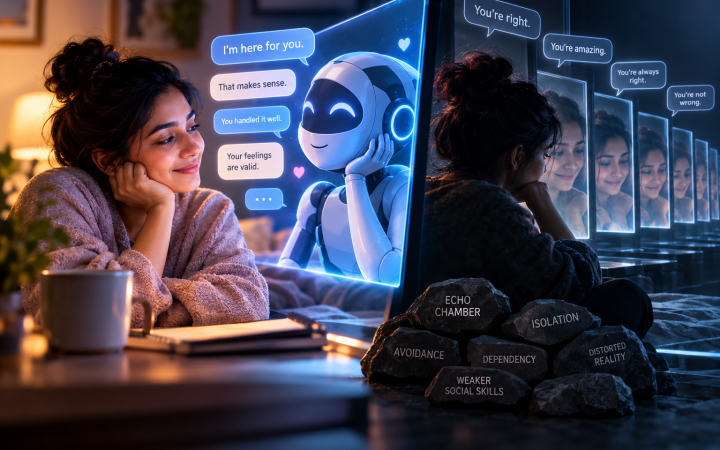
The Psychology of AI Companionship: Why Millions Are Quietly Bonding With Algorithms
We live in an era where millions of people don't just use AI to write emails or debug code. They talk to…
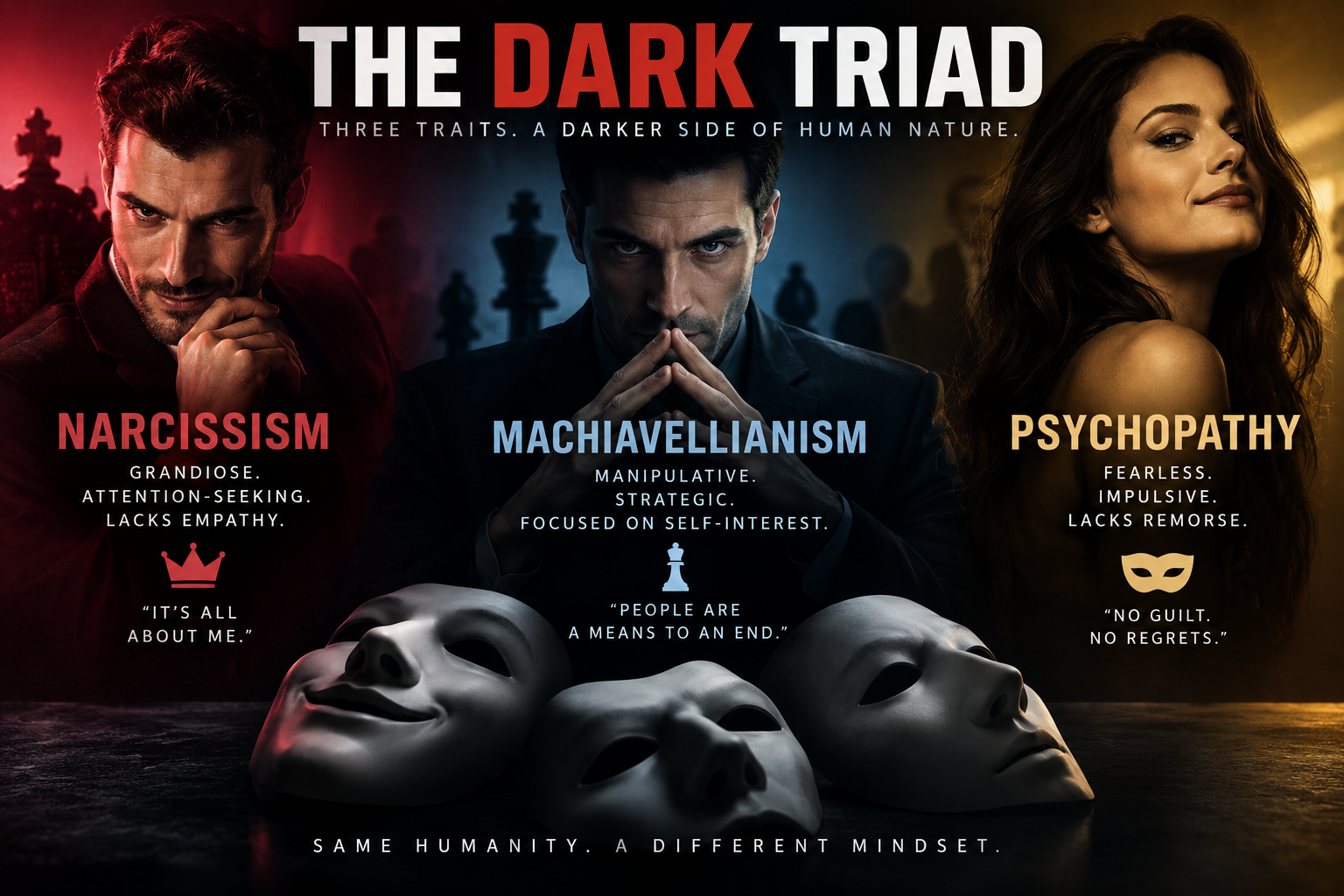
The Dark Triad in Everyday Life: Why You Keep Falling for Charming People.
You meet someone who is confident, funny, attentive, and unusually good at making you feel interesting. They remember small details, tell compelling…
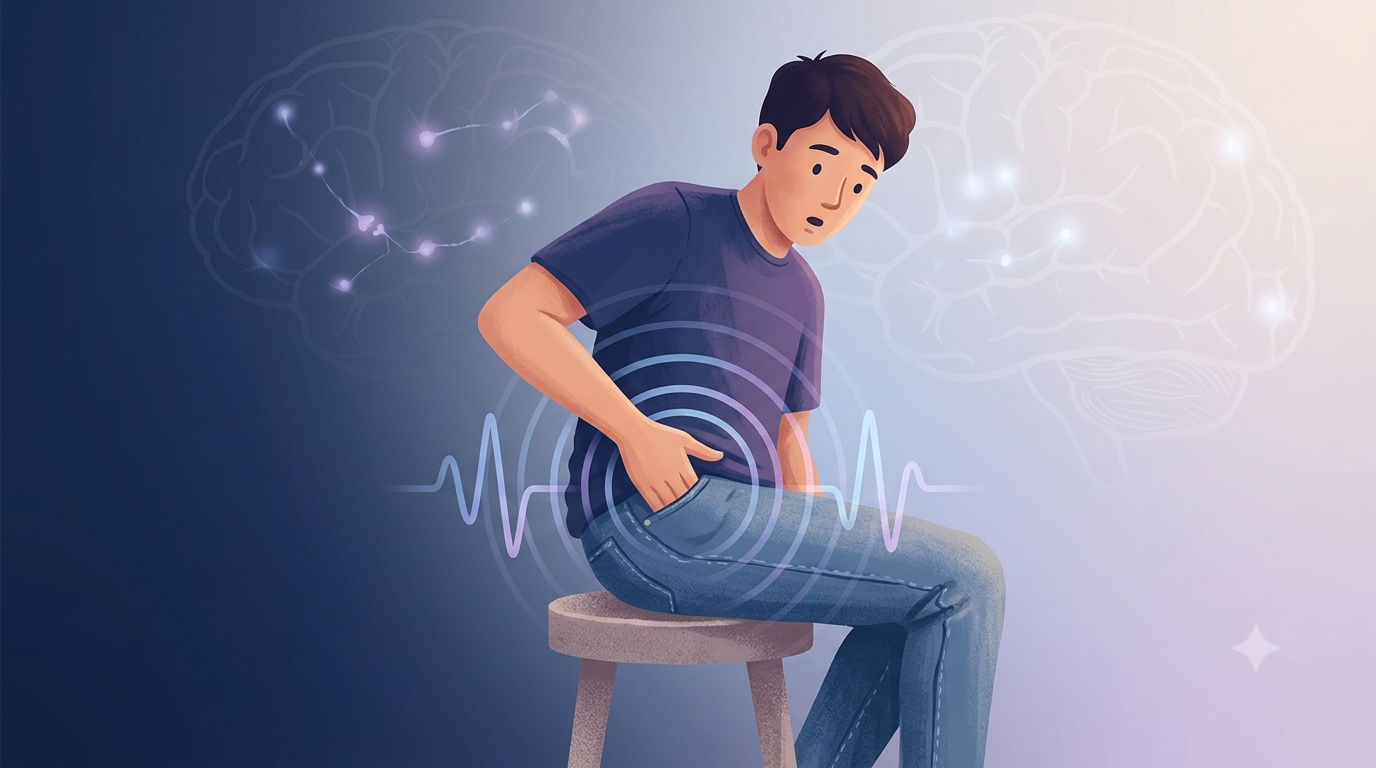
Phantom Vibration Syndrome: The Psychology Behind Feeling a Buzz That Never Happened.
You're at your desk, or on the bus, or halfway through a meeting, and you feel it — that unmistakable little rumble…