The ‘Moral Licensing’ Trap: How Doing One Good Thing Makes You Worse After
 By Team Random Read
12 min read
By Team Random Read
12 min read
TL;DR: The Short Version
Have you ever eaten a huge slice of chocolate cake because you went for a run that morning? That is moral licensing. It is a psychological trap where doing something good makes you feel like you have earned a “pass” to do something bad. Instead of building good habits, we end up canceling out our positive actions. This article breaks down why our brains keep score, how this trap shows up in our daily lives, and exactly how to escape it so you can make real, consistent progress.
In this article
- TL;DR: The Short Version
- Introduction: The "I Earned This" Illusion
- What Exactly is Moral Licensing?
- The Psychological Bank Account
- Conscious vs. Subconscious Licensing
- Everyday Examples of the Moral Licensing Trap
- Diet and Exercise: The Diet Coke Phenomenon
- Eco-Friendly Choices: The Green Purchasing Paradox
- Workplace Behavior: The Corporate Do-Gooder
- Charity and Activism: The Token Gesture
- The Science Behind the Trap
- Why Our Brains Love Balance
- The Role of Self-Identity
- Famous Studies on Moral Credentialing
- Why Moral Licensing is Dangerous
- Stalling Real Progress
- Damaging Relationships
- The Slippery Slope to Unethical Behavior
- How to Break Free from the Trap
- 1. Shift Your Focus to Your Core Values
- 2. Stop Keeping Score
- 3. Redefine the "Good" Action
- 4. Practice Mindful Consistency
- Conclusion
- Frequently Asked Questions (FAQs)
- 1. Is moral licensing a real psychological condition?
- 2. How can I tell if I am doing moral licensing or just rewarding myself healthily?
- 3. Does moral licensing only happen immediately after a good deed?
- 4. Can moral licensing affect group behavior or whole companies?
- 5. What is the quickest way to stop moral licensing in the moment?
Introduction: The “I Earned This” Illusion
We all like to think of ourselves as basically good people. We try to recycle, we help our neighbors, we hit the gym, and we donate to charity. But human psychology is messy. Sometimes, our good deeds do not lead to more good deeds. Instead, they act as a permission slip to misbehave.
Imagine spending all morning deep cleaning your house. You feel productive, responsible, and virtuous. Then, later that afternoon, you snap at your partner over something incredibly small. Or perhaps you spend an entire week eating salads, only to justify binge-eating fast food all weekend.
You fell into the moral licensing trap.
Moral licensing is a well-documented psychological phenomenon. It happens when doing a good deed gives you a false sense of moral superiority, which you then use to justify a bad or selfish action later on. It is the voice in your head that says, “I was so good today, I deserve to be a little bad.”
But this mindset is a trap. It stalls personal growth, sabotages our goals, and can even lead to highly unethical behavior. If you want to stop spinning your wheels and start making real progress—whether in your diet, your career, or your relationships—you have to understand how this mental trap works and how to dismantle it.
What Exactly is Moral Licensing?
At its core, moral licensing is an accounting error in your brain. To understand it, we have to look at how we view our own actions and our self-worth.
The Psychological Bank Account
Think of your self-esteem and moral standing as a bank account.
Every time you do something positive—like biting your tongue instead of complaining, picking up a piece of litter, or finishing a difficult project—you make a deposit into this “moral bank account.” You feel good. Your balance is high.
But instead of letting that balance grow, your brain decides it is time to spend it. When faced with a temptation later on—like skipping out on work early, buying something you cannot afford, or making a selfish choice—you look at your high balance and think, I can afford this. You make a withdrawal.
The problem is that morality, health, and personal growth do not work like bank accounts. Eating a salad does not erase the calories of a whole pizza. Donating to a charity does not make it okay to treat a retail worker poorly. But our brains love to convince us that the math checks out.
Conscious vs. Subconscious Licensing
Sometimes, we know exactly what we are doing. When you say out loud, “I worked out for an hour today, so I am going to order the massive dessert,” you are actively trading a good deed for a bad one.
However, moral licensing is often completely subconscious. We do not explicitly say, “I am a good person now, so I will do something bad.” Instead, our previous good behavior simply blinds us to our current bad behavior. We feel so secure in our identity as a “good person” or a “hard worker” that we stop monitoring our actions closely. We let our guard down.
Everyday Examples of the Moral Licensing Trap
Moral licensing sneaks into almost every area of our lives. Because it is a built-in feature of human psychology, no one is completely immune. Here is how it typically shows up.
Diet and Exercise: The Diet Coke Phenomenon
This is the most common and relatable form of moral licensing. Researchers sometimes call it the “Diet Coke and a cheeseburger” effect.
When you order a diet soda, you feel like you have made a healthy choice. That healthy choice makes you feel virtuous. Suddenly, ordering the extra-large fries or the bacon double cheeseburger doesn’t feel so bad. You mentally offset the bad choice with the good one.
It happens at the gym, too. People who join a gym often end up gaining weight in the first few months. Why? Because the act of going to the gym makes them feel like they have earned the right to eat significantly more food, or sit completely still for the rest of the day. The “good” action completely undermines the ultimate goal of getting healthier.
Eco-Friendly Choices: The Green Purchasing Paradox
Being environmentally friendly is heavily tied to our sense of morality. Studies have shown a fascinating and slightly disturbing trend regarding green products.
In one famous psychological study, researchers found that people who actively chose to buy eco-friendly “green” products were actually more likely to cheat on a subsequent task and less likely to share money with a stranger compared to people who bought conventional products.
Buying the green product gave them a moral credential. They proved to themselves that they cared about the earth. With that box checked, their subconscious mind gave them a free pass to act selfishly in the very next room.
Workplace Behavior: The Corporate Do-Gooder
Moral licensing is a massive issue in corporate environments.
Imagine an employee who volunteers to take on extra work over the weekend to help the team meet a tight deadline. They did a great thing. But the next week, that same employee might start showing up late, taking excessively long lunches, or ignoring standard company procedures.
They feel they have “paid their dues.” Because they went above and beyond previously, they feel entitled to slack off now. This creates a toxic cycle where bursts of extreme productivity are followed by periods of entitlement and poor performance.
Charity and Activism: The Token Gesture
We see this often in social causes. A person might share an infographic about a serious social issue on social media, or sign an online petition.
This small action provides a huge rush of moral satisfaction. They feel like part of the solution. But studies show that this initial token gesture often drastically reduces the likelihood that the person will follow up with real, meaningful action—like donating money or volunteering their time. They already feel like they did their part, so they mentally clock out.
The Science Behind the Trap
Why does our brain do this to us? It comes down to a few core psychological principles regarding how we manage our self-image.
Why Our Brains Love Balance
Human beings are wired to seek equilibrium, or balance. We do not want to see ourselves as entirely bad, because that causes immense psychological distress. But interestingly, most of us do not want the heavy burden of being entirely, perfectly good all the time, either. Being perfect requires too much energy and self-control.
Moral licensing allows us to hang out comfortably in the middle. It lets us maintain a positive self-image without having to do the hard work of making the right choice 100% of the time.
The Role of Self-Identity
The trap hits hardest when an action threatens our core identity. If you consider yourself a highly honest person, telling a lie creates cognitive dissonance—a feeling of extreme mental discomfort.
To resolve this, you need to prove your honesty to yourself. So, you might do something highly transparent and honest. Once you have re-established your identity (“See? I am an honest person!”), the cognitive dissonance fades. And ironically, once the discomfort fades, you are at a much higher risk of bending the truth again.
Famous Studies on Moral Credentialing
Psychologists Benoît Monin and Dale Miller conducted some of the most famous research on this topic in the early 2000s.
In one experiment, they asked participants to agree or disagree with highly sexist statements. Naturally, most people strongly disagreed, proving to the researchers (and themselves) that they were not sexist.
However, in the second part of the experiment, those same participants were asked to evaluate candidates for a job in a stereotypically male industry. The people who had just publicly proven they weren’t sexist were actually more likely to favor a male candidate over a female candidate.
Because they had firmly established their non-sexist credentials, they didn’t feel the need to monitor their subsequent choices for bias. They felt licensed to act on their subconscious prejudices.
Why Moral Licensing is Dangerous
It is easy to brush off moral licensing as a minor character flaw. Who cares if you eat an extra cookie after a workout? But when this mindset takes root, it causes deep, structural damage to your life.
Stalling Real Progress
Moral licensing traps you in a cycle of one step forward, one step back.
If every dollar you save triggers you to splurge later, you will never build wealth. If every productive morning gives you an excuse to waste the afternoon, your career will stagnate. You end up putting in a lot of effort without ever actually moving forward. It leads to massive frustration because you feel like you are working hard, but your results remain exactly the same.
Damaging Relationships
We often use moral licensing on our friends, families, and partners. If you buy your partner a nice, unexpected gift, you might feel entitled to be grumpy or dismissive toward them the next day. You think, “I was so nice yesterday, they can deal with my bad mood today.”
But relationships are not transactional. Your partner does not care about the “moral bank account.” They just know you are treating them poorly today. Over time, this transactional view of kindness breeds deep resentment.
The Slippery Slope to Unethical Behavior
At a societal level, moral licensing is how good people end up doing terrible things. Corporate executives who oversee massive charitable foundations often use that good work to justify ruthless, unethical business practices. They convince themselves that the “net good” they are doing outweighs the harm. This is a very dangerous mental space to operate in, as it allows people to justify almost anything.
How to Break Free from the Trap
Now that you know how the trap works, how do you stop falling into it? Escaping moral licensing requires a complete shift in how you view your goals and your actions.
1. Shift Your Focus to Your Core Values
The biggest mistake we make is looking at our good deeds as chores or obligations. When you view going to the gym as a punishment, you will demand a reward (junk food) when it is over.
You have to change the narrative. Stop asking, “What did I do?” and start asking, “Why did I do it?”
If you went for a run, remind yourself why you did it. You did it because you value your health. You want to have energy. When you connect the action to a core identity (e.g., “I am someone who cares about my body”), the desire to sabotage it fades. The run wasn’t a chore you had to suffer through; it was an expression of who you are. And someone who values their body doesn’t follow up a run with a massive junk food binge.
2. Stop Keeping Score
Throw away the mental ledger. You are not earning points for being a decent human being or for working toward your own goals.
When you catch yourself saying, “I earned this,” or “I deserve a break because I was so good,” stop immediately. Recognize that vocabulary as the siren song of moral licensing. Remind yourself that doing the right thing does not buy you a ticket to do the wrong thing. Treat every decision as an independent choice, completely disconnected from what you did yesterday.
3. Redefine the “Good” Action
Sometimes we give ourselves way too much credit for things that are just normal, expected behaviors.
Doing your job is not a heroic act that earns you the right to be rude to a coworker. Not cheating on your diet for two days does not make you a fitness guru. Lower the pedestal you put your good deeds on. When you view your positive actions as the normal baseline of your life rather than extraordinary achievements, you are less likely to seek a reward for them.
4. Practice Mindful Consistency
Consistency is the ultimate antidote to moral licensing. Focus on building habits rather than relying on bursts of willpower.
When something becomes a deeply ingrained habit, it no longer feels like a massive moral victory. You brush your teeth every day, but you don’t demand a piece of chocolate afterward as a reward. Why? Because brushing your teeth is just what you do.
Work to make your positive choices automatic. The less mental energy you spend congratulating yourself for making the right choice, the less likely you are to demand a destructive reward later.
Conclusion
The moral licensing trap is proof that human beings are incredibly skilled at tricking themselves. We desperately want to have our cake and eat it too, and our brains will perform incredible mental gymnastics to justify it.
But you do not have to be a victim of your own psychology. By recognizing the “I earned this” illusion, stopping the habit of keeping score, and tying your actions to your core values, you can break the cycle. You can stop trading one good deed for a bad one, and start building the consistent, steady momentum you need to actually achieve your goals. Real progress doesn’t come from balancing the scales; it comes from deciding which direction you want to walk, and taking steps that way every single day.
Frequently Asked Questions (FAQs)
1. Is moral licensing a real psychological condition?
It is not a clinical mental illness or a disorder, but rather a widely recognized cognitive bias. It is a normal psychological phenomenon that affects almost everyone to some degree. It is simply the way the human brain attempts to balance our self-image and regulate our willpower.
2. How can I tell if I am doing moral licensing or just rewarding myself healthily?
The key difference is whether the “reward” actively sabotages your original goal. If your goal is to save money, and you reward a week of frugality by buying an expensive pair of shoes on a credit card, that is moral licensing. If your goal is to finish a tough work project, and you reward yourself by taking a relaxing walk or watching a movie, that is a healthy, non-sabotaging reward.
3. Does moral licensing only happen immediately after a good deed?
No. While it often happens quickly (like eating poorly right after a workout), it can stretch over longer periods. You might work extremely hard for three months at your job, and then use that past effort to justify months of slacking off later in the year. The mental “bank account” can hold a balance for a surprisingly long time.
4. Can moral licensing affect group behavior or whole companies?
Absolutely. Companies often engage in “corporate moral licensing.” A business might donate millions to a charity, which improves their public image and the morale of their leadership. They then subconsciously use that good deed to justify harsh labor practices or ignoring environmental regulations, believing their charitable giving has balanced the scales.
5. What is the quickest way to stop moral licensing in the moment?
The quickest way to stop it is to pause and ask yourself: “Does this next action align with the person I want to be?” If you are about to eat junk food because you exercised, remind yourself that your goal is long-term health, not just finishing one workout. Reconnect with the why behind your actions before you make your next choice.

Team Random Read
Random Read is an independent general-interest blog covering history, current affairs, nature, psychology, science and pop culture. About us
More like this

The Psychology of AI Companionship: Why Millions Are Quietly Bonding With Algorithms
We live in an era where millions of people don't just use AI to write emails or debug code. They talk to…
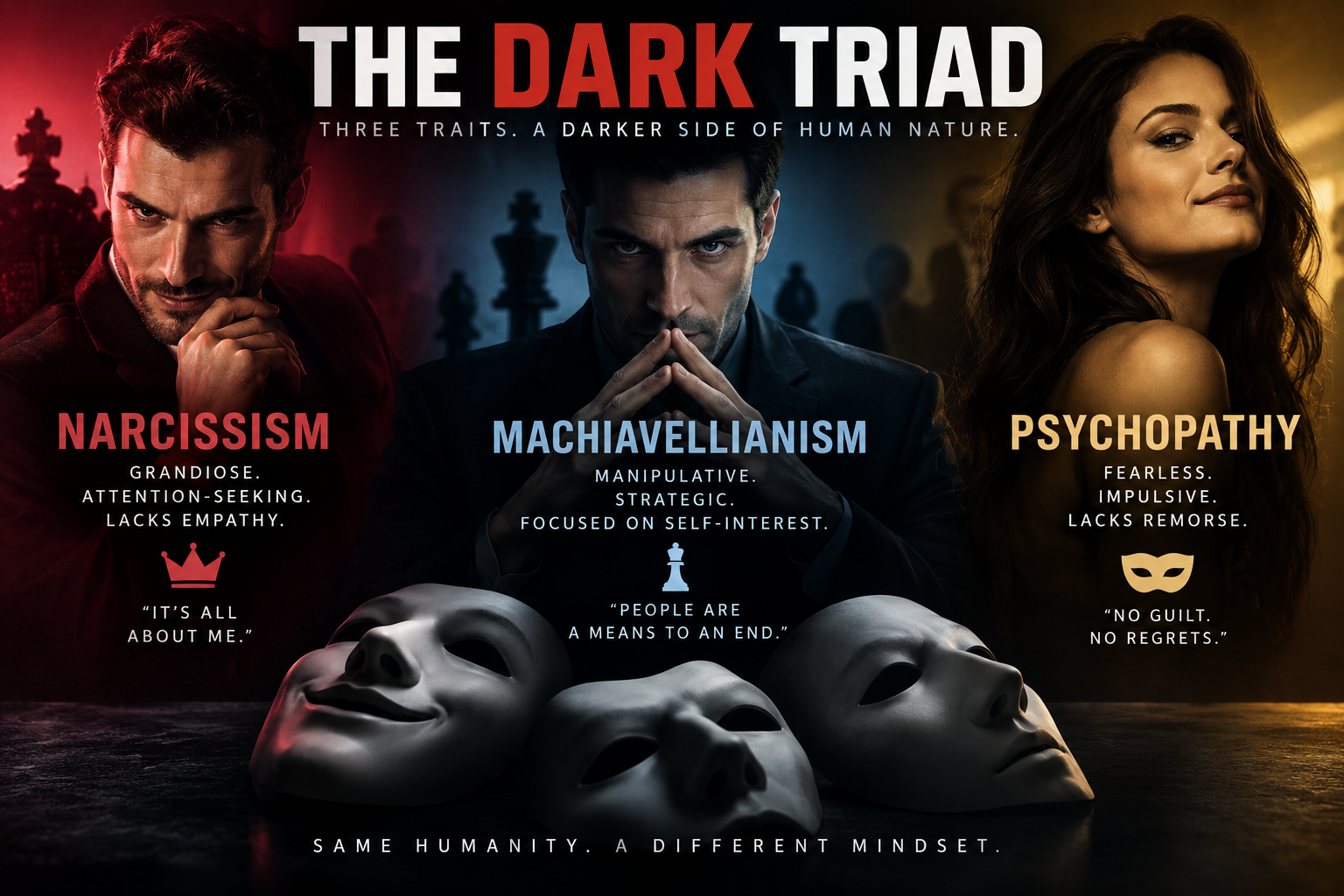
The Dark Triad in Everyday Life: Why You Keep Falling for Charming People.
You meet someone who is confident, funny, attentive, and unusually good at making you feel interesting. They remember small details, tell compelling…
Phantom Vibration Syndrome: The Psychology Behind Feeling a Buzz That Never Happened.
You're at your desk, or on the bus, or halfway through a meeting, and you feel it — that unmistakable little rumble…