When we think about the end of the world, we usually picture a massive, Hollywood-style disaster. We imagine giant asteroids crashing into the planet, supervolcanoes erupting and blocking out the sun, or nuclear wars leaving the earth a wasteland.
But the reality of our planet is much quieter, and in many ways, much scarier. Earth is not a static rock; it is a highly complex, interconnected system. Think of it like a massive game of Jenga. You can pull out a few blocks here and there, and the tower stands. But if you pull out the wrong block—even a very small one—the entire structure comes crashing down.
Humanity relies entirely on incredibly fragile natural balances to survive. A shift of a few degrees in temperature, a slight change in the saltiness of the ocean, or the disappearance of tiny insects could trigger a chain reaction that we cannot stop. We wouldn’t be wiped out in a sudden fiery explosion. We would be wiped out slowly, through starvation, suffocation, or extreme weather.
Here is a look at the seemingly insignificant shifts in nature that hold the power to end human civilization as we know it.
The Oxygen Makers: What if Phytoplankton Die?
When we think of the lungs of the earth, we usually picture the Amazon rainforest. Trees are incredibly important, but they are only half the story. The other half of the oxygen you breathe comes from something you can’t even see: phytoplankton.
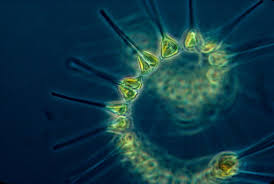
The Silent Lungs of the Earth
Phytoplankton are microscopic marine plants that drift in the upper layer of the ocean. Just like trees, they use photosynthesis. They take in sunlight and carbon dioxide, and they release oxygen. Every second breath you take is entirely thanks to these microscopic organisms.
Beyond making oxygen, they are the absolute base of the marine food web. Tiny fish eat phytoplankton. Bigger fish eat the tiny fish. Sharks, dolphins, and humans eat the bigger fish. If phytoplankton disappear, the entire ocean starves to death.
The Tipping Point
The terrifying part is how sensitive these tiny plants are to their environment. Phytoplankton thrive in very specific water temperatures and acidity levels. Because human beings are pumping heavy amounts of carbon dioxide into the atmosphere, the ocean is absorbing a lot of it.
When water absorbs carbon dioxide, it becomes more acidic. This is a process called ocean acidification. Many types of phytoplankton have delicate, microscopic shells made of calcium carbonate. If the water becomes even slightly too acidic, these shells literally dissolve.
If the ocean warms up by just a couple more degrees, or the acidity pushes past a specific threshold, we could see a massive die-off of phytoplankton. We wouldn’t notice it immediately. But within a few years, fish stocks would completely collapse, leaving billions of people without food. Eventually, oxygen levels in the atmosphere would drop, making it physically harder to breathe, while carbon dioxide levels would skyrocket, cooking the planet.
The Pollinators: A World Without Bees
Most of us view insects as annoyances. But humanity’s survival is heavily dependent on a few specific bugs flying from flower to flower.
More Than Just Honey
When people talk about saving the bees, it is not because we want to save honey. It is because bees, along with butterflies, moths, and certain beetles, are the mechanical workers of global agriculture.
To produce fruit, vegetables, nuts, and seeds, a plant has to be pollinated. The pollen from one part of a flower must be transferred to another. Plants can’t move, so they rely on insects looking for nectar to do this job for them. About 75% of the world’s flowering plants and about 35% of the world’s food crops depend entirely on animal pollinators to produce.
If you like apples, strawberries, almonds, tomatoes, or coffee, you are relying on bees. Even the meat and dairy industries rely on bees, because cows are fed alfalfa and clover, which are heavily dependent on insect pollination.
Global Starvation
The global bee population is currently under massive stress. This is due to a combination of tiny changes: the heavy use of agricultural pesticides, the loss of wild flower habitats, and small shifts in seasonal temperatures that confuse the bees’ mating and hibernation cycles.
If these small stressors push the pollinator population over the edge into extinction, the results would be catastrophic and immediate. Supermarkets would empty out within months. We would be left surviving strictly on wind-pollinated crops like wheat, rice, and corn.
The lack of dietary variety would lead to massive global malnutrition. Without the vitamins provided by fruits and vegetables, diseases like scurvy would return on a massive scale. Furthermore, the global economy built around agriculture would collapse. Wars would inevitably break out over the remaining fertile, wind-pollinated lands. All because a small flying insect disappeared.
The Global Thermostat: Ocean Currents Shutting Down
The weather outside your window is largely controlled by water moving thousands of miles away. The Earth’s oceans are not just giant bathtubs of still water; they are a constantly moving conveyor belt.
The AMOC Explained Simply
The most important part of this system is the Atlantic Meridional Overturning Circulation (AMOC). It acts as the planet’s central heating and cooling system.
Here is how it works: Warm water from the tropics travels up the Atlantic Ocean toward Europe. As it travels north, the water cools down. Cold water is denser and heavier than warm water. Because it is heavy, this cold water sinks deep to the bottom of the ocean and flows back south, making room for more warm water to flow north. This continuous loop keeps Europe much warmer than it should be, and helps regulate rainfall in Africa and South America.
Plunging into a Freeze
This entire massive conveyor belt runs on one delicate balance: the saltiness of the water. Salt makes water heavier. If the water isn’t heavy enough, it won’t sink, and the conveyor belt stops.
Right now, the planet is warming up slightly. This is melting the ice caps in Greenland. When ice melts, it dumps trillions of gallons of pure, fresh water into the northern Atlantic. This fresh water mixes with the salty ocean water, diluting it.
If enough fresh water enters the system, the ocean water in the north will become too light to sink. The pump will shut off.
If the AMOC stops, the consequences will be devastating. Northern Europe would quickly plunge into an ice age, making countries like the UK and Germany largely uninhabitable and unable to grow food. Meanwhile, the heat that was supposed to move north would stay at the equator, baking the tropics. The monsoons that provide water to billions of people in India and South America would fail. Billions of climate refugees would be forced to move, collapsing global borders and governments.
The Ticking Time Bomb: Melting Permafrost
In the far north of the planet, in places like Siberia, Alaska, and Northern Canada, the ground is permanently frozen. This dirt is called permafrost, and it has been locked in ice for thousands, sometimes millions, of years.
The Methane Trap
Permafrost isn’t just frozen dirt. It is frozen dead stuff. Over millions of years, plants, animals, and microbes died in the Arctic and were quickly frozen before they could rot. Think of permafrost as the world’s largest deep freezer.
Because the planet’s temperature is rising by just a few degrees, this freezer is starting to unplug. The ground is thawing out.
When the permafrost thaws, all that dead plant and animal matter begins to rot. And when organic matter rots underground, bacteria eat it and release gas. Specifically, they release methane.
Runaway Heating
Methane is a greenhouse gas, just like carbon dioxide, but it is much more aggressive. Over a 20-year period, methane is about 80 times more effective at trapping heat in the Earth’s atmosphere than carbon dioxide.
This creates what scientists call a “positive feedback loop,” which is essentially a death spiral. A little bit of global warming melts the permafrost. The melted permafrost releases massive amounts of methane. The methane traps more heat, causing more global warming. That extra warming melts even more permafrost, releasing even more methane.
Once this cycle fully kicks in, human beings will not be able to stop it. Even if we completely shut down every factory, car, and power plant on earth, the planet would continue to heat itself up. Sea levels would rise rapidly, drowning coastal cities from New York to Tokyo. The intense heat would make large parts of the Middle East and Africa completely unlivable for human beings.
The Foundation of Life: Disappearing Topsoil
We walk on it, we build on it, and we usually treat it like dirt. But topsoil—the top few inches of the earth’s surface—is arguably our most precious natural resource.
Dirt is Alive
True topsoil is not just crushed up rocks. It is a highly complex, living ecosystem. A single handful of healthy soil contains more living organisms than there are human beings on Earth. It is packed with bacteria, fungi, insects, and earthworms. These microscopic networks break down dead matter and turn it into the nutrients that plants need to grow.
It takes nature about 1,000 years to generate just three centimeters of healthy topsoil.
The End of Farming
Thanks to modern industrial farming, we are killing this microscopic ecosystem. Heavy plowing exposes the delicate bacteria to the harsh sun, killing them. Chemical fertilizers and pesticides destroy the underground fungal networks that plants use to communicate and share water.
When the life in the soil dies, the soil turns into useless, dead dust. Because we have cut down so many trees to make room for farmland, there are no roots to hold this dead dust in place. Every time the wind blows, and every time it rains, millions of tons of our best topsoil simply wash away into the ocean.
According to some estimates, humanity has already degraded one-third of the world’s soil. If this slow, barely noticeable degradation continues, we will eventually run out of dirt capable of growing food. We will experience a global Dust Bowl. Without topsoil, all the money and technology in the world will not help us grow the calories needed to feed eight billion people. Civilization would starve from the ground up.
A Shift in the Sun: The Carrington Event Reborn
Not all the small changes that could destroy us come from the Earth itself. Sometimes, a tiny hiccup in the sun is all it takes to bring human civilization to a grinding halt.
Solar Storms
The sun constantly shoots out streams of charged particles called the solar wind. Most of the time, the Earth’s magnetic field acts like a giant invisible shield, bouncing these particles away.
However, the sun occasionally experiences magnetic storms, resulting in something called a Coronal Mass Ejection (CME). This is when the sun burps a massive cloud of highly charged plasma directly into space. If the Earth happens to be in the way when this cloud hits, it causes a geomagnetic storm.
In 1859, a massive solar storm hit the Earth. It was named the Carrington Event. The sky lit up with auroras so bright that people could read newspapers at midnight. The only technology we really had back then was the telegraph system. The solar storm caused telegraph wires to spark, shocking operators and starting small fires. At the time, it was a weird inconvenience. Today, it would be an apocalypse.
The Grid Goes Down
Modern human civilization is entirely dependent on a highly sensitive electrical grid. Our bank accounts, water pumps, hospital equipment, food delivery logistics, and communication systems run on electricity and internet satellites.
If a solar storm the size of the Carrington Event hit us tomorrow, it would induce massive electrical currents in our power lines. The transformers that route power to our homes and cities would physically melt. Thousands of satellites in orbit would be fried.
We would instantly be thrown back into the 1800s. Without electricity, water processing plants would stop working, leaving cities without safe drinking water in days. The supply chains that bring food to grocery stores would freeze. Because manufacturing the massive transformers needed to fix the grid takes years, the power wouldn’t just be out for a few hours—it could be out for a decade. The resulting chaos, starvation, and societal breakdown would be immense.
How Do We Prevent This?
Reading about these massive, slow-moving disasters can feel paralyzing. It is terrifying to realize that the survival of our modern world hinges on the thickness of an oyster shell, the flight pattern of a bee, or the saltiness of ocean water.
But understanding these vulnerabilities is the first step toward fixing them. We are not helpless observers.
Preventing these small changes from becoming global catastrophes requires us to rethink how we interact with the planet. It means shifting our farming practices to prioritize soil health over maximum immediate profit. It means protecting wild spaces so pollinators have a place to live. Most importantly, it means aggressively cutting down our carbon emissions to stabilize ocean temperatures, protect the permafrost, and keep the massive ocean currents flowing.
We don’t need to prepare for a sudden asteroid strike. We need to focus on preserving the delicate, quiet balances of nature that keep us alive every single day.
Frequently Asked Questions (FAQ)
1. How long do we have before these natural systems collapse?
There is no single expiration date. Some issues, like topsoil degradation and pollinator decline, are happening right now and causing regional problems. Large-scale events, like the ocean currents shutting down or runaway permafrost melting, could happen within the next 50 to 100 years if global temperatures are not stabilized.
2. Can we artificially recreate what bees and phytoplankton do?
Technologically, it is practically impossible. While scientists have experimented with tiny robot bees, trying to manually pollinate trillions of plants worldwide is economically and logistically impossible. Similarly, there is no machine we can build that can rival the sheer scale of oxygen production naturally handled by ocean phytoplankton. We have to rely on nature.
3. Will a solar storm actually happen in my lifetime?
It is very possible. Small solar storms happen frequently and cause minor radio blackouts. Scientists estimate there is roughly a 1% to 10% chance of a massive, Carrington-level event occurring every decade. Governments and power companies are slowly starting to install safeguards to protect transformers, but the global grid remains highly vulnerable.
4. What can an average person do to help topsoil and bees?
You can make a difference locally. If you have a yard, avoid using chemical pesticides and leave some areas wild to encourage local insects. Planting native flowers helps pollinators thrive. Supporting local farmers who use regenerative agriculture practices (which protect topsoil) also helps shift the farming industry away from destructive habits.
5. If the permafrost melts, can we capture the methane?
No. The permafrost covers millions of square miles of the Arctic, mostly in incredibly remote and harsh environments. The methane doesn’t release from a single pipe; it bubbles up from the ground across entire continents. Capturing it is physically impossible. The only solution is to keep the ground frozen by preventing further global temperature increases.
Leave a Reply