Why Some Animals Evolved to Be Terrifying (And It Makes Perfect Sense)
 By Team Random Read
12 min read
By Team Random Read
12 min read
TL;DR: The animals that give us nightmares—like giant spiders, deep-sea anglerfish, and venomous snakes—didn’t evolve to scare humans. Their “terrifying” traits are highly effective survival tools shaped by millions of years of natural selection. Fangs, venom, bizarre shapes, and glowing eyes are simply nature’s solutions to the daily problems of finding food, avoiding predators, and reproducing in harsh environments. Once you understand the science behind the scary, fear usually turns into deep respect for nature’s ingenuity.
In this article
- The Human Bias: It Is Not About Us
- Defense Mechanisms: Looking Scary to Stay Alive
- Aposematism: Nature’s Bright Warning Signs
- Mimicry: Faking It to Make It
- Startle Displays: The Element of Surprise
- Predators: Tools Built for the Hunt
- Fangs, Claws, and Pure Power
- The Silent Killers: Venom and Toxins
- The Deep Sea: Where Nightmares Are Normal
- Bioluminescence and Giant Teeth
- The Goblin Shark's Slingshot Jaw
- Parasites and the "Creepy Crawlies"
- The Evolution of the Creepy
- Sexual Selection: Bizarre Features Just for Mating
- Evolutionary Psychology: Why Are We So Scared?
- Conclusion
- Frequently Asked Questions (FAQs)
- 1. Why are we so naturally afraid of spiders and snakes?
- 2. Are venomous animals trying to be mean when they bite humans?
- 3. Why do deep-sea fish look like aliens?
- 4. Do animals know that they look terrifying to us?
- 5. What is the difference between being poisonous and being venomous?
Have you ever looked closely at a wolf spider, a deep-sea viperfish, or a massive saltwater crocodile and thought, “Why does something that horrifying even need to exist?”
It is a completely normal human reaction. We are hardwired to feel a jolt of panic when we see sharp teeth, too many legs, or hear a sudden hiss. It is an evolutionary alarm bell ringing in our brains, telling us to run away from danger.
But nature does not do things just for the shock value. Mother Nature is not sitting in a dark room designing monsters for a horror movie. In the wild, every single physical trait serves a specific, practical purpose. The features we find absolutely terrifying are actually brilliant, highly efficient adaptations. They are tools for survival.
If we can put our fear aside for just a moment and look at these creatures through the lens of evolutionary biology, a fascinating truth emerges: these animals are not evil, they are simply trying to make a living in an incredibly unforgiving world.
Let’s break down exactly why some animals evolved to look like our worst nightmares, and why it makes perfect biological sense.
The Human Bias: It Is Not About Us
Before we dive into the animal kingdom, we have to address the elephant in the room: our own human bias.
When we say an animal looks “scary,” we are judging it by human standards. We find soft, furry mammals with big eyes (like puppies and pandas) adorable because they trigger the same nurturing instincts we have for our own human babies.
Conversely, we find animals with features that are radically different from ours—like an insect’s exoskeleton, a snake’s lack of limbs, or a shark’s rows of jagged teeth—to be unsettling. We are projecting our own psychological fears onto animals that are completely indifferent to our existence.
A great white shark does not know it looks intimidating. A tarantula does not know it gives people the creeps. To them, their bodies are simply the perfect vehicles for moving through their environments and getting their next meal. Evolution is blind, practical, and incredibly efficient. It only cares about one thing: what works.
Defense Mechanisms: Looking Scary to Stay Alive
For many animals, looking terrifying is the best way to ensure they do not become someone else’s dinner. The wild is full of predators, and if you are a small or vulnerable creature, you need a way to say, “Back off, you will regret eating me.”
Aposematism: Nature’s Bright Warning Signs
Normally, you would think that hiding is the best way to survive. Camouflage is incredibly common in nature. But some animals take the exact opposite approach. They wear bright, contrasting colors—usually neon reds, yellows, and oranges paired with black.
This is called aposematism, and it is the biological equivalent of a hazardous materials sign.
Think of the poison dart frog in the Amazon rainforest. These tiny frogs are practically glowing with bright blue, yellow, or red colors. They stand out like a sore thumb against the green jungle floor. To a human, it might seem like a terrible survival strategy. But to a predator, those bright colors are a terrifying warning.
Through evolution, predators have learned that animals sporting these flashy colors are usually packed with deadly toxins. The frog doesn’t have to fight off a predator; its terrifyingly bright appearance does the work for it.
Mimicry: Faking It to Make It
What if you aren’t actually poisonous or dangerous, but you still want predators to leave you alone? You fake it. This is called Batesian mimicry.
Some harmless caterpillars have evolved to look exactly like venomous snakes. When threatened, the caterpillar will puff up the front of its body, revealing large, terrifying “eyes” that make it look like a striking viper. To a hungry bird looking for a quick snack, suddenly finding itself face-to-face with a snake is a horrifying experience. The bird flies away, and the harmless caterpillar lives to see another day.
They evolved these terrifying features because the caterpillars that looked slightly more like snakes survived longer and reproduced, passing those genes down until the mimicry became flawless.
Startle Displays: The Element of Surprise
Sometimes, being scary is a temporary state. Many insects, like the praying mantis or certain moths, use startle displays. When a predator approaches, they will suddenly flash open their wings to reveal massive, terrifying “eyes” hidden underneath.
This unexpected burst of color and pattern is designed to short-circuit the predator’s brain for just a split second. It triggers a moment of confusion and fear in the attacker, giving the prey the precious milliseconds it needs to escape.
Predators: Tools Built for the Hunt
While prey animals look scary to avoid being eaten, predators look terrifying because they are built to kill. When your entire existence depends on catching, subduing, and consuming other animals, your body evolves into a specialized weapon.
Fangs, Claws, and Pure Power
Let’s look at apex predators like lions, grizzly bears, and crocodiles. What makes them terrifying to us? Their massive size, crushing jaw strength, and razor-sharp claws.
These features are pure, unadulterated efficiency. A lion needs large canines to quickly puncture the windpipe of a wildly thrashing wildebeest. A crocodile needs a bite force of over 3,000 pounds per square inch to drag heavy prey into the water and perform a “death roll.”
These animals evolved terrifying physical power because the prey they hunt is also strong, fast, and desperate to survive. Natural selection created an evolutionary arms race. As prey got faster and tougher, predators had to become stronger and deadlier just to keep up.
The Silent Killers: Venom and Toxins
Not all terrifying predators rely on brute strength. Some of the most deeply feared animals on earth—spiders, scorpions, and venomous snakes—rely on chemical warfare.
Why did a creature like the Inland Taipan (the world’s most venomous snake) evolve venom toxic enough to kill 100 grown men with a single bite? It wasn’t to target humans.
Venomous animals are often fragile. A snake has no arms or legs to hold down its prey, and a thin body that can easily be crushed by a struggling rat or bird. For a snake, wrestling with prey is a massive risk. A single scratch to the eye from a desperate rodent could lead to an infection and death.
Evolution solved this problem with venom. By evolving a highly toxic bite, the snake can strike its prey once, let it go, and wait for the venom to do the dangerous work. The extreme toxicity is just a way to ensure the prey dies as quickly as possible, minimizing the chance of it escaping or fighting back. What looks like “overkill” to us is just the snake’s way of staying safe while hunting.
The Deep Sea: Where Nightmares Are Normal
If you want to find the most alien, terrifying animals on the planet, you have to look down. Deep, deep down into the abyss of the ocean.
The deep sea (the bathypelagic and abyssopelagic zones) is an environment that is so hostile, it is a miracle anything lives there at all. It is pitch black, the water is freezing cold, and the pressure is intense enough to crush a submarine. Most importantly, food is incredibly scarce.
Because of these extreme conditions, deep-sea animals have evolved in ways that look like straight-up horror to us surface dwellers.
Bioluminescence and Giant Teeth
Take the Anglerfish, easily one of the most frightening-looking creatures on Earth. It is basically a swimming head with a mouth full of jagged, translucent teeth, and a glowing rod sticking out of its forehead.
Why does it look like this? In the pitch black of the deep ocean, you can’t chase down food; you have to let the food come to you. The anglerfish uses the glowing bacteria in its lure to act as a beacon in the dark. Smaller fish, curious about the light or mistaking it for a smaller meal, swim toward it.
When the prey gets close, the anglerfish unhinges its massive jaws and swallows them whole. Those terrifying, needle-like teeth are angled inward. This ensures that once prey is in the mouth, it is physically impossible for it to swim back out. In an environment where you might only get one meal a month, you cannot afford to let your dinner escape. Every “scary” feature on the anglerfish is a direct response to the absolute scarcity of the deep sea.
The Goblin Shark’s Slingshot Jaw
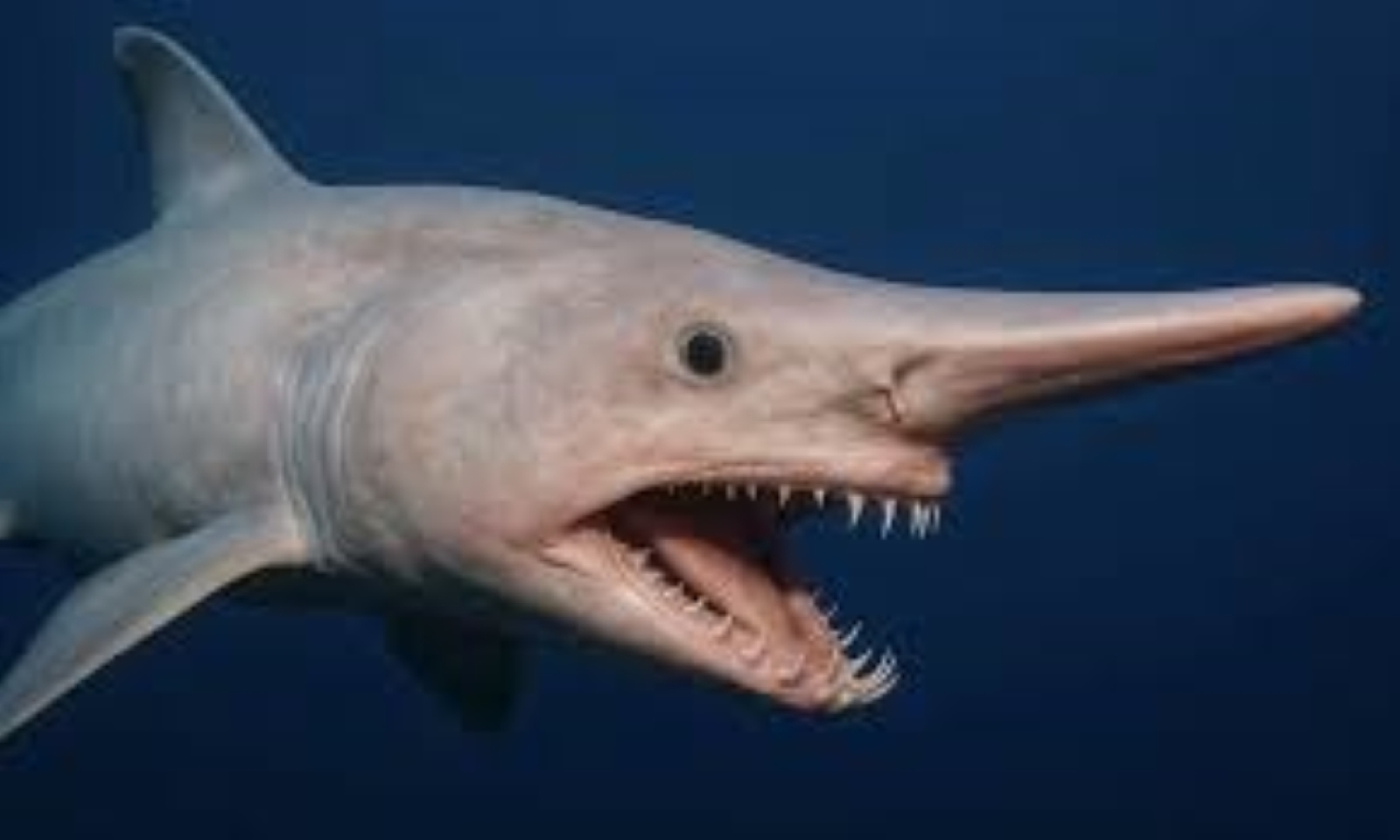
Another deep-sea terror is the Goblin Shark. It looks like a normal, albeit pale, shark until it tries to bite something. When it strikes, its entire jaw shoots out of its face like an alien xenomorph.
Again, this makes perfect sense in context. Water is dense, and swimming fast takes a lot of energy—energy that is hard to come by in the deep ocean. Instead of chasing prey, the Goblin Shark sneaks up on it and uses its extendable jaw to bridge the gap in a millisecond, snapping up fish before they even know they are being hunted. It is deeply unsettling to watch, but it is a masterpiece of energy-efficient hunting.
Parasites and the “Creepy Crawlies”
Some animals aren’t terrifying because they are huge or powerful, but because they invoke a deep sense of disgust. We are talking about parasites like tapeworms, leeches, and ticks, as well as multi-legged creatures like centipedes.
The Evolution of the Creepy
Why do centipedes have so many legs, and why do they move so fast? A house centipede looks terrifying because it darts across your wall at lightning speed. But evolutionarily, those long, numerous legs allow it to be incredibly agile, hunting down other household pests like spiders and roaches. They are the apex predators of the micro-world.
Parasites, on the other hand, are terrifying because they violate our bodily autonomy. A tapeworm can grow to be 30 feet long inside a human intestine. It has no eyes, no mouth, and no digestive tract. It is just a terrifying ribbon of reproductive organs and hooks.
Why did it evolve to look so gross? Because it outsourced all of its bodily functions to its host. It doesn’t need to digest food; you are digesting it for them. It doesn’t need eyes; it lives in the dark. It only needs hooks to hold onto your intestinal wall and segments to lay eggs. It is the ultimate minimalist survivor, stripping away everything except what it needs to reproduce. It is disgusting to us, but it is a highly successful evolutionary strategy.
Sexual Selection: Bizarre Features Just for Mating
Sometimes, a terrifying feature has nothing to do with hunting or hiding. Sometimes, it is purely about attracting a mate.
Charles Darwin noticed that natural selection (survival of the fittest) couldn’t explain every weird animal trait. This led him to the concept of sexual selection.
Take the Rhinoceros Beetle. The males have massive, terrifying-looking horns on their heads that look like medieval weapons. They don’t use these horns to hunt for food—they eat tree sap and fruit. They use these horns entirely to wrestle other males off of tree branches to win the right to mate with females.
To us, it looks like a scary monster bug. To a female rhinoceros beetle, a big, imposing horn is a sign of good genetics and health. The “scarier” the male looks to a rival, the more successful he is at passing on his genes.
Evolutionary Psychology: Why Are We So Scared?
We have established why animals look the way they do, but we should also briefly look at ourselves. Why do we have such strong, visceral reactions to these animals?
The answer lies in our own evolutionary history. Just as animals evolved traits to survive, humans evolved psychological mechanisms to survive.
Hundreds of thousands of years ago, our early human ancestors lived in the wild alongside venomous snakes, massive predators, and toxic spiders. The humans who had a healthy, instinctual fear of slithering shapes in the grass or eight-legged creatures in the dark were the ones who survived. They avoided getting bitten, lived longer, and had children.
The humans who were curious and tried to pet the venomous snake? They died out, taking their fearless genes with them.
When you feel a sudden wave of terror looking at a spider or a snake, you are experiencing the echoes of your ancestors’ survival instincts. It is called prepared learning. We are biologically pre-wired to quickly learn to fear certain shapes and movements because fearing them kept our species alive.
Conclusion
The natural world is not out to get us. The animals that populate our horror movies and nightmares are not monsters; they are the highly successful products of millions of years of trial and error.
From the deep-sea anglerfish saving energy in the pitch black, to the brightly colored poison dart frog warning away predators, every terrifying fang, spine, claw, and venom drop tells a story of survival. Evolution is a master problem-solver, and sometimes the solution to a problem just happens to look terrifying to the human eye.
The next time you see a creature that makes your skin crawl, take a deep breath. Try to look past the fear and appreciate the incredible biology at work. They aren’t trying to be scary—they are just trying to live.
Frequently Asked Questions (FAQs)
1. Why are we so naturally afraid of spiders and snakes?
Humans evolved a natural fear of spiders and snakes (known as prepared learning) because our early ancestors who quickly recognized and avoided these potentially deadly animals survived to pass on their genes. It is an evolutionary defense mechanism hardwired into our brains to keep us safe from venomous threats.
2. Are venomous animals trying to be mean when they bite humans?
Not at all. Venom is biologically expensive for an animal to produce, meaning it takes a lot of energy. A snake or spider wants to use its venom exclusively for catching food. When they bite a human, it is almost always a defensive reaction because they feel cornered, stepped on, or threatened. To them, we are the terrifying giant predators.
3. Why do deep-sea fish look like aliens?
Deep-sea creatures live in extreme environments with immense crushing pressure, freezing temperatures, and total darkness. Because food is incredibly rare down there, animals evolved features like massive, unhinging jaws, inward-facing needle teeth, and glowing lures to ensure that when a meal finally comes along, it absolutely cannot escape.
4. Do animals know that they look terrifying to us?
No. Animals do not possess human self-awareness or human aesthetic standards. A great white shark has no concept of what “scary” means. They are only aware of their environment, their hunger, and their drive to reproduce. Our fear is entirely a human projection onto their biological adaptations.
5. What is the difference between being poisonous and being venomous?
The difference comes down to how the toxin is delivered. Venomous animals actively inject their toxins into you, usually via fangs or stingers (like a rattlesnake or a wasp). Poisonous animals secrete toxins passively, and you only get sick if you touch or eat them (like a poison dart frog or a pufferfish). If it bites you and you get sick, it’s venomous. If you bite it and you get sick, it’s poisonous.

Team Random Read
Random Read is an independent general-interest blog covering history, current affairs, nature, psychology, science and pop culture. About us
More like this
The Wood Wide Web: Do Trees Really Talk to Each Other?
Beneath most forests, tree roots are linked to fungi in a partnership that’s hundreds of millions of years old. Some researchers say…
What’s Happening in the Amazon Rainforest Right Now – The Good, The Bad, and The Ugly
Welcome to 2026. The Amazon rainforest is currently experiencing one of the most volatile and decisive periods in its recorded history. If…

Places on Earth Where the Laws of Nature Feel Broken
We go through life trusting a basic set of rules. Water flows downhill. Lava is red. Rocks are silent. Gravity pulls us…